weekly workout planner
Weekly Workout Planner: Build a Training Week That Adapts to You
A weekly workout planner helps you turn fitness goals into a realistic routine. Learn how to structure training days, recovery, cardio, and adjustments around your life.
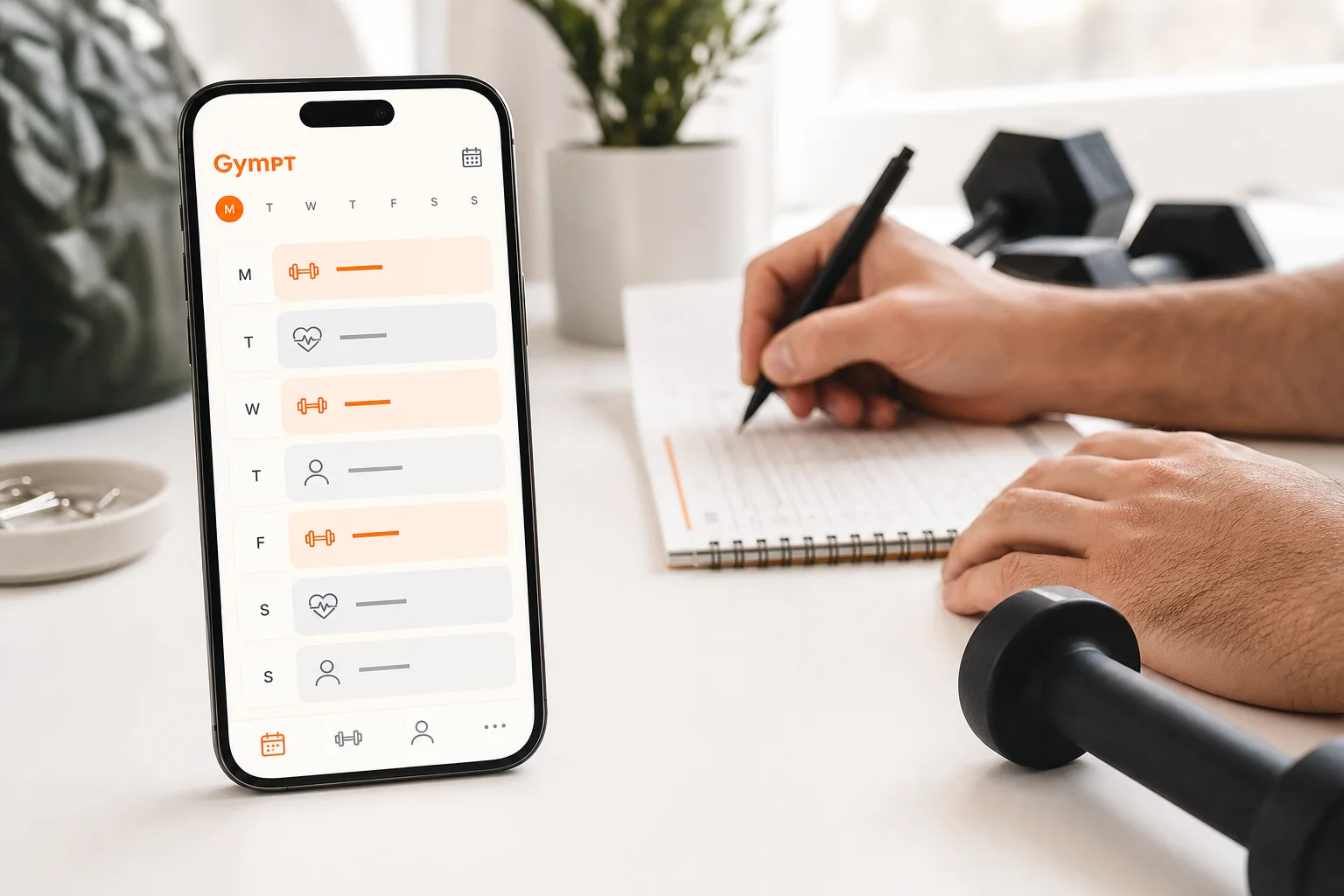
A weekly workout planner can turn a vague goal like “get stronger” or “exercise more” into a clear, repeatable training week. The best plan is not necessarily the most advanced split or the longest list of exercises. It is the one that fits your schedule, matches your current ability, includes enough recovery, and can adapt when life gets busy.
This guide explains how to build a practical weekly workout schedule for strength, muscle gain, fat loss, general fitness, or a combination of goals. You will also learn how to adjust your plan when your energy, time, equipment, or progress changes.
What should a weekly workout planner include?
A useful planner should answer five basic questions before you start training:
- What is the main goal? Strength, muscle growth, fat loss, endurance, mobility, or general health may require different priorities.
- How many days can you train consistently? Your realistic number is more important than an ideal number you rarely complete.
- What equipment do you have? A gym, adjustable dumbbells, resistance bands, or bodyweight exercises can all support effective training.
- How will you recover? Rest days, lower-intensity sessions, sleep, and manageable training volume all matter.
- How will you measure progress? Reps, load, completed sessions, exercise quality, and energy can help you decide when to progress or adjust.
Think of the planner as a flexible structure rather than a rigid contract. It should provide direction while leaving room for modifications.
Step 1: Start with your goal and available training days
Your goal determines what deserves the most attention during the week. For example, a strength-focused plan may emphasize repeated practice of key movements, while a fat-loss plan may combine resistance training with manageable cardio and more daily movement. A general fitness plan can use a balanced mix.
Next, choose the number of training days you can maintain for at least several weeks. Here is a practical starting point:
- Two days: Use full-body workouts so each session trains the major movement patterns.
- Three days: Use full-body sessions or alternate upper-body and lower-body emphasis.
- Four days: Use an upper/lower workout split or two full-body sessions plus two focused sessions.
- Five or more days: Add focused strength, cardio, mobility, or technique sessions while keeping some sessions easier.
Adults are generally advised to include muscle-strengthening activity on at least two days each week, alongside regular aerobic activity. That does not mean everyone needs to train hard every day. It means a good weekly plan should make regular movement achievable and sustainable.
If you are new to structured training, our beginner gym workout plan offers another simple way to organize your first training weeks.
Step 2: Choose a weekly structure that supports recovery
There is no single best workout split for everyone. The right structure depends on training frequency, experience, session length, and personal preference. The main principle is to distribute demanding work so that the same muscles and movement patterns are not constantly trained while fatigued.
Example two-day weekly workout planner
- Monday: Full-body strength workout
- Tuesday: Rest or easy walking
- Wednesday: Rest or mobility
- Thursday: Full-body strength workout
- Friday: Rest
- Saturday: Optional easy cardio or recreational activity
- Sunday: Rest and plan the next week
This structure works well when time is limited. Each workout can include a squat or leg movement, a push, a pull, a hip-hinge movement, and optional core or conditioning work.
Example three-day weekly workout planner
- Monday: Full-body workout with strength emphasis
- Tuesday: Rest or low-intensity cardio
- Wednesday: Full-body workout with moderate loads
- Thursday: Rest or mobility
- Friday: Full-body workout with technique or volume emphasis
- Saturday: Optional walk, cycling, or recreational activity
- Sunday: Rest
Three full-body sessions allow frequent practice without requiring a complicated split. You can vary exercise choices or intensity while keeping the main movement patterns consistent.
Example four-day upper/lower structure
- Monday: Upper body
- Tuesday: Lower body
- Wednesday: Rest or easy cardio
- Thursday: Upper body
- Friday: Lower body
- Saturday: Optional mobility or light activity
- Sunday: Rest
An upper/lower split can make it easier to give each session a clear purpose. It also spreads weekly training volume across multiple days instead of placing too much work into one long workout.
For more examples, compare this structure with a 4 day upper lower workout plan or a 2 day full body workout plan.
Step 3: Balance training volume, intensity, and exercise selection
Three variables shape how demanding your week feels:
- Volume: The amount of work you complete, often tracked through sets and repetitions.
- Intensity: How challenging the load or effort is relative to your current ability.
- Frequency: How often you train during the week, either overall or for a particular muscle group.
More is not automatically better. A high-volume plan can be useful for some experienced trainees, but excessive work may reduce exercise quality, recovery, and consistency. Start with a manageable amount and increase gradually when your performance and recovery are stable.
For muscle growth, research suggests that distributing resistance-training work across more than one weekly session can be a practical approach, especially when it helps maintain better effort and technique. However, when weekly volume is similar, training frequency itself is not the only factor determining results. Your schedule should prioritize consistent, high-quality sessions.
Build each resistance workout around several movement patterns:
- Knee-dominant: Squats, split squats, step-ups, or leg presses
- Hip-dominant: Deadlift variations, hip thrusts, or good mornings
- Horizontal push: Push-ups, bench presses, or machine presses
- Horizontal pull: Rows or supported rowing variations
- Vertical push and pull: Overhead presses, pull-downs, or assisted pull-ups
- Core and carries: Planks, dead bugs, loaded carries, or anti-rotation exercises
You do not need every movement in every session. Select exercises that match your goal, experience, equipment, and comfort. A personalized workout plan should also offer alternatives when an exercise is unavailable or unsuitable for the day.
Step 4: Add cardio without undermining strength training
Cardio can support general fitness, work capacity, and daily energy expenditure. It does not need to compete with strength training. The key is to manage its placement and difficulty.
For many people, two or three easy-to-moderate cardio sessions can fit around resistance training. These might include brisk walking, cycling, rowing, jogging, or another activity you enjoy. If you also perform demanding intervals, place them away from your hardest lower-body workout when possible.
A balanced weekly workout schedule might include short walks on recovery days, one longer easy cardio session, and resistance training as the main performance priority. If your legs remain unusually tired or your lifting performance declines, reduce cardio intensity or duration before adding more training.
Step 5: Plan recovery days instead of treating them as missed workouts
Recovery is part of the plan, not a sign that the plan has failed. A recovery day can include complete rest, walking, gentle mobility, or another low-effort activity. The choice depends on your training load and how you feel.
Useful signs that your weekly workload may be too high include:
- Repeatedly declining performance across sessions
- Persistent soreness that interferes with normal movement
- Low motivation to train for several days in a row
- Difficulty completing your planned repetitions with good technique
- Needing to skip sessions because the schedule is too demanding
One difficult day does not automatically mean you need to stop training. Instead, use the pattern over several sessions. A good planner lets you substitute an easier workout, reduce sets, or move a session rather than forcing the original plan at all costs.
How to make a weekly workout planner adaptable
The most effective planners include adjustment rules. Before the week begins, decide what you will do if your schedule or readiness changes.
If you have less time
Keep the main movements and reduce optional exercises. A focused 25-minute session can be more useful than skipping because the full routine is unavailable. Use supersets when appropriate, but do not rush technical exercises.
If you have less equipment
Replace the movement pattern rather than searching for an identical exercise. For example, a loaded backpack, resistance band, or bodyweight variation may provide a suitable alternative to a machine or barbell exercise.
GymPT can help organize equipment-based alternatives, which is especially useful when you train at home, travel, or change gyms. You can also explore our guide to an AI workout planner without equipment for ideas on adapting sessions to limited resources.
If your energy is low
Use a lighter version of the planned workout. Reduce the load, stop a few repetitions earlier, or complete fewer sets while preserving good technique. The goal is to maintain the habit without turning every session into a test of maximum effort.
If you are progressing easily
Progress one variable at a time. You might add a repetition, increase the load slightly, add a set, improve range of motion, or use a more challenging variation. Avoid changing everything at once, because it becomes difficult to identify what caused an improvement or setback.
Track the information that helps you make better decisions
A planner becomes more useful when it learns from completed workouts. Record the exercises, sets, repetitions, load, effort, and any notes that explain the session. You can also track whether the workout felt easy, appropriate, or unusually difficult.
Look for trends rather than judging one workout in isolation. If you complete most planned sessions and gradually improve repetitions or load, your structure is probably working. If the same exercise repeatedly stalls, consider changing the progression method, exercise variation, rest time, or weekly placement.
Progress insights are most valuable when they connect training data to practical decisions. GymPT combines workout tracking with personalized planning so that your next week can reflect what you actually completed—not just what you intended to do.
A simple weekly workout planner template
Use this checklist when building your next week:
- Write down your primary goal for the next four to eight weeks.
- Choose two to five realistic training days.
- Assign resistance-training sessions before adding optional work.
- Distribute demanding sessions with recovery between them.
- Add cardio, walking, or mobility according to your time and energy.
- Choose exercises that match your equipment and current skill level.
- Define a simple progression rule for each main exercise.
- Write an easier backup version for busy or low-energy days.
- Review your completed sessions at the end of the week.
- Adjust the next week based on performance, recovery, and consistency.
Final takeaway
A weekly workout planner should make training clearer, not more stressful. Start with your goal, choose a schedule you can repeat, distribute challenging work sensibly, and protect recovery days. Then use workout tracking and honest feedback to adjust the plan over time.
The best routine is not the one that looks most impressive on paper. It is the one that helps you train consistently, progress gradually, and stay flexible when real life changes.