2 day full body workout plan
2 Day Full Body Workout Plan: Build Strength With Smart Recovery
A 2 day full body workout plan can deliver meaningful strength and muscle-building results when each session is structured around the major movement patterns and supported by consistent progression.
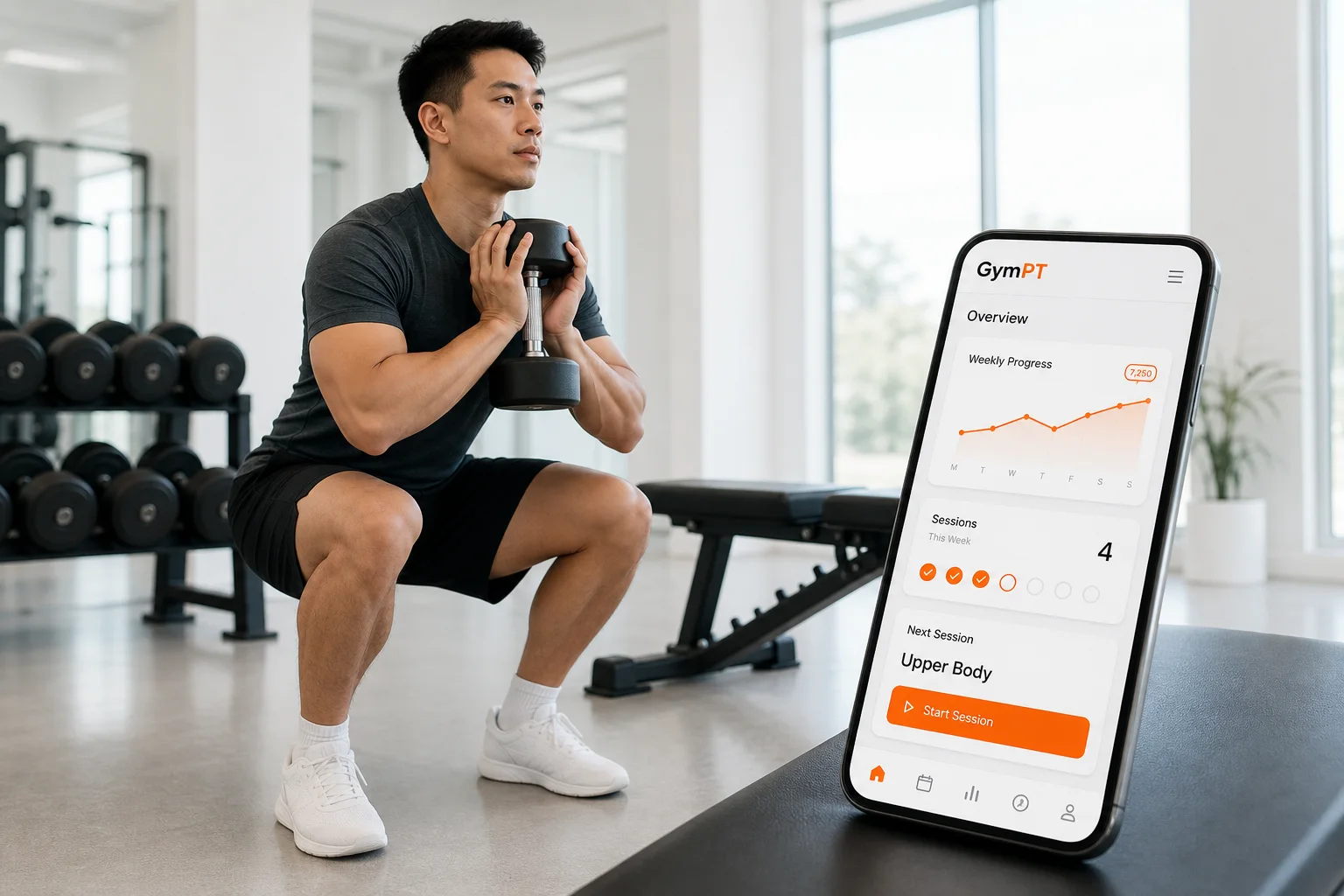
A 2 day full body workout plan is one of the most practical ways to train when your schedule is busy, unpredictable, or simply not compatible with five gym visits per week. Instead of assigning one muscle group to each day, you train the major movement patterns in both sessions: squat, hinge, push, pull, and core.
The result is a simple two-day workout routine that gives each major muscle group regular practice while leaving enough time for recovery. The key is not cramming every possible exercise into two long workouts. It is choosing effective movements, managing effort, and progressing gradually.
Who should use a 2 day full body workout plan?
This structure works especially well for:
- Beginners who need repeated practice with fundamental exercises.
- Busy adults who can reliably train twice per week.
- People returning to training after a long break.
- Intermediate lifters who want a low-maintenance strength plan.
- Home trainees working with dumbbells, resistance bands, or bodyweight.
Two sessions per week can also satisfy the basic muscle-strengthening frequency recommended for adults. More training may be useful for some goals, but a plan you can follow consistently is usually more valuable than an ambitious schedule you abandon after two weeks.
If you are still deciding what kind of plan fits your lifestyle, read How to Choose a Custom Fitness Plan App That Actually Fits Your Life for a broader planning framework.
How to schedule your two full-body workouts
Place the sessions on non-consecutive days whenever possible. A Monday-and-Thursday or Tuesday-and-Friday schedule gives you several recovery days between workouts.
- Monday and Thursday: a balanced option for most people.
- Tuesday and Saturday: useful if weekends are more flexible.
- Wednesday and Sunday: workable when your weekdays are crowded.
Avoid treating the two workouts as back-to-back tests. The goal is to arrive at each session recovered enough to use good technique and produce high-quality sets. Light walking, mobility work, or easy cardio can fit between training days, but keep demanding activities from interfering with your lower-body recovery.
The structure of an effective 2 day full body workout
Each session should include five elements:
- A brief warm-up.
- One primary lower-body movement.
- One upper-body push and one upper-body pull.
- A second lower-body movement that complements the first.
- Core or optional accessory work.
This approach distributes work across the whole body without requiring excessive exercise variety. Most people can complete the session in approximately 45 to 70 minutes, depending on rest periods and equipment.
Warm-up
Start with five to ten minutes of general movement, followed by a few lighter sets of your first exercise. Your warm-up should prepare you for the workout rather than tire you out.
Rep ranges and effort
Use a mix of moderate and higher repetitions:
- Main lifts: 3 sets of 5–8 repetitions.
- Secondary compound exercises: 2–3 sets of 8–12 repetitions.
- Accessory and core exercises: 2–3 sets of 10–15 repetitions.
For most sets, finish with about one to three good repetitions left in reserve. You do not need to reach failure on every set. Stopping when your technique is about to deteriorate can make it easier to recover and repeat strong performances in the next session.
Sample 2 day full body workout plan
The following plan is designed for a healthy adult with access to a basic gym. You can replace exercises with similar movements based on your equipment, comfort, and training experience.
Workout A: squat and horizontal push emphasis
- Squat or goblet squat: 3 sets of 5–8 repetitions
- Bench press or dumbbell bench press: 3 sets of 6–10 repetitions
- Seated cable row or one-arm dumbbell row: 3 sets of 8–12 repetitions
- Romanian deadlift: 2 sets of 8–10 repetitions
- Standing overhead press: 2 sets of 8–12 repetitions
- Plank or dead bug: 2–3 sets
Workout B: hinge and vertical pull emphasis
- Deadlift variation or hip thrust: 3 sets of 5–8 repetitions
- Split squat or leg press: 3 sets of 8–12 repetitions
- Lat pulldown or assisted pull-up: 3 sets of 8–12 repetitions
- Incline dumbbell press or push-up: 3 sets of 8–12 repetitions
- Leg curl: 2 sets of 10–15 repetitions
- Side plank or Pallof press: 2–3 sets per side
This is a starting template, not a requirement to use every listed exercise. If you are new to training, begin with two sets for most movements and add volume only when you are recovering well. A beginner-focused AI Gym Plan for Beginners can also help you choose simpler exercise variations and adjust the workload as your experience improves.
How to adapt the plan to your equipment
At home with dumbbells
Use goblet squats, dumbbell Romanian deadlifts, floor presses, one-arm rows, overhead presses, and split squats. If your dumbbells are light, increase repetitions, slow the lowering phase, or use single-limb exercises.
With resistance bands
Band squats, banded good mornings, chest presses, rows, overhead presses, and pulldowns can cover the main movement patterns. Anchor bands securely and choose a resistance that allows smooth, controlled repetitions.
With bodyweight only
Use squats, reverse lunges, push-ups, pike push-ups, inverted rows if available, glute bridges, and planks. Bodyweight training can become challenging by increasing range of motion, using unilateral variations, or adding pauses.
Equipment should change the exercise selection, not the principles. For more guidance on choosing movements around your available equipment, see Fitness App That Creates Workouts: What to Look For Before You Choose One.
How to progress with only two weekly sessions
Progression is what turns a list of exercises into a training plan. Use a simple double-progression method:
- Choose a weight that lets you perform the lower end of the target rep range with good form.
- Keep the same weight until you can complete the upper end of the rep range for every set.
- Increase the load slightly at the next session.
- Return to the lower end of the range and build again.
For example, if an exercise is programmed for 3 sets of 8–12, you might perform 10, 9, and 8 repetitions in week one. Over several sessions, you could reach 12, 12, and 12. At that point, add a small amount of weight and begin again around 8–10 repetitions.
You can also progress by adding one repetition, improving technique, increasing range of motion, or reducing unnecessary rest time. Do not change every variable at once. A small, measurable improvement is enough.
Recovery for a two-day workout routine
Recovery determines whether two demanding workouts build momentum or create constant fatigue. Prioritize:
- Rest days: leave at least one day between full-body sessions.
- Sleep: maintain a regular sleep schedule when possible.
- Nutrition: eat enough total food and include regular protein-rich meals.
- Low-intensity movement: walking and gentle activity can support general fitness without competing with lifting.
- Fatigue monitoring: reduce sets or load temporarily if performance and technique decline across sessions.
Every workout does not need to feel equally difficult. If you are unusually tired, use the same exercises with fewer sets or stop further from failure. Training consistently at a manageable effort is better than forcing maximum intensity and needing a long break.
Common mistakes to avoid
- Trying to do too much: six to eight exercises per session may be more than you need.
- Changing exercises every week: frequent changes make progression difficult to measure.
- Ignoring pulling movements: balance pressing exercises with rows and pulldowns.
- Training every set to failure: reserve maximal effort for occasional, suitable accessory sets if desired.
- Skipping the log: record exercises, sets, repetitions, load, and a brief effort note.
Tracking matters even more when you train only twice weekly because each session represents a meaningful part of your total workload. GymPT can help organize exercises around your equipment, log performance, and surface progress trends over time. For more detail, read Workout Progress Tracking: How to Log Training and See Real Results.
How long should you follow the plan?
Follow the same structure for at least six to eight weeks before making major changes, unless an exercise causes pain or clearly does not suit you. This gives you enough repeated practice to judge whether your strength, repetitions, technique, and recovery are improving.
After that period, you can adjust exercise variations, add a set to selected movements, or move to a higher-frequency schedule if your goals and availability change. The best 2 day full body workout plan is not the most complicated one. It is the one that covers the basics, fits your week, and gives you a clear way to improve.