AI gym plan for beginners
AI Gym Plan for Beginners: A Safer, Smarter Way to Start Training
Starting at the gym is easier when you have a clear plan. Learn how an AI gym plan for beginners can help you choose exercises, adapt to your equipment, track progress, and build consistency without overcomplicating training.
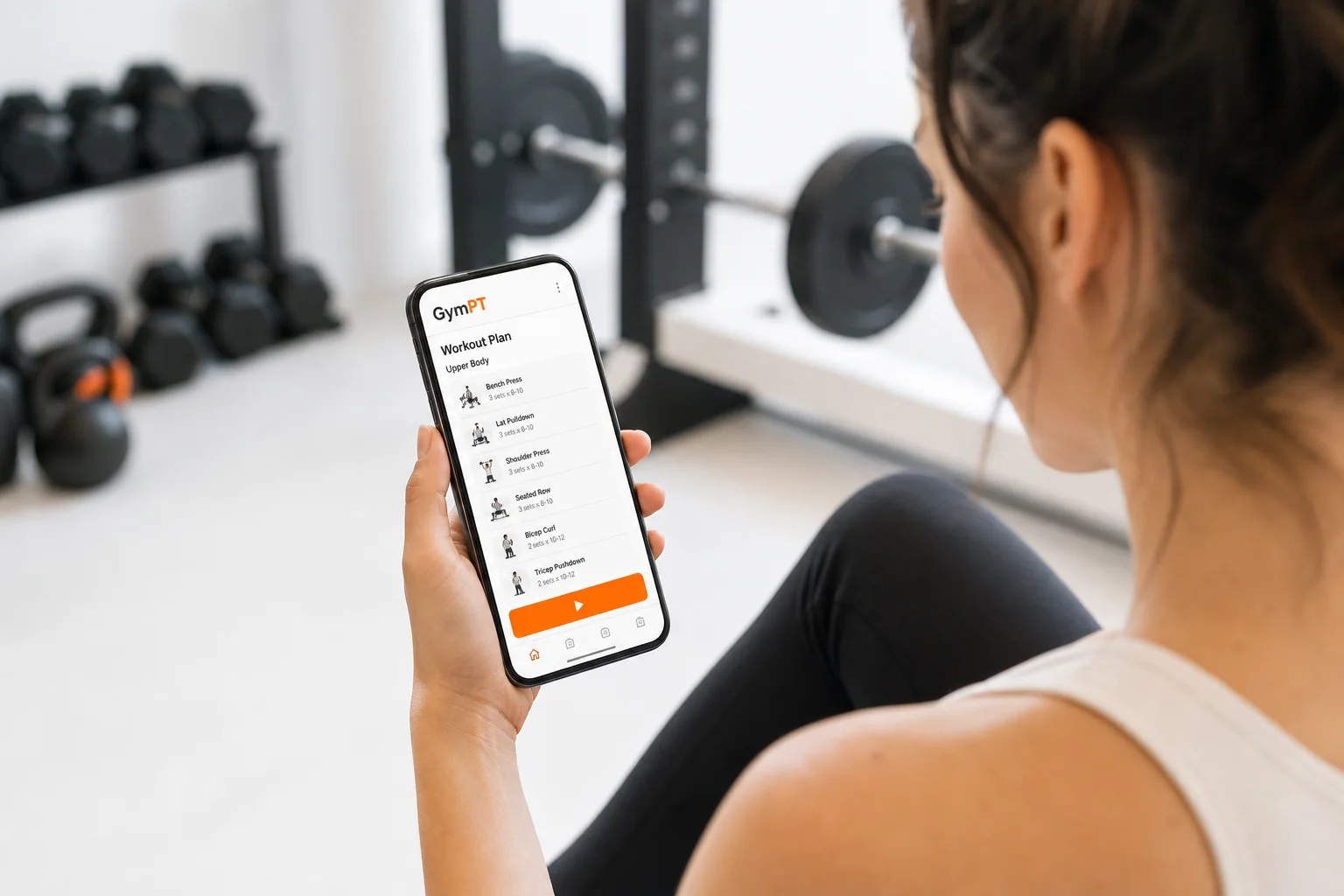
Walking into a gym for the first time can feel more complicated than it needs to be. There are dozens of machines, unfamiliar exercises, conflicting advice, and the pressure to know exactly what to do before you even begin. A clear AI gym plan for beginners can make that first step easier by turning your goals, schedule, experience, and available equipment into a practical training starting point.
That does not mean artificial intelligence replaces judgment, coaching, or attention to how your body feels. The best use of AI is more realistic: it helps organize decisions, reduce guesswork, and adjust a plan as you learn. You still control the pace, exercise quality, and decision to stop when something does not feel right.
What an AI gym plan for beginners should actually do
A useful beginner plan should be simple enough to follow and flexible enough to fit real life. It should not overwhelm you with advanced techniques or assume that you already understand training terminology.
At a minimum, an AI-generated gym plan should help you:
- Choose a realistic number of training days each week.
- Select exercises that match your experience and available equipment.
- Train the major movement patterns rather than repeating random exercises.
- Start with manageable sets, repetitions, and effort levels.
- Record what you did so future workouts are based on useful information.
- Make gradual changes instead of constantly replacing the entire routine.
This is where GymPT can support beginners. You can provide information about your goals, training frequency, equipment, and current experience, then use the resulting plan as a structured starting point. GymPT can also help explain exercises, answer training questions through AI coach chat, track completed workouts, and surface progress insights over time.
Why beginners usually benefit from a simple full-body routine
For many people starting resistance training, two or three full-body sessions per week are easier to recover from and easier to schedule than a complex split. Each session can include a lower-body movement, a pushing exercise, a pulling exercise, and a small amount of core or accessory work.
A beginner gym routine does not need to include every machine in the facility. The goal is to practice fundamental movements consistently while leaving enough recovery time between sessions.
A practical three-day beginner structure
- Lower body: leg press, goblet squat, or a supported squat variation.
- Upper-body push: machine chest press, dumbbell press, or an incline push-up.
- Upper-body pull: seated cable row, machine row, or assisted pulldown.
- Hip movement: light Romanian deadlift, cable pull-through, or a machine variation.
- Core: dead bug, plank, or another controlled trunk exercise.
One or two working sets per exercise may be enough at first. A common starting range is around 8 to 12 controlled repetitions, but the correct choice depends on the exercise, the load, and your ability to maintain good technique. The important point is to begin below your maximum effort so you can learn the movement and recover for the next session.
If you prefer a different schedule, GymPT can help you explore alternatives. For example, a two-day approach may be more realistic for someone with a busy week. You can compare it with this 2 Day Gym Workout Plan before choosing the format you are most likely to follow.
How AI personalizes a beginner workout plan
Personalization should involve more than adding your name to a generic routine. A good AI fitness coach considers the practical details that influence whether a plan will work.
1. Your training goal
Someone who wants to build general strength may need a different emphasis from someone who wants to improve fitness, gain muscle, or become more comfortable using gym equipment. Your goal influences exercise selection, repetition ranges, rest periods, and how progress is measured.
2. Your available equipment
A plan should not depend on equipment you cannot access. If your gym is busy, your home setup is limited, or you prefer machines while learning technique, an adaptive system can suggest practical substitutions instead of leaving you stuck.
3. Your schedule and recovery
A plan that requires five sessions when you can realistically complete two is not personalized. Frequency should reflect your work, family responsibilities, sleep, and current activity level. Consistency with a manageable routine is more useful than following an ambitious plan for one week and abandoning it.
4. Your feedback after each workout
Workout tracking gives an AI system more context. If a weight felt too heavy, an exercise was unavailable, or you had less energy than usual, that information can guide future recommendations. This is more useful than treating the first plan as permanent.
For a deeper look at this process, read AI Exercise Recommendation App: How Personalized Workout Suggestions Work.
What the evidence suggests about beginner resistance training
Current physical activity guidance consistently encourages adults to include muscle-strengthening activity on at least two days per week and to work the major muscle groups. It also emphasizes that some activity is better than none and that people should build up gradually.
Recent resistance-training evidence supports a reassuring message for beginners: complicated programming is not a requirement for progress. Consistent resistance training improves strength and physical function, while many advanced variables do not consistently determine results for the average healthy adult. Equipment choice, training to complete failure, and complex periodization are not mandatory starting points.
That evidence supports a beginner-friendly approach:
- Learn a small number of useful exercises.
- Use a load that allows controlled repetitions.
- Repeat the plan long enough to learn what works.
- Increase difficulty gradually when the current workload becomes manageable.
- Track performance rather than chasing exhaustion.
This does not mean every person should follow the same routine. It means your first plan can be straightforward without being ineffective.
How to progress without rushing
Progression means gradually asking your body to do a little more over time. That might involve adding a small amount of weight, completing an extra repetition, improving range of motion, or performing the same exercise with better control.
Beginners often make one of two mistakes. They either increase the load too aggressively or change exercises before giving themselves time to learn. A better approach is to keep most exercises stable for several weeks and make one small adjustment when your technique remains strong and the target repetitions feel comfortable.
A simple progression rule
Suppose your plan calls for 8 to 12 repetitions. Start with a weight that lets you complete the lower end of the range with good form. Over several sessions, work toward the upper end. Once you can complete the upper end consistently and still feel in control, increase the load slightly and return to the lower end.
An AI system can help you apply this rule consistently by remembering previous workouts and showing where progress is appropriate. GymPT's workout tracking and progress insights are useful here because they turn individual sessions into a longer-term view.
How to use AI safely as a beginner
AI can organize fitness information, but it cannot see every detail of your movement or know your complete health history. Treat the plan as guidance, not as an instruction to push through pain or ignore warning signs.
- Start conservatively: Choose manageable weights and leave room to learn.
- Prioritize technique: If you cannot control the movement, reduce the load or choose an easier variation.
- Pay attention to symptoms: Stop an exercise if you experience sharp pain, unusual dizziness, chest discomfort, or another concerning symptom.
- Ask for qualified help: A gym professional can demonstrate technique and help you adjust equipment in person.
- Consider your circumstances: If you have an injury, medical condition, or specific concern about exercise, seek appropriate professional guidance before increasing training.
GymPT is designed to support fitness planning and training decisions. It is not a medical device and should not be used to diagnose or treat a health condition.
Common mistakes an AI gym plan can help you avoid
Doing too much too soon
Beginners may copy advanced routines or train hard every day. A personalized plan can keep the initial workload realistic and create rest days intentionally.
Ignoring equipment limitations
Many generic routines assume access to a specific barbell, bench, or machine. Equipment-based recommendations make substitutions easier and reduce unnecessary friction.
Changing the plan constantly
Novelty can be motivating, but changing every exercise each session makes progress harder to evaluate. A better plan keeps the core structure stable while adjusting details when needed.
Measuring only body weight
Progress can also appear as more repetitions, better control, improved confidence, increased training consistency, or a heavier manageable load. A tracking system gives you more than one way to evaluate improvement.
If you want to compare different training formats before starting, the guide to choosing a personalized gym app explains which features are most useful for real-world training.
How GymPT fits into your first month
A practical first month might look like this:
- Week one: Complete two or three easy-to-moderate sessions and learn the equipment.
- Week two: Repeat the main exercises and record how each session feels.
- Week three: Add a small progression only where technique is consistent.
- Week four: Review completed workouts, identify exercises you enjoy, and adjust the plan around your schedule.
GymPT can support each stage with personalized workout plans, equipment-aware exercise choices, AI coach chat, body analysis features, workout tracking, and progress insights. The value is not that the app makes every decision for you. The value is that it helps you make better decisions repeatedly, with less confusion.
Final takeaway
The best AI gym plan for beginners is not the most advanced plan. It is the one that matches your current ability, fits your schedule, uses equipment you can access, and gives you a clear way to progress.
Start with a few foundational movements, train consistently, increase difficulty gradually, and use AI to organize feedback rather than replace common sense. With that approach, GymPT can help turn an intimidating first visit into a practical training routine you can actually maintain.
Once you are comfortable with the basics, you can explore more structured options such as a 3 Day Full Body Workout Plan and continue adapting your training as your goals and experience develop.