personalized gym app
How to Choose a Personalized Gym App That Fits Your Training
A personalized gym app should do more than display random workouts. Learn which coaching, planning, tracking, and progression features actually help you train consistently.
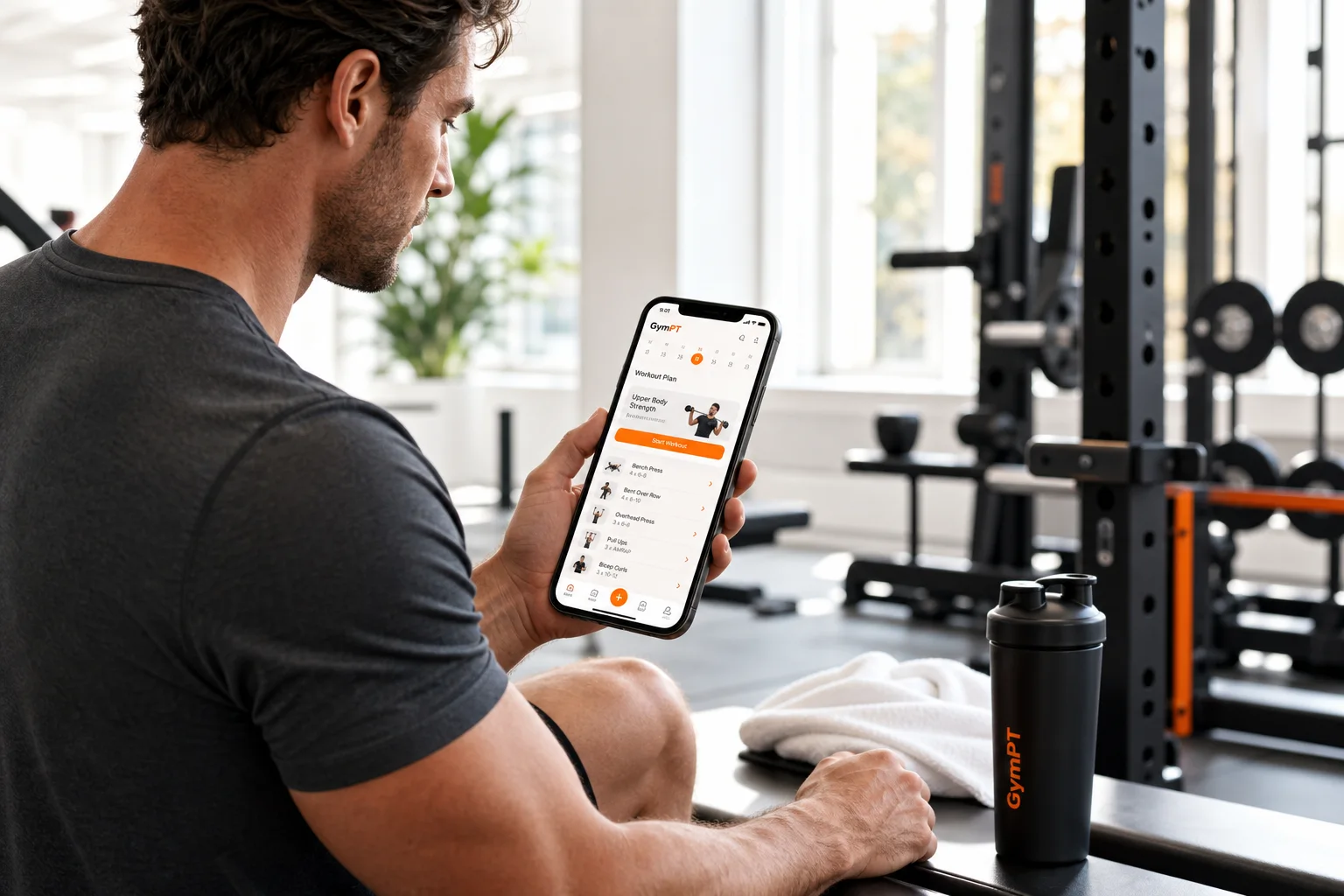
Choosing a personalized gym app can feel harder than choosing your next workout. App stores are full of platforms promising smarter plans, faster results, and constant motivation. But a useful fitness app should do more than show exercise videos or generate a random list of movements.
The best option should help you make sensible training decisions week after week. That means matching workouts to your goals, schedule, experience, available equipment, and current performance. It should also make progress easier to see without turning every session into a complicated data-entry task.
GymPT is designed around this practical approach. It combines personalized workout planning, AI coach chat, body analysis, equipment-based training, workout tracking, and progress insights in one experience. Whether you are new to structured training or want a more adaptive gym workout planner, the right features can make your routine easier to follow and easier to improve.
What should a personalized gym app actually personalize?
Personalization is not simply adding your name to a generic program. A meaningful plan should account for variables that change how you train, including:
- Your goal: strength, muscle gain, general fitness, fat loss support, or improved consistency.
- Your training experience: a beginner needs different exercise choices and explanations than an experienced lifter.
- Your schedule: two available sessions require a different structure from four or five weekly sessions.
- Your equipment: a commercial gym, home setup, or limited equipment should not produce the same plan.
- Your preferences: exercise selection matters because a plan you dislike is less likely to become a habit.
- Your recent performance: completed sets, reps, loads, and perceived difficulty can guide future sessions.
Research on personalized physical-activity interventions commonly describes personalization through goal recommendations, activity recommendations, motivational support, educational content, and timing. In practice, that means a good app should adapt both the training itself and the way it helps you stay engaged.
8 features to look for before choosing a personalized gym app
1. Goal-based workout planning
Start with the plan, not the technology. A strong personalized workout app should ask what you are trying to achieve and then organize training around that objective.
For example, a muscle-building plan may prioritize sufficient weekly volume, stable exercise selection, and gradual progression. A strength-focused plan may emphasize heavier compound movements, longer rest periods, and more deliberate performance tracking. A general fitness plan may balance resistance training with conditioning and manageable session lengths.
Look for an app that explains the purpose of a session instead of treating every workout as interchangeable. You should understand whether the day is designed to build strength, train a muscle group, practice a movement, or accumulate useful volume.
2. Adaptation to your schedule
The most impressive program is not useful if you cannot complete it. Adults are generally encouraged to include muscle-strengthening activity on at least two days each week, but the ideal structure depends on your availability and recovery.
A good app should let you choose realistic training frequency and adjust when life gets busy. If you miss a session, it should help you continue rather than making you feel as though the entire program has failed.
Useful flexibility may include:
- Different plans for two, three, four, or five training days.
- Shorter alternatives when you have limited time.
- Workout rescheduling without losing your progression history.
- Exercise substitutions that preserve the goal of the movement.
This is one reason structured splits are not automatically better than full-body training. The best split is the one that distributes useful work across the week while fitting your real routine. If you are deciding between different schedules, compare the practical options in this 2 day gym workout plan guide and the 4 day full body workout plan guide.
3. Equipment-aware exercise selection
A workout should be executable where you train. An app that recommends a barbell squat when you only have adjustable dumbbells creates friction before the session even begins.
Equipment-based planning should recognize the difference between a full commercial gym, a basic home gym, and bodyweight-only training. It should also offer sensible substitutions. For example, a cable row, chest-supported dumbbell row, and resistance-band row do not feel identical, but they can serve a similar pulling purpose when selected appropriately.
GymPT uses your available equipment to make exercise recommendations more practical. This helps reduce the common problem of constantly searching for replacements or abandoning a session because one machine is occupied.
4. Clear exercise guidance
Instructions should help you perform an exercise with confidence without overwhelming you. Look for demonstrations, setup cues, movement explanations, and guidance on common errors.
Beginners benefit from knowing what the exercise should feel like and how to adjust the setup. More experienced users may want concise cues that help them focus on range of motion, tempo, stability, or effort.
An AI fitness coach app can make this more useful when it allows you to ask follow-up questions in plain language. For example, you might ask how to modify an exercise, what to do if equipment is unavailable, or how to interpret a difficult set. AI guidance should support your judgment, not replace attention to technique and sensible training decisions.
5. Progression that responds to performance
Repeating the same workout forever is not personalization. A plan should give you a way to progress when performance improves and adjust when a session feels unusually difficult.
Progression can involve adding a small amount of weight, completing more repetitions within a target range, increasing sets, improving control, or maintaining performance with better technique. The right choice depends on the exercise, goal, training age, and recovery.
Be cautious of apps that automatically increase difficulty without considering what happened in the previous session. A useful system should use your completed workouts and feedback to inform the next recommendation. It should also allow you to override a suggestion when the adjustment does not fit your circumstances.
6. Simple workout tracking
A workout tracking app should make recording your session easier, not turn it into administrative work. At minimum, you should be able to log exercises, sets, repetitions, loads, and completion status.
The most helpful tracking features connect data to decisions. Instead of showing a long list of numbers, the app might help you identify that:
- You are consistently completing the planned work for a muscle group.
- Your repetitions are improving at the same load.
- A particular exercise has stalled for several sessions.
- Your planned training frequency is higher than your actual consistency.
- You perform better when sessions are shorter or more evenly spaced.
Tracking is valuable because memory is unreliable. A written record gives you a more objective view of your training and makes progression less dependent on guesswork.
7. Progress insights without exaggerated promises
Progress insights should help you understand behavior and performance, not promise an unrealistic transformation. Look for summaries that show completed workouts, consistency, volume trends, exercise performance, and changes in relevant measurements over time.
Body analysis can be useful when it is treated as one source of information rather than a definitive verdict. Measurements fluctuate because of hydration, food intake, sleep, and other factors. Review trends over several weeks and combine them with gym performance, energy, and consistency.
A responsible app should avoid medical diagnosis and should not present estimated body metrics as perfect measurements. It should help you notice patterns while leaving room for context and human judgment.
8. Coaching support that improves consistency
Many people do not need more workout ideas; they need help following a reasonable plan long enough to benefit from it. Personalized support can make the difference between opening an app once and using it as part of a routine.
Look for features such as reminders, encouraging feedback, explanations of training decisions, and an AI coach chat that can answer questions when they arise. Personalization should feel practical rather than intrusive. The goal is to reduce uncertainty and make the next useful action obvious.
Evidence from exercise-adherence research consistently points to factors such as self-efficacy, support, convenience, and habit formation. An app cannot remove every barrier, but it can lower the amount of planning and decision-making required before a workout.
How GymPT fits the personalized gym app category
GymPT brings the main parts of adaptive training into one workflow:
- Personalized plans: workouts are organized around your goals, schedule, and experience.
- AI coach chat: ask questions about exercises, substitutions, training structure, or your next step.
- Equipment-based training: receive recommendations that reflect the equipment you actually have access to.
- Body analysis: use visual and measurement-based information as part of a broader progress picture.
- Workout tracking: record completed training so future decisions are based on more than memory.
- Progress insights: review consistency and performance trends to understand what is working.
The value is not that an app makes every decision for you. The value is that it gives you a clearer starting point, fewer unnecessary choices, and a more consistent way to adjust your training.
Questions to ask before you commit
Before paying for a fitness subscription, test whether the app fits your actual situation. Ask:
- Can it create a plan for my goal and available number of training days?
- Can I select the equipment I have and replace exercises when needed?
- Will it explain why a workout or progression recommendation makes sense?
- Can I log a session quickly while I am training?
- Does it adapt when I miss a workout or perform differently than expected?
- Can I ask questions instead of searching through a static exercise library?
- Does it show useful trends without making exaggerated health or transformation claims?
If the answer to most of these questions is yes, the app is more likely to become a useful training system rather than another source of workout ideas.
The bottom line
The best personalized gym app is not necessarily the one with the longest exercise library or the most dramatic promises. It is the one that turns your goals, schedule, equipment, and training history into actions you can realistically repeat.
Prioritize adaptable planning, clear coaching, equipment-aware recommendations, simple tracking, and honest progress feedback. GymPT combines these features to help you train with less guesswork and more continuity. If you want a practical starting point, use it to build a plan that matches your current routine, record what you do, and let your performance guide the next adjustment.
For more structured examples, explore the AI exercise recommendation app guide or compare different weekly structures in the 3 day full body workout plan guide.