2 day workout plan for muscle gain
2 Day Workout Plan for Muscle Gain: A Practical Hypertrophy Blueprint
A two-day schedule can support meaningful muscle growth when each session is structured around sufficient weekly volume, challenging sets, progressive overload, and recovery. Use this practical hypertrophy plan to train every major muscle group twice per week without turning every workout into a marathon.
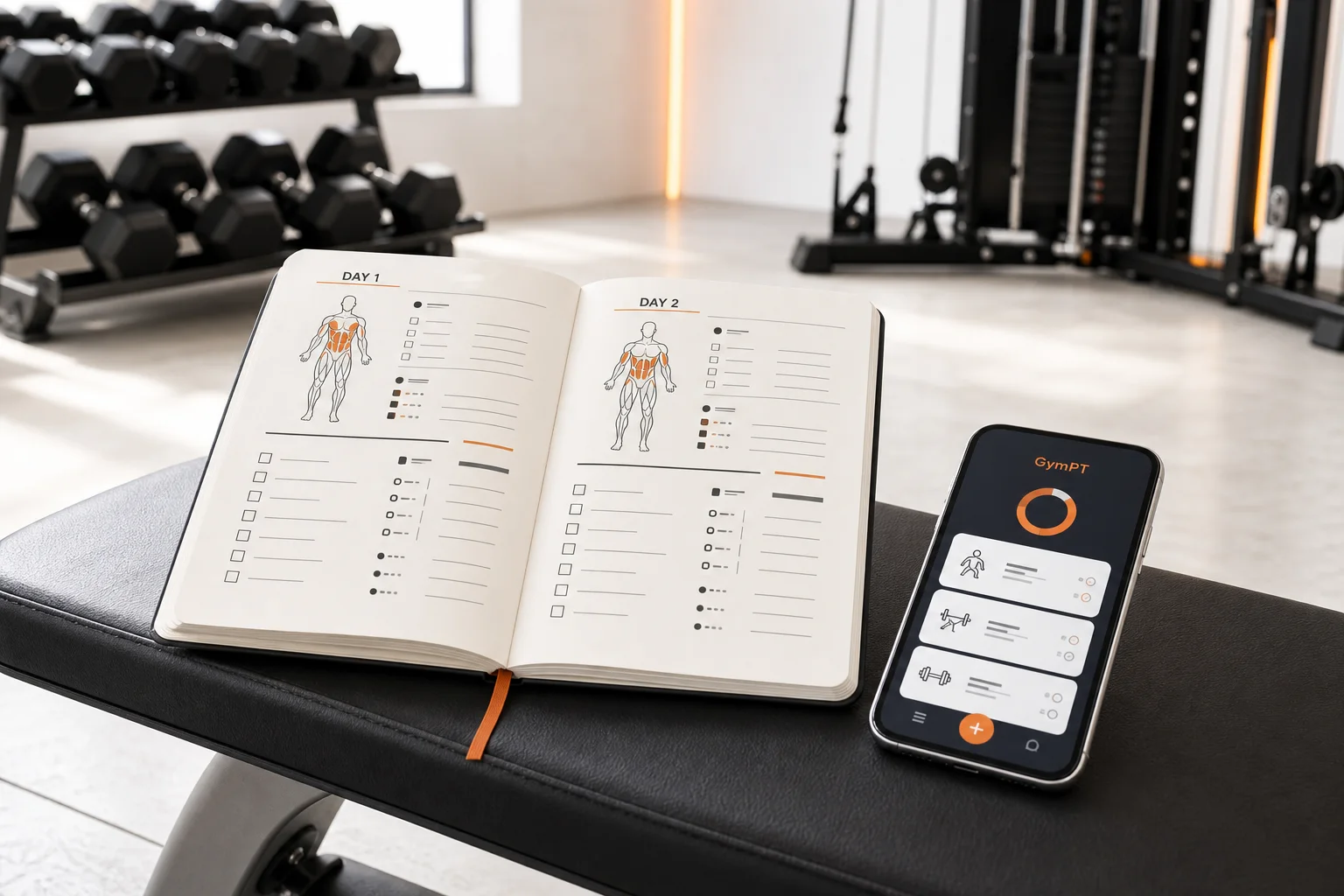
A 2 day workout plan for muscle gain can work surprisingly well when your schedule is busy, your recovery is limited, or you simply prefer a sustainable routine. The key is not to cram every possible exercise into two exhausting sessions. It is to train the major muscle groups consistently, accumulate enough challenging work, and improve that work gradually over time.
This plan uses two full-body workouts per week. Each session combines compound lifts for efficient loading with isolation exercises that help you add targeted volume. You can train on Monday and Thursday, Tuesday and Friday, or any schedule that gives you at least one rest day between sessions.
Can a 2 day workout plan build muscle?
Yes. Muscle growth depends mainly on the quality and progression of your resistance training, not on having a five-day gym schedule. A two-day routine gives you fewer weekly training opportunities, so each session needs to cover more than one movement pattern. It also makes consistency especially important: missing one workout removes half of your weekly stimulus for several muscles.
For hypertrophy, a useful starting point is approximately 6–10 challenging sets per major muscle group per week, adjusted according to your training age, exercise selection, and recovery. Some people grow with less, while experienced lifters may eventually need more. Since this routine trains each major muscle group in both sessions, volume is spread across the week instead of being concentrated into one very long workout.
Training frequency itself is not magic. When weekly volume is similar, different frequencies can produce comparable muscle growth. The practical advantage of training a muscle twice per week is that it lets you distribute hard sets more comfortably and practice important lifts more often.
How to use this 2 day workout plan for muscle gain
- Warm up: Complete five to ten minutes of general movement, then perform lighter preparation sets for your first one or two exercises.
- Effort: Finish most working sets with about one to three good repetitions left in reserve, often called RIR.
- Rest: Rest two to three minutes on demanding compound exercises and 60–120 seconds on isolation movements.
- Tempo: Use controlled repetitions, especially during the lowering phase. Do not turn every set into a test of speed or momentum.
- Exercise order: Perform technically demanding multi-joint lifts earlier, then use machines, cables, or simpler isolation exercises later.
You do not need to reach momentary failure on every set. Training close to failure can be productive, but repeated all-out sets may create more fatigue than you can recover from. Save true failure for occasional final sets on safer isolation exercises if you choose to use it.
Workout A: Full-body muscle-building session
1. Squat or leg press
3 sets of 6–10 reps
Choose the version that feels stable, comfortable, and compatible with your equipment. Keep the range of motion consistent from week to week. If barbell squats are not a good fit, a leg press, hack squat, or supported squat variation can still provide effective work for the lower body.
2. Flat bench press or machine chest press
3 sets of 6–10 reps
Use a load that allows controlled repetitions without losing shoulder position or bouncing the weight. A machine press is a useful alternative when you want more stability or when your available equipment is limited.
3. Chest-supported row or seated cable row
3 sets of 8–12 reps
Pull with your elbows, pause briefly when your upper back is contracted, and avoid turning the movement into a full-body swing. A supported row can make it easier to focus on the back without adding unnecessary lower-back fatigue.
4. Romanian deadlift
2 sets of 8–12 reps
Keep the weight close to your body, push your hips backward, and stop when you can no longer maintain a controlled hinge. This targets the hamstrings and glutes while reinforcing a valuable movement pattern.
5. Cable lateral raise or dumbbell lateral raise
2 sets of 12–20 reps
Use a manageable load and raise with control. The goal is consistent tension through the side delts, not swinging the heaviest dumbbells available.
6. Cable curl and cable pressdown
2 sets of 10–15 reps each
These exercises add direct arm volume without requiring much recovery. Keep your upper arm relatively still and use a full, comfortable range of motion.
Workout B: Full-body hypertrophy session
1. Deadlift variation or hip thrust
2–3 sets of 6–10 reps
If conventional deadlifts create too much fatigue for your schedule, use a hip thrust, trap-bar deadlift, or machine-based posterior-chain exercise. The best choice is the one you can perform consistently and progress without compromising your other training.
2. Incline dumbbell press or incline machine press
3 sets of 8–12 reps
Set the bench at a moderate incline and keep the movement controlled. This complements the flatter pressing angle from Workout A while continuing to train the chest, front delts, and triceps.
3. Lat pulldown or assisted pull-up
3 sets of 8–12 reps
Start each repetition by drawing your shoulders down, then pull the handle toward your upper chest. Avoid using excessive momentum to force the final repetitions.
4. Bulgarian split squat or walking lunge
2 sets of 8–12 reps per leg
Unilateral exercises increase lower-body work while challenging balance and coordination. Hold onto a support if needed so that stability does not limit the target muscles.
5. Leg curl
2 sets of 10–15 reps
Move through a controlled range and avoid lifting your hips off the pad. If you do not have a leg curl machine, sliding leg curls or stability-ball curls are possible alternatives.
6. Rear-delt fly and calf raise
2 sets of 12–20 reps each
Use a light-to-moderate load and prioritize control. These smaller movements help round out the week without requiring the same systemic recovery as heavy compound lifts.
How to apply progressive overload
Progressive overload means gradually increasing the training challenge. It does not always mean adding weight every workout. You can progress by adding repetitions, increasing load, improving technique, expanding range of motion, or completing the same work with less unnecessary rest.
A simple method for this plan is double progression:
- Choose a weight that allows you to reach the lower end of the rep range with one to three repetitions in reserve.
- Keep the same weight until you can complete the upper end of the rep range for every working set with good form.
- Increase the load by the smallest practical amount.
- Return to the lower end of the range and build again.
For example, if your bench press target is three sets of 6–10 reps, you might record 8, 8, and 7 reps in week one. Over several sessions, you may reach 10, 10, and 10. At that point, increase the weight slightly and begin again around 6–8 reps.
Track the exercise, load, repetitions, and how difficult the set felt. GymPT can help you organize workout tracking and use your performance history to make progression easier to follow.
Volume, recovery, and scheduling
Two weekly sessions should not be back-to-back if you can avoid it. A rest day between them gives your muscles and connective tissues more time to recover and lets you approach the second session with better performance.
Start conservatively. The routine above provides a moderate amount of direct work, but compound exercises also contribute to multiple muscles. If your strength and repetitions are improving, you do not need to add volume immediately. If progress has stalled for several weeks and recovery is good, add one set to a priority muscle group rather than expanding every exercise at once.
Sleep, food, and stress also influence your results. Aim for regular sleep, eat enough total calories to support your goal, and include a reliable protein source in your meals. For many exercising adults, a daily protein intake around 1.4–2.0 grams per kilogram of body weight is a reasonable evidence-informed range. You do not need perfect meal timing, but spreading protein across the day can make the habit easier to maintain.
Common mistakes with a two-day muscle-gain routine
- Doing too many exercises: More movements can make sessions longer without improving the quality of your hardest sets.
- Changing the plan every week: Frequent variation makes it difficult to tell whether you are actually progressing.
- Using failure as the only measure of effort: A technically strong set stopped just short of failure can be more repeatable than a sloppy all-out set.
- Ignoring lower-body work: A balanced full-body structure supports complete development and makes the limited weekly frequency more effective.
- Skipping the logbook: Without records, progression often becomes guesswork.
- Expecting rapid changes: Muscle gain is a gradual process. Evaluate trends in performance, measurements, photos, and consistency rather than day-to-day appearance.
When to adjust the plan
Keep the routine for at least six to eight weeks before making major changes unless an exercise causes pain or clearly does not suit you. Adjust one variable at a time so you can identify what helped.
If sessions are too long, remove one isolation exercise or alternate arm and calf work across weeks. If a muscle is a priority, add one set to that muscle in both workouts only after confirming that your current performance and recovery are stable. If you have access to different equipment, GymPT can help adapt the plan around what is available rather than forcing you to use exercises that do not fit your gym.
For more help choosing between training structures, compare this approach with the 2 day upper lower workout plan or review the 3 day workout plan for muscle gain if you can train one additional day. You can also learn how personalized recommendations work in the AI exercise recommendation app guide and see how to build progression into a broader routine with the 5 day workout plan for muscle gain.
The bottom line
A successful two-day muscle-gain plan is built on repeatable training, not complexity. Train each major muscle group in both sessions, use a manageable amount of weekly volume, stay close enough to failure to make sets challenging, and record your performance. Then give the plan enough time to work.
If two days is the schedule you can maintain, it is a strong starting point. The best routine is the one that fits your life well enough for you to complete it, recover from it, and improve it week after week.