5 day workout plan for muscle gain
5 Day Workout Plan for Muscle Gain: An Evidence-Based Hypertrophy Split
This 5 day workout plan for muscle gain combines effective weekly volume, repeat muscle exposure, progressive overload, and enough recovery to support consistent hypertrophy progress.
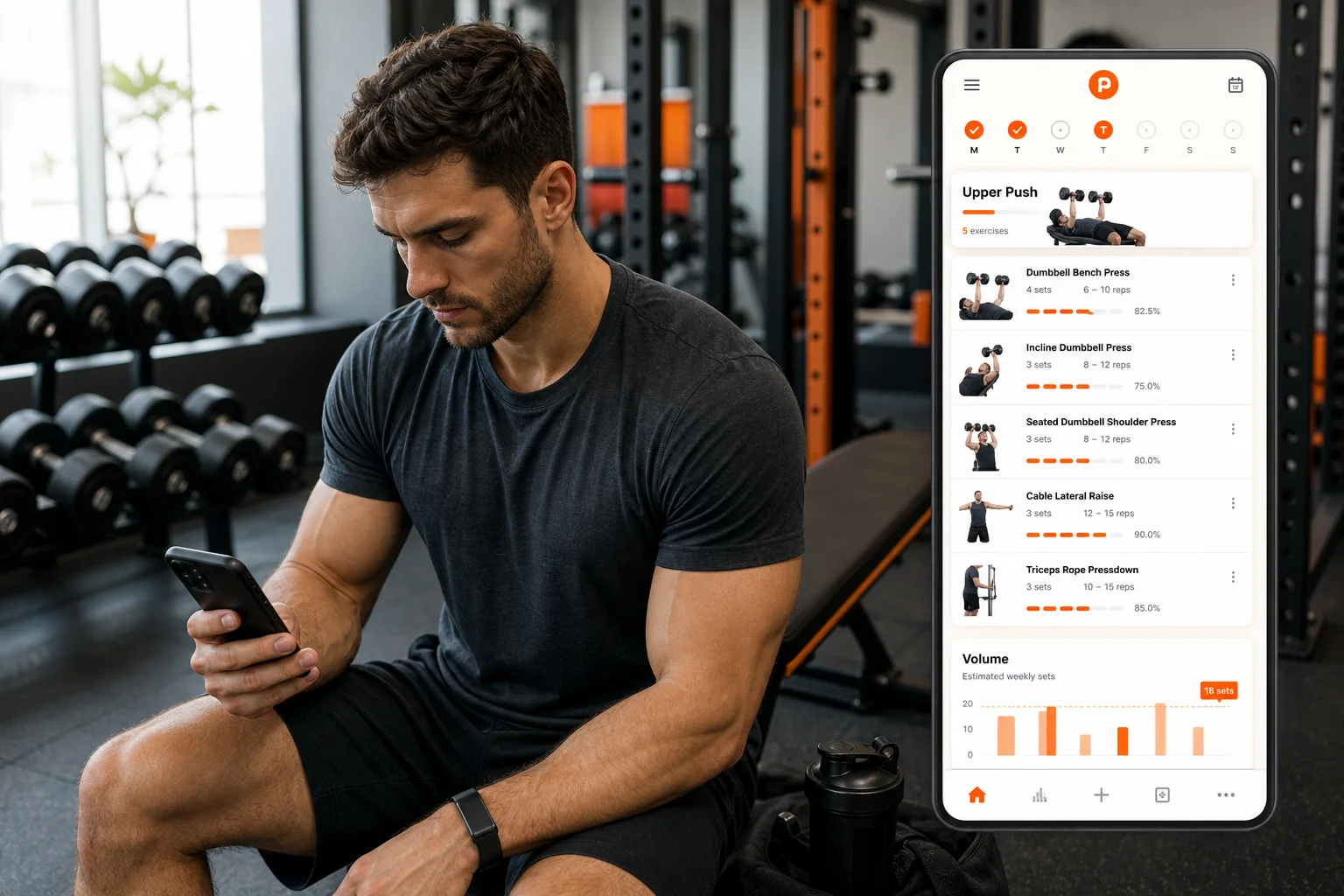
A 5 day workout plan for muscle gain can be an excellent choice if you enjoy training frequently and can recover between sessions. The key is not simply adding more gym days. A productive hypertrophy plan distributes challenging work across the week, trains each major muscle often enough, and gives you a clear way to improve over time.
This plan uses an upper/lower structure with a fifth session for shoulders and arms. It is designed for healthy adults with access to a typical gym, but the exercises can be adapted for home or limited-equipment training. The goal is to provide enough stimulus for growth without turning every session into an exhausting test of willpower.
What makes a 5 day workout plan effective for muscle gain?
Muscle growth is driven by repeated resistance-training stimulus, sufficient effort, adequate nutrition, and recovery. Your muscles do not grow because a workout looks complicated. They grow when you apply challenging tension consistently and gradually give your body a reason to adapt.
Current resistance-training guidance emphasizes consistency, individualized programming, and enough weekly volume for the target muscle groups. A useful starting point for many lifters is roughly 10 challenging sets per muscle group per week, although the best amount varies with training experience, exercise selection, recovery, and how close your sets are to failure.
Frequency is mainly a tool for organizing that volume. Training a muscle twice per week often makes it easier to perform high-quality sets than trying to complete all your work in one session. It also gives you more opportunities to practice key movements and assess whether performance is improving.
5 day workout plan for muscle gain
Use the following schedule as a starting framework. Perform most working sets with approximately 1–3 good repetitions left in reserve. Isolation exercises can occasionally be taken closer to failure, while demanding compound lifts usually benefit from maintaining a little more technical margin.
Day 1: Upper body strength and hypertrophy
- Barbell or dumbbell bench press: 3 sets of 6–10 reps
- Chest-supported row: 3 sets of 8–12 reps
- Incline dumbbell press: 3 sets of 8–12 reps
- Lat pulldown or assisted pull-up: 3 sets of 8–12 reps
- Cable lateral raise: 3 sets of 12–20 reps
- Rope triceps pressdown: 2–3 sets of 10–15 reps
- Dumbbell curl: 2–3 sets of 10–15 reps
Start the week with controlled compound pressing and pulling. Keep the first exercises focused and avoid using so much volume that the rest of the week suffers.
Day 2: Lower body strength and hypertrophy
- Back squat, front squat, or hack squat: 3 sets of 6–10 reps
- Romanian deadlift: 3 sets of 8–12 reps
- Leg press: 3 sets of 10–15 reps
- Seated or lying leg curl: 3 sets of 10–15 reps
- Standing calf raise: 3–4 sets of 8–15 reps
- Optional abdominal exercise: 2–3 sets of 10–20 reps
Use a range of knee-dominant and hip-dominant movements. If your lower back becomes the limiting factor during several exercises, choose more stable options such as a hack squat, leg press, or machine row.
Day 3: Rest or active recovery
Take a full rest day, walk, or perform light mobility work. Active recovery should help you feel better, not become another hard workout. Use this day to eat regular meals, hydrate, and prepare for the second half of the week.
Day 4: Upper body volume
- Incline barbell or machine press: 3 sets of 8–12 reps
- Pull-up or neutral-grip pulldown: 3 sets of 6–12 reps
- Machine chest press: 3 sets of 10–15 reps
- One-arm cable or dumbbell row: 3 sets of 10–15 reps
- Rear-delt fly: 3 sets of 12–20 reps
- Overhead cable triceps extension: 3 sets of 10–15 reps
- Incline dumbbell curl: 3 sets of 10–15 reps
This session uses slightly higher rep targets and stable exercises to accumulate quality volume. Keep the lowering phase controlled and use a range of motion that you can repeat consistently.
Day 5: Lower body volume and posterior-chain focus
- Leg press or pendulum squat: 3 sets of 8–15 reps
- Hip thrust or glute bridge: 3 sets of 8–12 reps
- Bulgarian split squat: 3 sets of 8–12 reps per leg
- Seated leg curl: 3 sets of 10–15 reps
- Leg extension: 2–3 sets of 12–20 reps
- Seated calf raise: 3–4 sets of 10–20 reps
- Optional loaded carry or core exercise: 2–3 sets
Finish the week with movements that train the glutes, hamstrings, and quadriceps without requiring another maximal-effort barbell session. If soreness from Day 2 is still high, reduce one exercise or use the lower end of the set range.
Day 6 and Day 7: Rest
Two consecutive rest days can work well after five training sessions. You can also place the rest days differently if your schedule requires it. For example, train Monday and Tuesday, rest Wednesday, train Thursday through Saturday, and rest Sunday.
How many sets and reps should you use?
The set and rep targets above are starting points, not fixed rules. Most exercises for muscle gain work well across a broad range of moderate repetitions when sets are performed with sufficient effort and good technique.
- Compound lifts: commonly 6–12 repetitions per set
- Machine and secondary lifts: commonly 8–15 repetitions per set
- Isolation exercises: commonly 10–20 repetitions per set
Begin near the lower end of the recommended set range if you are new to structured training. Add volume only when your performance is stable, soreness is manageable, and you are recovering well between sessions. More sets are not automatically better if they reduce the quality of your work or make you miss workouts.
How to apply progressive overload
Progressive overload means gradually increasing the training challenge. That does not always require adding weight every session. You can progress by completing more repetitions with the same load, adding a small amount of weight while maintaining technique, improving range of motion, or performing the same work with better control.
A simple method is double progression:
- Choose a rep range, such as 8–12.
- Start with a load that allows all sets to be completed with about 2–3 repetitions in reserve.
- Keep the same load until you reach the top of the range on every set.
- Increase the load slightly, then build back toward the top of the range.
For example, if you perform three sets of dumbbell presses at 10, 9, and 8 reps, keep the weight the following week and try to beat that total without sacrificing form. When you can complete 12, 12, and 12 with consistent technique, move to the next practical increment.
Track exercises, loads, repetitions, and how difficult each set felt. GymPT can help organize this information into a personalized plan and provide progress insights so you can make decisions from your training history rather than memory.
Do you need to train every set to failure?
No. Training to momentary failure is not required for muscle growth, especially when your weekly volume and exercise technique are already appropriate. Repeatedly taking heavy compound lifts to failure can create more fatigue than benefit and may affect the quality of later sets.
For most working sets, stop when you believe you could complete one to three additional technically sound repetitions. On safer isolation movements such as curls, lateral raises, leg extensions, or pressdowns, occasional sets closer to failure can be useful if recovery remains good.
Nutrition and recovery for muscle gain
A strong plan needs recovery support. Aim to consume enough total energy to maintain performance and, if appropriate for your goal, use a modest calorie surplus rather than an aggressive one. Include a reliable protein source in each meal. Evidence-based sports nutrition guidance commonly places daily protein needs for active adults around 1.4–2.0 grams per kilogram of body weight.
- Sleep consistently and protect your normal bedtime routine.
- Eat carbohydrates around training if they help you perform better.
- Drink enough fluids to avoid training while dehydrated.
- Keep at least one full rest day each week.
- Reduce volume temporarily when performance and motivation stay unusually low.
Recovery is individual. If your lifts are progressing, soreness is tolerable, and you feel ready for most sessions, the workload may be appropriate. If several exercises decline for two or more weeks, adjust volume, exercise selection, sleep, or nutrition before adding more training.
How to customize this muscle gain workout split
The best 5 day hypertrophy workout plan is the one you can repeat for months. Substitute exercises based on your equipment, comfort, and movement skill. A barbell squat can become a hack squat. Pull-ups can become pulldowns. Free-weight pressing can become machine pressing. The target muscle and progression method matter more than loyalty to one specific exercise.
If you have limited equipment, GymPT can build equipment-based alternatives and adjust your sessions around what you actually have available. If five days becomes difficult to maintain, switch to a 3 day workout plan for muscle gain rather than forcing an inconsistent schedule.
You can also compare this structure with a 5 day push pull legs workout plan or a 5 day full body workout plan. Each can work when weekly volume, effort, exercise quality, and recovery are managed well.
How long should you follow the plan?
Run the plan for at least six to eight weeks before making major changes, unless an exercise causes pain or clearly does not suit you. Evaluate progress using several measures: repetitions completed, loads used, technique, body weight trends, measurements, and how consistently you trained.
Do not judge the plan from one workout or one mirror check. Muscle gain is a gradual process, and daily performance can fluctuate because of sleep, stress, food, and hydration. A consistent log makes the useful trend easier to see.
For additional guidance on adapting sessions, see AI Workout Coach for Beginners and What an AI Workout Assistant Can Actually Do. GymPT can help you plan sessions, track workouts, adjust for available equipment, and stay consistent while your goals evolve.
Final takeaway
This 5 day workout plan for muscle gain works because it keeps the fundamentals visible: train each major muscle more than once, accumulate manageable weekly volume, progress gradually, and recover between sessions. Start with the minimum effective workload, record what you do, and adjust based on performance. A simple plan followed consistently will outperform a complicated plan that you cannot sustain.