workout progress tracking
Workout Progress Tracking: How to Log Training and See Real Results
Workout progress tracking turns scattered gym sessions into useful feedback. Learn what to log, how to measure consistency, and how to use progress reports without chasing misleading numbers.
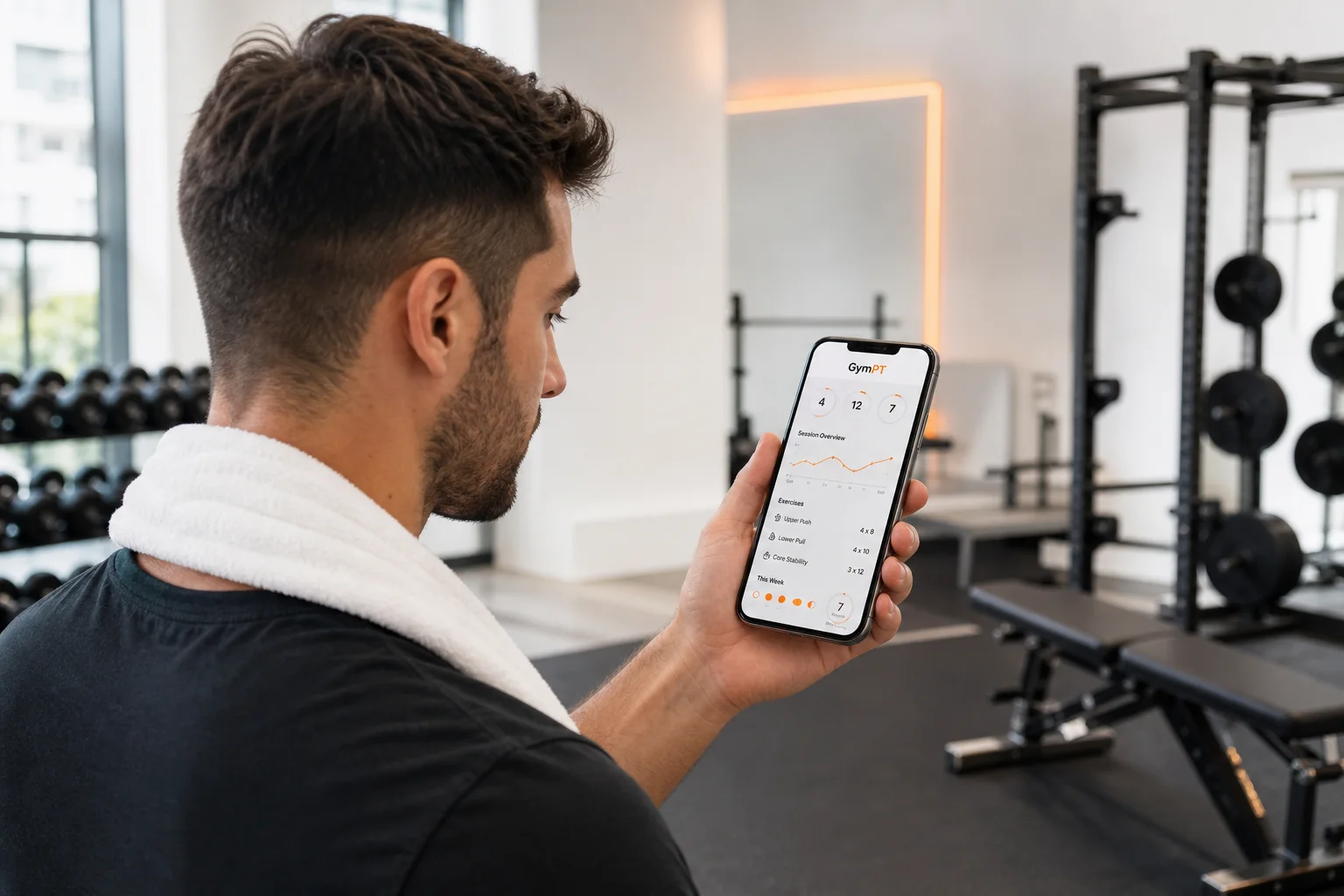
Progress in the gym is rarely a straight line. Some weeks you lift more weight, while other weeks you repeat the same numbers, change exercises, or simply focus on completing your sessions. That is why workout progress tracking matters: it helps you see the pattern behind your training instead of judging your results by a single workout or mirror check.
A useful training log does more than store numbers. It shows whether you are training consistently, gives you a reference for choosing your next challenge, and helps you notice when a plan needs adjusting. With the right information, progress reports become practical coaching tools rather than another source of pressure.
What is workout progress tracking?
Workout progress tracking is the process of recording and reviewing the details that describe your training. Depending on your goal, this may include:
- Exercises completed
- Sets, repetitions, and resistance used
- Workout duration or total sessions completed
- How difficult a set felt
- Range-of-motion or technique notes
- Body measurements or performance tests
- Weekly consistency and missed sessions
The goal is not to collect every possible metric. The goal is to record enough useful information to make better training decisions. For strength, load and repetitions may be central. For muscle gain, completed sets, exercise performance, and consistency can be more useful. For general fitness, session frequency, exercise variety, and perceived effort may matter most.
Why a training log improves your workouts
1. It replaces memory with evidence
It is easy to remember an unusually strong workout and forget the average sessions that built it. A training log gives you a more accurate view of what you have actually done. You can compare today’s performance with a previous session instead of guessing whether you are improving.
2. It makes progression more deliberate
Progressive overload does not always mean adding weight every workout. You may progress by completing an extra repetition, improving technique, using a fuller range of motion, adding a set, or performing the same work with better control. A log helps you identify these smaller improvements.
3. It highlights consistency
A perfect plan followed inconsistently is usually less useful than a simple plan you can repeat. Tracking completed sessions helps you see your actual training frequency. It also separates a temporary plateau from a period when missed workouts, schedule changes, or poor recovery have reduced your training stimulus.
4. It supports safer adjustments
When performance drops, the answer is not always to push harder. Your notes may show that the exercise was performed after a demanding movement, that recovery was limited, or that the planned workload was too high for your current schedule. This context can guide a more sensible adjustment.
For beginners who are still learning how to structure their week, a beginner-friendly AI gym plan can provide a clearer starting point before you begin comparing performance across sessions.
What to record in your workout tracking system
A practical training log should be quick enough to use during a busy workout. Start with the information that directly supports your goal.
Core workout details
- Date: This lets you review training frequency and spacing between sessions.
- Exercise: Use consistent exercise names so comparisons remain meaningful.
- Sets and repetitions: Record what you completed, not only what was planned.
- Resistance: Include weight, band level, machine setting, or bodyweight variation.
- Effort: A simple rating such as easy, moderate, hard, or an effort scale can add useful context.
Helpful optional details
- Rest time between sets
- Tempo or pause variations
- Technique notes
- Energy or readiness before training
- Any exercise substitutions
- Short notes about discomfort or unusual fatigue
You do not need to track all of these forever. Use optional details when they help explain your performance or when you are trying to solve a specific training problem.
How to measure progress beyond the number on the bar
Strength is valuable, but it is only one form of progress. A complete fitness progress report can combine several signals:
- Performance: More repetitions, more resistance, better control, or improved endurance.
- Consistency: A higher percentage of planned workouts completed.
- Work capacity: Completing a similar session with less excessive fatigue or shorter rest.
- Technique: More stable movement, better range of motion, or improved confidence.
- Body measurements: Changes in body weight, circumference, or progress photos when these fit your goal.
- Training tolerance: Recovering well enough to repeat your sessions without accumulating excessive fatigue.
Different metrics move at different speeds. Daily body weight can fluctuate because of hydration, food, and normal changes in stored carbohydrates. Workout performance can also vary with sleep and stress. Review trends over several weeks rather than reacting to one data point.
How often should you review your workout progress?
Use your log at three different time scales:
- During each workout: Record the completed work and any important notes.
- At the end of each week: Check how many sessions you completed and whether the workload matched your schedule.
- Every four to six weeks: Review performance trends, exercise selection, recovery, and whether your goal is still reflected in the plan.
Weekly reviews are useful for catching practical problems early. A longer review is better for judging meaningful changes in strength, muscle development, body composition, or conditioning. Avoid changing your entire plan after only one difficult session.
If you follow a structured split, compare the review process with the demands of your schedule. For example, a four-day upper-lower plan may distribute training stress differently from a three-day routine, so your progress report should consider both performance and recovery between sessions.
How to use progress reports to make better decisions
When performance is improving
Keep the plan stable long enough to benefit from it. You may increase resistance when you can complete the top of your target repetition range with strong technique, or add a small amount of work when recovery remains good. Small, repeatable changes are often easier to sustain than dramatic jumps.
When performance is stable
A plateau is not automatically a problem. If your technique is improving, your consistency is strong, and the exercise still fits your goal, repeating the current workload may be appropriate. You can also review sleep, rest periods, exercise order, and whether the target muscle or movement is receiving enough quality work.
When performance is declining
Look for patterns before making changes. Several difficult sessions in a row may suggest that the workload, frequency, or recovery demands need attention. Consider reducing unnecessary volume, adjusting exercise order, using a temporary variation, or taking a lighter training period. If you experience persistent pain or a concerning physical symptom, seek qualified professional advice rather than relying on an app or training log.
Common workout tracking mistakes
- Tracking only weight: A heavier load is not useful if technique and range of motion deteriorate.
- Changing exercises too often: Constant variation makes comparisons harder and can hide gradual improvement.
- Ignoring missed sessions: Consistency data explains why a program may appear ineffective.
- Comparing unrelated workouts: Compare the same exercise, setup, repetition range, and effort when possible.
- Overreacting to daily fluctuations: Look at trends instead of isolated wins or setbacks.
- Recording planned work instead of completed work: Honest data is more useful than an impressive-looking log.
Make workout progress tracking easier with GymPT
The best tracking system is the one you will actually use. GymPT combines personalized workout planning, equipment-based exercise selection, workout tracking, AI coach chat, body analysis, and progress insights in one place. That makes it easier to connect your completed sessions with the next training decision.
Instead of asking only, “Did I work out today?” you can review whether your training matches your goal, whether your weekly schedule is realistic, and where your performance is moving. GymPT can also help you adapt when your available equipment, time, or training experience changes.
If you are choosing between different ways to organize your week, explore this practical guide to a five-day gym workout plan. If your priority is muscle gain with fewer sessions, compare it with a three-day muscle-gain workout plan.
A simple weekly routine for better progress tracking
- Complete your planned workout and record the actual sets, repetitions, and resistance.
- Add one short note about effort, technique, or recovery.
- At the end of the week, count completed sessions and identify any substitutions.
- Compare repeated exercises with the previous week or training block.
- Choose one reasonable next step: maintain, add a repetition, increase resistance slightly, or adjust the workload.
Workout progress tracking works best when it remains simple and honest. You do not need a perfect dashboard or a complicated formula. Record the work, review the trend, and make one sensible adjustment at a time. Over months, those small decisions create a clearer path to consistent training and measurable progress.