beginner gym workout plan
Beginner Gym Workout Plan: A Simple 3-Day Routine That Builds Confidence
A practical beginner gym workout plan with full-body workouts, exercise guidance, safe progression, recovery tips, and an easy way to track your progress.
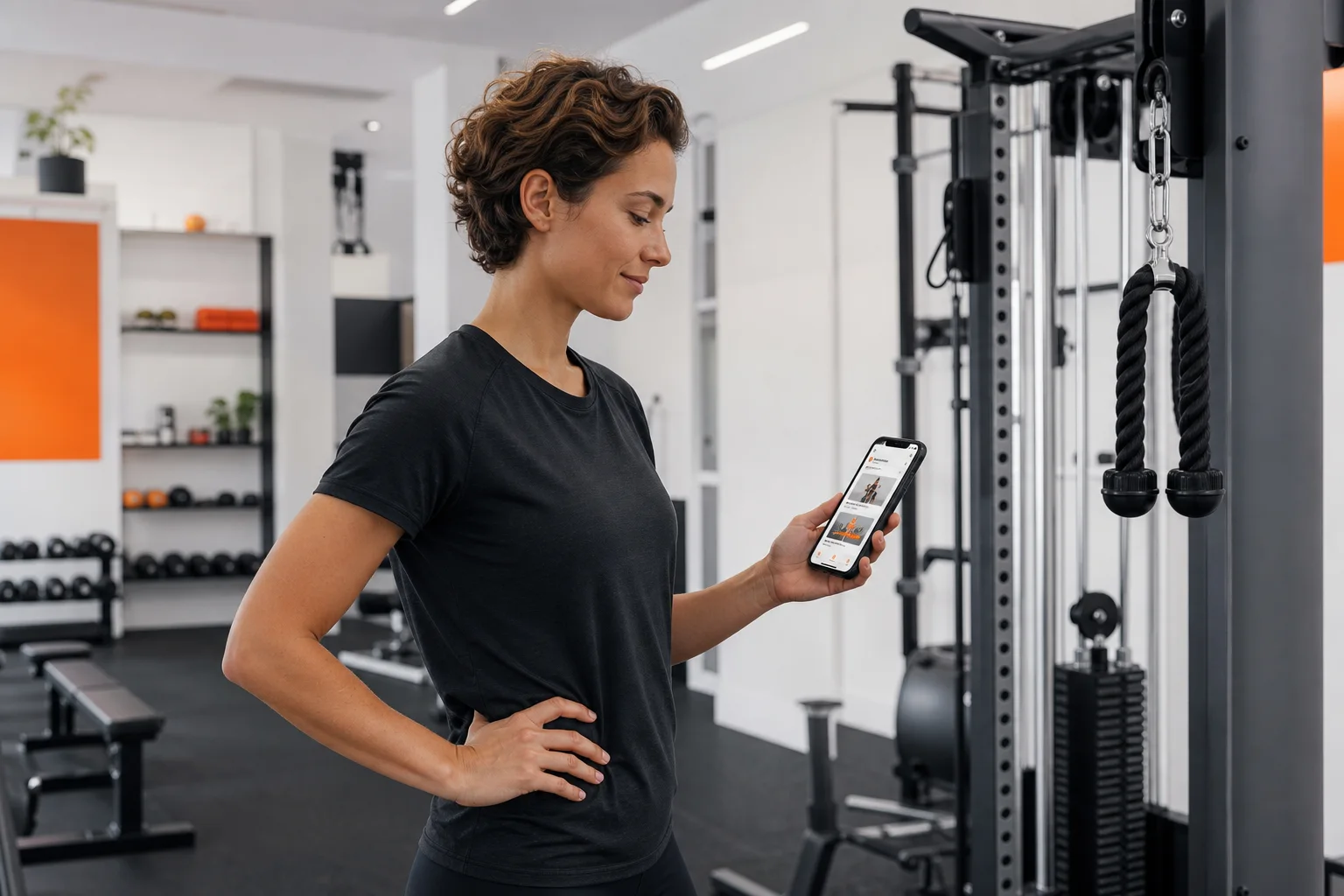
Starting at the gym can feel complicated, especially when every machine, exercise, and training split seems to promise better results. The best beginner gym workout plan is usually much simpler: train your major muscle groups consistently, use manageable weights, learn good movement patterns, and give your body enough time to recover.
This three-day full-body routine is designed for adults who are new to resistance training or returning after a long break. It prioritizes safe progression, repeatable structure, and exercises that are easy to adjust. You do not need to train to exhaustion or spend two hours in the gym. Your first goal is to build a routine you can perform well and repeat week after week.
How this beginner gym workout plan works
Train three non-consecutive days per week, such as Monday, Wednesday, and Friday. Each session covers your legs, pushing muscles, pulling muscles, and core. This gives you regular practice without concentrating all your weekly work into one demanding session.
Most exercises use 2 to 3 sets of 8 to 12 repetitions. Choose a weight that allows you to complete every repetition with controlled technique while still feeling that you could perform approximately two or three more repetitions. This approach gives you room to learn without making every set a test of your limits.
For general health, official activity guidelines recommend muscle-strengthening activity on at least two days per week. A three-day schedule is a practical option, but two weekly sessions can also be effective when that better matches your schedule.
Weekly schedule
- Day 1: Workout A
- Day 2: Rest, walking, or light mobility
- Day 3: Workout B
- Day 4: Rest, walking, or light mobility
- Day 5: Workout A or B, alternating each week
- Weekend: Recovery, optional easy cardio, or activity you enjoy
Use this rotation: Week 1 includes A, B, A. Week 2 includes B, A, B. That way, both workouts receive similar attention over time.
The 3-day beginner gym workout plan
Workout A
- Leg press or goblet squat: 2 sets of 8–12 repetitions
- Machine chest press or dumbbell bench press: 2 sets of 8–12 repetitions
- Seated cable row: 2 sets of 8–12 repetitions
- Romanian deadlift with dumbbells: 2 sets of 8–10 repetitions
- Seated dumbbell shoulder press: 2 sets of 8–12 repetitions
- Front plank: 2 sets of 20–40 seconds
Workout B
- Box squat, hack squat, or leg press: 2 sets of 8–12 repetitions
- Lat pulldown: 2 sets of 8–12 repetitions
- Incline dumbbell press: 2 sets of 8–12 repetitions
- Hip thrust or glute bridge: 2 sets of 10–12 repetitions
- Leg curl: 2 sets of 10–12 repetitions
- Dead bug: 2 sets of 6–10 controlled repetitions per side
Rest for around 90 seconds between most sets. You may need a little longer after leg exercises or whenever your breathing has not returned to a comfortable level. The exact rest period matters less than being ready to perform the next set with good form.
How to perform the exercises safely
Before adding weight, learn the basic movement of each exercise. Ask a qualified gym professional to check machine setup or demonstrate an unfamiliar movement. Adjust the seat, handles, and range of motion to suit your body rather than forcing yourself into an uncomfortable position.
- Lower-body exercises: Keep your feet stable and move through a range of motion you can control. Your knees should generally track in the same direction as your toes.
- Pressing exercises: Keep your shoulders controlled and avoid bouncing the weight. Stop the repetition if you lose a stable position.
- Pulling exercises: Start the movement by controlling your shoulder blades, then pull without jerking or swinging.
- Hip-hinge exercises: Push your hips back while keeping your spine in a comfortable, neutral position. Reduce the weight if you cannot control the descent.
- Core exercises: Focus on maintaining a steady trunk rather than holding a position for as long as possible.
Normal effort, muscle fatigue, and mild next-day soreness can occur when you begin training. Sharp pain, sudden pain, joint instability, chest discomfort, dizziness, or unusual shortness of breath are reasons to stop and seek appropriate professional advice.
How to progress without rushing
Progressive training does not mean increasing the weight every workout. It means gradually asking your body to do slightly more while maintaining technique. Beginners often improve quickly because they are learning the movements as well as adapting physically, but a steady approach is still the safest way to build momentum.
Use a repetition range
For an exercise programmed at 8–12 repetitions, begin with a weight that allows about 8 controlled repetitions. Over several sessions, aim to add repetitions while keeping your form consistent. When you can complete 12 repetitions on every set with clear control and a few repetitions still in reserve, increase the load by the smallest practical amount.
Change one variable at a time
Do not increase weight, sets, repetitions, and training days all at once. If you add weight, keep the number of sets the same. If you are recovering well and your technique is stable, you can later add a third set to selected exercises. This makes it easier to understand how your body responds.
Keep a training log
Record the exercise, weight, repetitions, and a short note about how the set felt. Tracking turns vague effort into useful information. It also helps you notice when a weight is too heavy, when recovery is poor, or when you are ready for a small progression. For more ideas, read Workout Progress Tracking: How to Log Training and See Real Results.
Warm-up, cardio, and recovery
Warm up efficiently
Start with five to ten minutes of easy movement, such as walking or cycling. Then perform a few lighter practice sets for your first major exercise. A warm-up should prepare you for training, not tire you out before the working sets begin.
Add cardio gradually
Walking, cycling, rowing, or other enjoyable cardio can support your general fitness. If you are new to exercise, begin with short, comfortable sessions and increase duration gradually. Avoid turning every lifting day into a demanding cardio workout, especially during your first few weeks.
Protect your recovery
Recovery includes sleep, food, hydration, rest days, and managing your total activity. Try to sleep on a regular schedule and eat enough overall to support your goals. Include protein-rich foods and a variety of fruits, vegetables, grains, and other foods you enjoy.
Muscles do not need to feel sore for a workout to be effective. If soreness is interfering with normal movement or your next session, reduce the weight, perform fewer sets, or take an additional rest day. Training consistently is more valuable than repeatedly creating extreme fatigue.
Common beginner gym mistakes to avoid
- Changing programs every week: Keep the core routine stable long enough to learn the exercises and see patterns in your progress.
- Starting too heavy: A weight that looks impressive is not useful if it changes your technique or limits your range of motion.
- Training only visible muscles: Include legs, back, pushing muscles, and core for a more balanced routine.
- Skipping rest days: More sessions are not automatically better. Your plan should match your current recovery capacity.
- Comparing yourself with experienced lifters: Compare your current performance with your own previous sessions.
- Chasing soreness: Soreness is not a reliable measure of workout quality.
When to adjust the plan
After four to six weeks, review your schedule and training log. If you are completing the workouts comfortably, recovering well, and maintaining good technique, you can add a small amount of weight, one additional set to a few exercises, or a little more cardio.
If your schedule is unpredictable, a personalized plan may be easier to follow than a fixed routine. GymPT can adapt workouts around your available days, equipment, training experience, and progress. You can also explore a custom fitness plan app approach when you need more flexibility.
Some beginners prefer training twice per week. In that case, perform Workout A and Workout B, leaving at least one rest day between them. A consistent two-day plan is better than an ambitious five-day plan that you cannot maintain. If you want a detailed version, see 2 Day Full Body Workout Plan: Build Strength With Smart Recovery.
Make your first month simple
Your first month should be about building skill and consistency, not proving how much you can lift. Arrive with a plan, warm up, perform controlled repetitions, record what you did, and leave enough energy to recover. Repeat that process three times per week and make only small changes when your body and schedule are ready.
The most effective beginner gym workout plan is the one that helps you train regularly, progress gradually, and feel confident enough to keep going. With a simple structure and clear feedback, each session becomes easier to understand—and more useful for your long-term fitness.