AI workout planner without equipment
AI Workout Planner Without Equipment: Build Smarter Home Workouts
An AI workout planner without equipment can turn limited space and bodyweight exercises into a structured training plan. Learn what to look for, how progression works, and how GymPT can help you train more consistently.
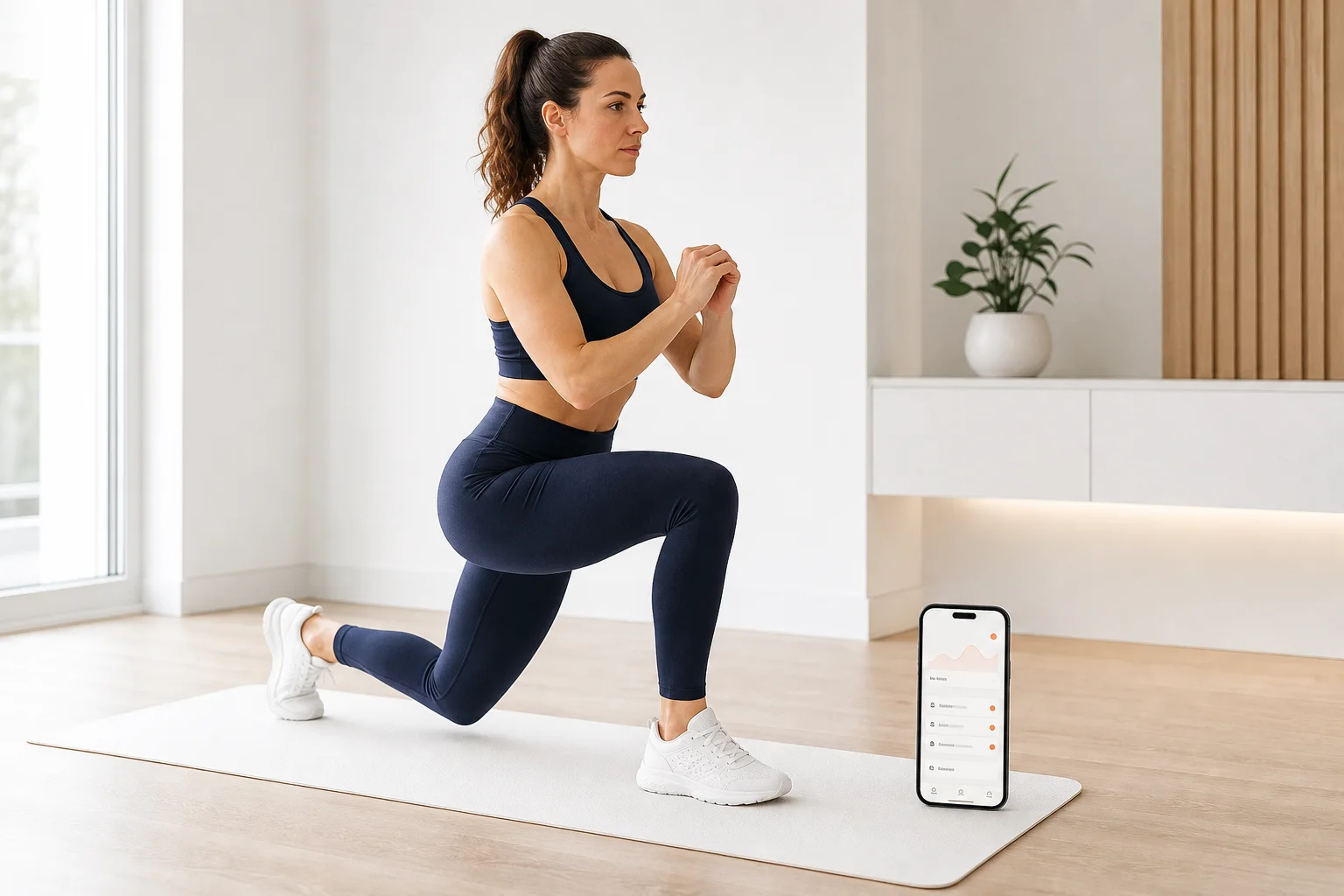
If you want to exercise at home, the biggest obstacle is often not motivation. It is knowing what to do next. Without a rack, dumbbells, or a full gym, many people fall back on random exercises, repeat the same short routine, or stop progressing altogether.
An AI workout planner without equipment can help solve that problem by organizing bodyweight movements around your goal, experience, available time, and training frequency. The best tools do not promise instant transformations or replace professional judgment. Instead, they make planning easier, offer sensible exercise options, and help you adjust training as you learn how your body responds.
What an AI workout planner without equipment actually does
An equipment-free AI workout planner is more than a list of push-ups and squats. It should use your information to build a repeatable training structure. That may include your fitness level, goals, preferred workout length, weekly schedule, movement preferences, and any equipment you do have available.
For example, a beginner who has 20 minutes three times per week needs a different plan from an experienced person training for strength or conditioning five days per week. A useful planner should also recognize that “no equipment” does not mean “no progression.” It can change exercise variations, repetitions, tempo, rest periods, range of motion, and weekly volume to keep the plan appropriately challenging.
In practice, AI can make several planning tasks simpler:
- Exercise selection: choosing movements that match your current level and training goal.
- Workout structure: arranging warm-up, main exercises, conditioning, and cooldown elements in a logical order.
- Progression: suggesting when to add repetitions, use a harder variation, or increase control.
- Adaptation: modifying a session when you have less time, lower energy, or different space available.
- Accountability: keeping your workouts visible and helping you review what you have completed.
This is where a bodyweight workout planner can be more useful than a static routine. It gives you a starting point and a way to continue making decisions instead of asking you to repeat the same workout indefinitely.
Can you build an effective workout without equipment?
Yes. Bodyweight training can challenge the major muscle groups when exercises are selected and progressed appropriately. Push-ups, split squats, lunges, hip bridges, squats, planks, crawling patterns, and controlled jumping movements can all contribute to a well-rounded program.
However, an equipment-free plan has practical limitations. It can be easier to train the chest, shoulders, legs, and core than to progressively load the upper back. Pulling movements may require a safe bar, sturdy table setup, or another appropriate option. A responsible planner should not assume that household furniture is safe for exercise, and it should not recommend unstable or improvised equipment without clear caution.
The goal is not to make every session extreme. The goal is to train consistently while gradually increasing the challenge. U.S. physical activity guidance recommends muscle-strengthening activity involving the major muscle groups on at least two days each week. Bodyweight calisthenics can count when they require meaningful effort and involve the relevant muscle groups.
For many people, the most effective starting point is a simple full-body routine performed two or three times per week. That schedule allows practice, recovery, and enough repetition to notice whether the plan is working.
How AI can personalize an equipment-free workout plan
1. It starts with your actual constraints
A plan is only useful if it fits your life. An AI home workout app should consider how many days you can train, how much time you have, whether you are working in a bedroom or living room, and whether jumping is appropriate for your space.
That information helps prevent a common mistake: choosing an impressive routine that is impossible to follow. A 15-minute plan you complete consistently is usually more valuable than a 60-minute plan that repeatedly gets skipped.
2. It matches exercises to your current ability
Many bodyweight exercises have easier and harder variations. A push-up may be performed against a wall, from an elevated surface, from the knees, or from the toes. A squat may be limited by range of motion, performed to a target, or progressed toward a single-leg variation.
An AI planner can help you begin at a realistic level rather than treating every exercise as all-or-nothing. That makes the first weeks less intimidating and gives you clear options when a movement is too difficult or too easy.
3. It manages progression instead of chasing novelty
Random variety can make workouts feel interesting, but progress usually requires some consistency. You need enough repeated practice to improve technique and compare performance over time.
Progression may come from completing more repetitions with good form, adding a set, slowing the lowering phase, pausing at the hardest point, increasing range of motion, shortening rest slightly, or moving to a more demanding variation. The right choice depends on your goal and experience.
A good planner should make these changes gradually. It should not encourage you to increase everything at once or treat soreness as proof that a workout was effective.
What a safer AI workout plan should include
AI coaching is useful when it supports good decisions. It becomes less useful when it sounds certain without having enough information. Before choosing an app, look for features that make the plan more transparent and adjustable.
- Clear exercise instructions: You should understand the intended movement, repetitions, rest, and technique cues.
- Difficulty alternatives: Each major exercise should have a simpler and more challenging option where practical.
- Session flexibility: The plan should adapt when you have only 10 or 20 minutes rather than forcing you to abandon the session.
- Training history: Completed workouts and performance notes should inform future recommendations.
- Recovery awareness: Hard sessions should not be stacked endlessly without considering rest and fatigue.
- Honest boundaries: The app should not diagnose injuries, promise guaranteed results, or present general fitness guidance as medical care.
It is also important to pay attention to how you feel during a workout. Stop an exercise if you experience sharp or unusual pain, dizziness, chest discomfort, or symptoms that concern you. If you have a health condition, are returning from an injury, or are unsure whether exercise is appropriate, seek guidance from a qualified healthcare or fitness professional before relying on an automated plan.
A practical equipment-free weekly structure
You do not need a complicated split to begin. A simple three-day structure can cover the main movement patterns while leaving space for recovery.
Day 1: Full-body strength practice
- Squat variation
- Push-up variation
- Hip bridge or hinge-focused movement
- Plank variation
- Optional low-impact conditioning finisher
Day 2: Lower body and core emphasis
- Reverse lunge or split squat variation
- Single-leg hip bridge or controlled hip extension
- Calf raise variation
- Side plank or anti-rotation-inspired core exercise
- Light mobility work
Day 3: Upper body and conditioning emphasis
- Incline, knee, or standard push-up variation
- Bear crawl or another floor-based movement
- Prone back extension or controlled posterior-chain exercise
- Mountain climber variation, marching, or step-based conditioning
- Core stability exercise
This is only a framework, not a universal prescription. Repetitions, sets, rest periods, and exercise variations should reflect your level. A beginner may start with one or two manageable sets, while a more experienced person may need greater volume or more demanding variations.
How GymPT can support training without equipment
GymPT is designed to help you turn your circumstances into a usable training plan. You can specify your goal, experience, schedule, and available equipment, including a preference for no equipment. The app can then organize workouts around those inputs instead of giving you a generic routine.
Its AI coach chat can also help you ask practical questions during the process: how to make a movement easier, how to adjust a session when you are short on time, or how to understand the purpose of an exercise. Body analysis and progress insights can add context, while workout tracking helps you see whether you are actually building consistency.
For a broader look at planning across a busy week, read AI Weekly Workout Planner: How to Build a Smarter Training Week. If you are new to home training, 5 Day Home Workout Plan: Build Strength in Small Spaces can help you think about exercise selection in limited space.
You can also compare the planning features that matter in Fitness App That Creates Workouts: What to Look For Before You Choose One, or learn how adaptive recommendations work in Adaptive Fitness Program App: How to Choose One That Fits Your Training.
How to get better results from your AI planner
- Give accurate information. Include your real schedule, training history, space limitations, and available equipment.
- Start below your maximum. Leave room to learn the movements and repeat the plan next week.
- Track what happened. Record completed sets, repetitions, perceived difficulty, and exercises that felt uncomfortable.
- Change one variable at a time. Progress by adding a few repetitions, improving control, or choosing a harder variation—not all three at once.
- Review the plan regularly. Your goals, schedule, and fitness level may change. Your program should change with them.
The best AI workout planner is not the one that produces the most complicated routine. It is the one that helps you make sensible training decisions, follow through repeatedly, and recognize when an adjustment—or human advice—is appropriate.
If you want structured, personalized home training without depending on a gym full of equipment, GymPT can give you a practical place to start and a clearer way to keep progressing.