adaptive fitness program app
Adaptive Fitness Program App: How to Choose One That Fits Your Training
The best adaptive fitness program app does more than generate a workout once. It adjusts training around your goals, equipment, schedule, performance, and real-world consistency.
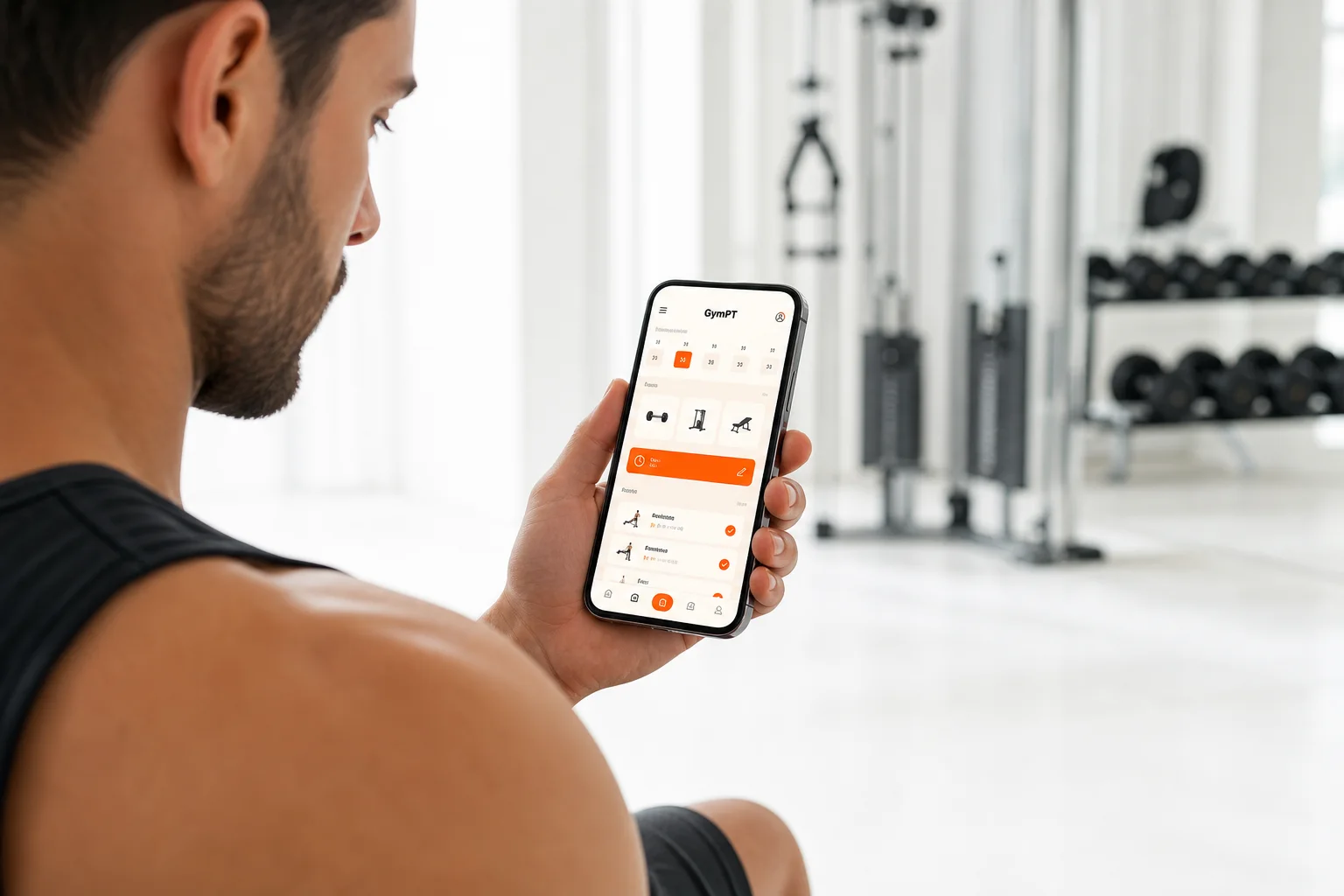
A good training plan should fit the person using it. Your goals, available equipment, weekly schedule, training experience, and ability to recover all influence what makes sense for your next workout. That is the idea behind an adaptive fitness program app: instead of giving every user the same routine, it uses your information and training history to make the plan more relevant over time.
That does not mean an app should constantly replace exercises at random. Effective adaptation is usually more practical. It might reduce the complexity of a session when you are short on time, suggest a home alternative when you cannot reach the gym, or guide gradual progression when your recent workouts show that you are ready for more.
This guide explains what to look for in an adaptive workout platform and how GymPT can serve as a practical example of the features that make personalization useful.
What is an adaptive fitness program app?
An adaptive fitness program app creates a starting plan and then adjusts that plan using new information. The input may include your goal, fitness level, preferred training days, available equipment, completed workouts, exercise performance, and feedback from your conversations with an AI coach.
The difference between a basic workout library and an adaptive system is the feedback loop:
- Plan: The app builds workouts around your stated goals and circumstances.
- Train: You complete the session and record exercises, sets, repetitions, load, or effort.
- Review: The app uses your activity and progress data to identify what is working and what may need attention.
- Adjust: Future sessions become more suitable for your current situation.
Research on personalized mobile interventions suggests that tailoring can improve lifestyle behavior, although personalization is not a guarantee of results. The quality of the inputs, the type of feedback, and whether the plan is realistic for the user all matter. In practice, the most valuable app is often the one that helps you follow a sensible plan consistently rather than the one with the most complicated algorithm.
Why fixed workout plans often stop working
A fixed plan can be useful, especially when you are learning the basics. However, a plan written for a generic user may become inconvenient when your circumstances change.
For example, you might begin with four available training days but only have three during a busy week. You may move from a fully equipped gym to home workouts with dumbbells. You may also find that a particular exercise is uncomfortable, too easy, too difficult, or unavailable at your facility.
Without a way to adapt, users commonly respond by skipping sessions, improvising without structure, or abandoning the plan completely. An adaptive workout plan helps preserve the overall training objective while changing the route used to reach it.
This is also why a custom fitness plan app should ask more than one question during setup. Your goal is important, but it is only one part of a useful training prescription.
Six features to look for in an adaptive workout app
1. Personalization beyond your goal
“Build muscle,” “get stronger,” or “improve fitness” are useful starting points, but they do not describe your complete training context. Look for an app that considers:
- Training experience and current ability
- Preferred number of sessions per week
- Typical session length
- Gym, home, outdoor, or mixed training
- Available equipment
- Exercise preferences and movements you want to avoid
- How you want to track progress
The more accurately the plan reflects your real life, the more likely you are to use it. This is one reason personalization should be practical rather than decorative. A different color theme is not adaptation; a useful alternative workout when your equipment changes is.
2. Equipment-aware exercise selection
Equipment is one of the clearest tests of whether an app is genuinely flexible. A plan that repeatedly recommends machines or free weights you do not have is not personalized enough.
A strong system should understand the difference between a barbell gym, a small home setup, and bodyweight-only training. It should also offer reasonable substitutions that preserve the main movement pattern or training purpose. A dumbbell press, for instance, may be a practical alternative when a bench press station is unavailable.
GymPT is designed to use your available equipment when creating workouts, helping you spend less time rewriting a plan and more time training.
3. Progression that responds to performance
Progressive overload does not require aggressive increases every session. It can involve adding repetitions, increasing resistance, improving control, completing an additional set, or gradually making a movement more challenging.
Current resistance-training guidance emphasizes consistency, training major muscle groups regularly, and progressing gradually. For many healthy adults, simple methods are enough; advanced techniques are optional rather than mandatory.
When comparing an AI workout planner, check whether it records what you actually did. If an app only displays a routine but does not use your completed sets, repetitions, and loads to inform future sessions, its “adaptive” label may be limited.
4. Schedule-aware planning
Your plan should fit your calendar. A program that assumes you can train at the same time every day may fail as soon as work, travel, family responsibilities, or fatigue interfere.
Useful schedule adaptation can include shorter sessions, flexible training days, full-body options when a planned workout is missed, and sensible rearrangement of sessions. The goal is not to reward perfection. It is to help you maintain a productive weekly rhythm.
If you normally train twice per week, a realistic two-day plan may be more valuable than a theoretically excellent five-day routine you rarely complete. For ideas on structuring limited training time, see this 2 day full body workout plan.
5. Coaching that explains decisions
Recommendations are easier to follow when you understand them. An AI coach chat can be useful for questions such as:
- Why is this exercise included?
- What can I do instead if the equipment is occupied?
- How should I approach the next set?
- How can I fit this workout into a shorter session?
- What should I focus on when learning this movement?
The best coaching experience should be clear about its limits. It can offer general fitness guidance, but it should not diagnose injuries or replace qualified medical or exercise-professional advice when you have a health concern.
6. Progress insights that are easy to understand
Tracking is useful when it helps you make a better decision. A dashboard filled with numbers is not automatically insightful.
Look for progress information that helps answer practical questions:
- Am I training consistently?
- Which exercises or movements are improving?
- Have I increased resistance or repetitions over time?
- Am I completing the sessions I planned?
- Where might my program need adjustment?
Feedback and monitoring are frequently identified as helpful behavior-change tools, particularly when they make progress visible. That does not mean every metric is equally important. Choose an app that emphasizes trends and useful next steps instead of encouraging you to obsess over a single workout.
How GymPT puts adaptation into practice
GymPT combines several features that support a more responsive training experience. You can begin with your goals, experience, and available equipment, then receive a workout plan that is more specific to your situation than a generic routine.
During training, workout tracking helps create a record of what you completed. That information can support future progression and give you a clearer view of consistency. The app also includes AI coach chat, so you can ask practical questions while navigating your plan.
GymPT’s body analysis feature can provide additional context for setting goals and observing changes over time. It should be treated as a fitness-progress aid rather than a medical assessment or a promise of a particular physical transformation.
Together, these features create a useful cycle: define your situation, train with structure, record the work, review the trend, and make the next decision with more information.
How to test an adaptive fitness program app before committing
Before choosing an app, run a simple quality check. Ask whether it can handle the situations that normally disrupt your training.
- Change your schedule: See whether you can move or shorten a workout without losing the week’s structure.
- Remove equipment: Check whether the app offers sensible alternatives for the tools you actually have.
- Record a real session: Find out whether sets, repetitions, resistance, and completion status are easy to log.
- Ask a coaching question: Look for an explanation that is specific and actionable, not generic encouragement.
- Review progress: Make sure the app shows trends that help you decide what to do next.
- Check the tone: The app should encourage consistency without making unrealistic promises or implying that missed workouts are failures.
You can also compare the app with the criteria discussed in this guide to fitness apps that create workouts and this guide to workout apps with an AI coach.
Who benefits most from an adaptive fitness app?
An adaptive system can be especially useful if you:
- Are new to structured training and want guidance without guessing
- Train across multiple locations or with changing equipment
- Have an inconsistent schedule but still want a weekly plan
- Want to combine strength, muscle-building, and general fitness goals
- Prefer a coach-like explanation when you are unsure what to do
- Want workout data and progress trends in one place
It may be less suitable if you need rehabilitation programming, medical supervision, or highly specialized athletic preparation. In those situations, use professional guidance and treat a general fitness app only as a supplementary tool when appropriate.
The bottom line
The best adaptive fitness program app is not the one that changes your plan the most. It is the one that makes appropriate adjustments while keeping your training coherent, progressive, and realistic.
Prioritize goal-based programming, equipment awareness, schedule flexibility, performance tracking, understandable coaching, and useful progress insights. GymPT brings these elements together in one AI personal trainer experience, helping you move from a generic routine toward training that reflects how you actually live and exercise.
Start with a plan you can follow, log what you do, and let better information improve the next workout.