AI fitness app for home workouts
How to Choose an AI Fitness App for Home Workouts That You’ll Actually Use
The best AI fitness app for home workouts is not the one with the most exercises. It is the one that turns your available space, equipment, schedule, and goals into a plan you can follow consistently.
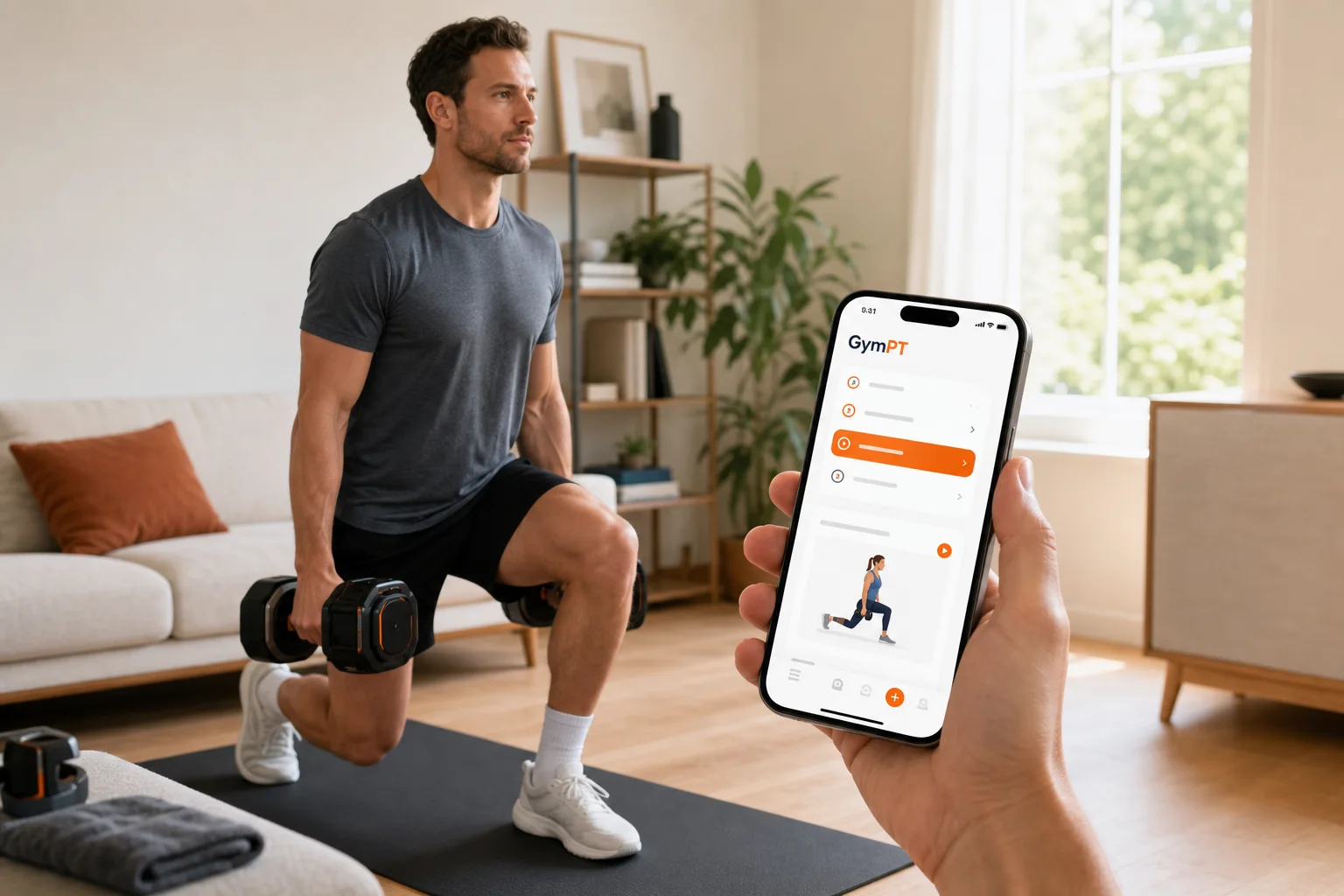
Home workouts are more convenient than ever, but convenience does not automatically create consistency. Without a clear plan, it is easy to repeat the same exercises, skip difficult sessions, or spend more time choosing a workout than completing one. An AI fitness app for home workouts can solve that problem by turning your goals, schedule, training experience, and available equipment into a practical routine.
However, not every app that uses the word “AI” provides useful coaching. Some offer little more than exercise libraries or random daily routines. The right app should help you make better training decisions while keeping the process simple enough to use week after week.
What should an AI fitness app for home workouts do?
A strong home workout app should do more than display exercises on a screen. It should help answer four important questions:
- What should I train today?
- How should I perform the workout?
- How can I adapt if my time or equipment changes?
- How do I know whether I am progressing?
These questions matter because effective training depends on more than exercise selection. Frequency, effort, recovery, progression, and adherence all influence results. Current activity guidelines recommend that adults combine regular aerobic activity with muscle-strengthening work on at least two days per week. A home-based plan can support that goal, whether you train with body weight, resistance bands, dumbbells, or a more complete setup.
7 features to compare before choosing a home workout app
1. Genuine personalization instead of generic routines
Personalization should be visible in the workouts you receive. At minimum, the app should consider your primary goal, training experience, preferred schedule, session duration, and limitations. A beginner who can train three times per week should not receive the same plan as an experienced lifter training five days per week.
Look for an app that adjusts the structure of your plan rather than simply changing the workout title. Useful personalization may include exercise difficulty, training volume, rest periods, movement selection, and weekly frequency.
GymPT is designed around this principle. It can create a personalized plan based on your goals and current situation, then provide a clearer path from one workout to the next. That is more useful than opening an exercise catalog and trying to build a balanced program from scratch.
2. Equipment-based workout planning
Home training spaces vary widely. One person may have adjustable dumbbells and a bench. Another may have a resistance band, a yoga mat, or no equipment at all. An app that ignores this difference will often recommend exercises you cannot perform or replacements that do not match the original movement.
Before subscribing, check whether you can select the equipment you actually own. The app should also offer sensible substitutions. For example, a pulling exercise may need a different solution when you do not have a pull-up bar. A lower-body workout may need to change when you have limited weights.
Equipment-aware programming makes your plan more realistic. It also reduces the friction that causes many people to abandon home workouts after the first few sessions.
3. Progression that is easy to understand
A workout can feel challenging without being progressive. If you perform the same sets, repetitions, and resistance indefinitely, your training may eventually stop providing a strong enough stimulus.
A useful AI personal trainer app should help you progress gradually through options such as:
- Adding repetitions within a target range
- Increasing resistance when your current load becomes manageable
- Adding a set when appropriate
- Using a more difficult variation
- Improving control, range of motion, or rest management
Progression does not need to be aggressive. In fact, a plan that constantly pushes you to do more may be difficult to recover from. The best approach balances challenge with your actual training history and schedule.
4. A coach you can ask questions
Home training often creates questions that a static plan cannot answer. You may wonder how to replace an exercise, whether a workout is too difficult, or how to adjust a session after missing a day.
AI coach chat can make an app more useful by giving you a place to ask those questions in context. The quality of the feature depends on whether it understands your plan and responds with practical guidance rather than generic motivation.
Good coaching should be specific. Instead of simply saying “keep going,” it might explain how to reduce difficulty, shorten a session, or choose a safer-feeling alternative. It should also be clear that fitness software is not a substitute for medical assessment or professional care when pain, injury, or a health concern is involved.
If conversational coaching is important to you, compare this feature with our guide to choosing a workout app with AI coach.
5. Workout tracking that captures useful information
Tracking is valuable when it helps you make decisions. Recording exercises, sets, repetitions, resistance, and completed sessions can reveal whether you are training consistently and progressing over time.
A basic calendar may be enough for some users, but a better workout tracking app can show patterns such as:
- How often you train each muscle group
- Whether your strength or repetitions are improving
- Which sessions you frequently skip
- How your current week compares with previous weeks
- Whether your plan needs more recovery or variety
GymPT includes workout tracking and progress insights so that completed sessions become part of an ongoing training picture. This helps shift your attention away from a single workout and toward the habits and performance trends that matter over time.
For a deeper explanation of what to record, read how workout progress tracking works.
6. Body analysis used responsibly
Some fitness apps offer body analysis to help users understand changes in measurements, proportions, or visual progress. This can be useful when presented as one part of the process, but it should not become the only measure of success.
Changes in strength, energy, workout consistency, mobility, and confidence can all be meaningful. Visual analysis should support better training decisions, not encourage unrealistic transformation promises or constant comparison.
When evaluating this feature, look for clear explanations of what is being assessed and how the information affects your plan. Avoid apps that make precise health or body-composition claims from limited information.
7. A simple experience that removes decisions
The best technology is often the technology you use without much effort. If starting a workout requires navigating through multiple menus, comparing dozens of routines, or manually rewriting every exercise, the app may create more work than it removes.
Look for a clear daily workout view, visible exercise instructions, simple logging, and an easy way to modify the session. The app should help you start quickly while still giving you enough control to adapt when life changes.
How to use an AI fitness app at home effectively
Start with a realistic weekly schedule
Choose the number of sessions you can consistently complete, not the number you wish you had time for. Two or three well-planned workouts can be a strong starting point. You can increase frequency later if your recovery and schedule support it.
If you need help choosing a structure, compare options such as a two-day full-body plan or a three-day workout plan. The ideal split is the one that lets you train major movement patterns regularly without making recovery unnecessarily difficult.
Give the app accurate information
Personalization is only as good as the information behind it. Be honest about your experience level, available equipment, preferred session length, and weekly availability. If a workout is consistently too easy or too difficult, use the app’s feedback and adjustment tools rather than silently skipping it.
Track performance, not just attendance
Completing a workout is important, but your log should also help you see how the work is developing. Record the resistance you use, the repetitions you complete, and how challenging the final sets feel. Over several weeks, these details can show whether your plan is moving in the right direction.
Keep progression gradual
You do not need to test your limits every session. Add difficulty when your technique is controlled, your repetitions are consistent, and the current level no longer feels appropriately challenging. If fatigue accumulates, a lighter session or an extra recovery day may be the better decision.
GymPT as a practical AI home workout example
GymPT brings several of these features into one training experience. It can create personalized workout plans, account for the equipment available to you, provide AI coach chat, support body analysis, track workouts, and surface progress insights.
That combination matters because home training problems are usually connected. A plan may fail because it does not fit your equipment. You may stop progressing because your workouts are not being adjusted. You may lose motivation because you cannot see whether your effort is adding up.
By combining planning, coaching, adaptation, and tracking, GymPT is intended to make home workouts more structured without making them complicated. It is not about replacing your judgment. It is about giving you a useful starting point, practical adjustments, and a clearer record of what you are doing.
Final checklist: choosing the right app
Before choosing an AI fitness app for home workouts, ask whether it can:
- Create a plan around your goals, experience, schedule, and session length
- Adapt workouts to the equipment you have at home
- Offer exercise substitutions when your circumstances change
- Explain progression in a realistic, gradual way
- Answer practical training questions through an AI coach
- Track completed workouts and performance details
- Show useful progress insights without making exaggerated claims
- Keep the daily experience simple enough to use consistently
An effective app should make training decisions easier, not overwhelm you with features. If it gives you a realistic plan, helps you adapt, and shows how your work is building over time, it can become a valuable part of your home fitness routine.