fitness progress app
Fitness Progress App: How to Track Workouts, Trends, and Consistency
A fitness progress app should do more than count workouts. Learn what to track, how to review performance trends, and how GymPT helps you train with more clarity and consistency.
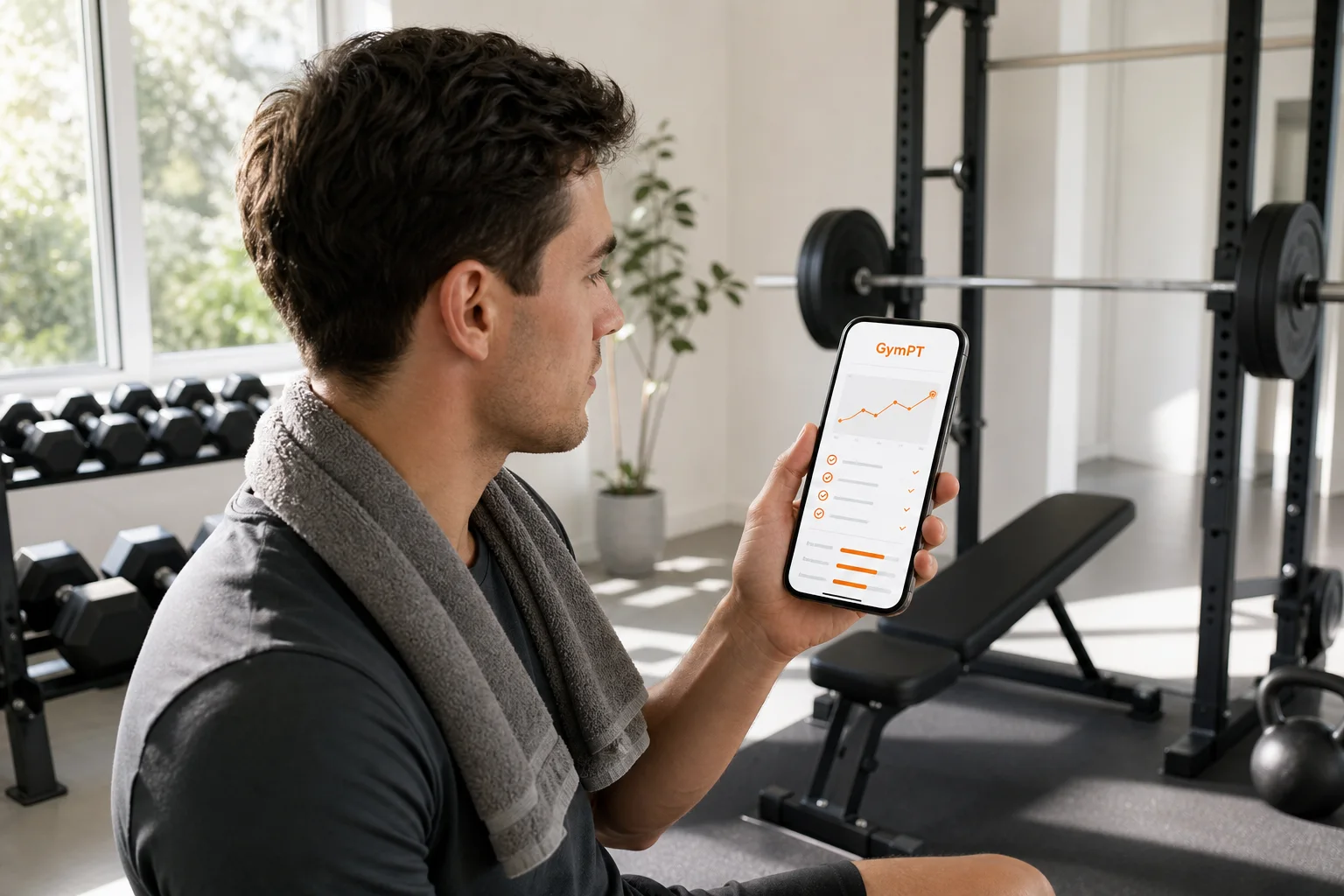
Progress is easier to maintain when you can see it. A fitness progress app turns scattered workout details into a clear record of what you did, how your performance is changing, and what to focus on next.
That matters because fitness progress is not always visible from day to day. Your body weight may stay the same while you complete more repetitions, lift heavier loads, improve your technique, or recover better between sessions. A useful app helps you capture those changes instead of relying on memory or motivation alone.
What should a fitness progress app track?
The best tracking system is detailed enough to guide decisions but simple enough to use consistently. Start with the information that directly explains your training performance.
- Exercises: Record the movement, variation, and equipment used.
- Sets and repetitions: These show how much work you completed.
- Load or resistance: Note the weight, band tension, or difficulty level when relevant.
- Workout duration: This helps you understand how efficiently you train.
- Session completion: A completed workout is an important part of your consistency record.
- Optional notes: Add information about energy, technique, difficulty, or available equipment.
You do not need to measure everything. Choose metrics that match your goal. Someone focused on strength may prioritize load and repetitions. Someone training for general fitness may care more about weekly sessions, movement variety, and how consistently they complete planned workouts.
Why workout logs are more useful than memory
It is easy to remember your best workout and forget the ordinary sessions that built it. A written or digital log gives you a more accurate picture. It can show whether you are training regularly, repeating the same load for several weeks, or progressing faster in some exercises than others.
Self-monitoring is also useful because it makes behavior more visible. Research on physical activity interventions has found that self-monitoring and feedback can support improvements in activity behavior, although results depend on the quality and duration of the overall approach. In practical terms, recording a workout is not magic. Its value comes from using the information to make better choices.
For example, your log might reveal that:
- You complete three sessions most weeks, even when individual workouts feel inconsistent.
- Your lower-body exercises are progressing while your upper-body exercises need more time.
- You perform better when sessions are shorter and scheduled earlier in the day.
- You often skip a movement because your plan does not match the equipment available.
- Your performance drops after several demanding sessions without an easier training day.
These insights are more actionable than simply asking whether you “feel fitter.”
Four types of progress to review
A fitness progress tracker should help you look beyond a single number. Review progress across four categories.
1. Consistency progress
Consistency is the foundation of almost every training goal. Review how many planned workouts you completed over the past two to four weeks. Also look for patterns: Do you train more reliably on certain days? Are missed sessions caused by schedule conflicts, lack of equipment, or overly ambitious programming?
A missed workout is not a failure. It is information. If the same problem appears repeatedly, adjust the plan rather than simply demanding more willpower.
2. Performance progress
Performance progress can include more weight, more repetitions, better control, a longer session, or improved work capacity. You do not need to increase every variable at once. A gradual improvement in one meaningful measure is often enough.
Use comparable conditions when possible. Compare the same exercise variation, similar range of motion, and a similar effort level. Changing the exercise and the load at the same time can make the trend difficult to interpret.
3. Training-quality progress
Numbers are useful, but quality matters too. Track whether your technique feels more controlled, whether you can maintain your target tempo, and whether a movement feels more stable. These changes may appear before a large increase in load.
Notes are especially helpful here. A short comment such as “last two repetitions were controlled” or “used a slower lowering phase” gives future sessions more context.
4. Goal progress
Your tracking should connect to the result you actually want. For strength, review performance in key movements. For muscle gain, review training volume and progression over time. For fat loss or general fitness, consider consistency, activity habits, and performance alongside body measurements.
A progress report should support a broader view, not create pressure to judge your body from one measurement.
How to read workout performance trends
Daily performance fluctuates. Sleep, stress, work demands, nutrition, and normal variation can all affect one session. That is why trends are usually more useful than isolated results.
Try reviewing your data once per week and more deeply once per month. Ask:
- Did I complete the sessions I planned?
- Which exercises improved in repetitions, load, control, or effort?
- Where did performance remain flat?
- Did my plan fit my real schedule and equipment?
- What is one adjustment that could improve the next training block?
Look for direction rather than perfection. A trend can still be positive when some sessions are weaker than others. For example, completing similar work with better control, fewer pauses, or less perceived difficulty may represent progress even if the load has not changed.
Use progress data to make smarter training adjustments
Tracking is most valuable when it changes what you do next. Here are practical ways to turn a log into a decision.
When performance is improving
Keep the plan stable long enough to understand why it is working. If you can complete the target repetitions with good technique and the effort feels manageable, a small increase in resistance or repetitions may be appropriate. Progress gradually instead of changing several variables at once.
When performance is flat
First, check consistency. A plan cannot produce a clear trend if sessions are frequently missed. Then check exercise difficulty, recovery between sessions, and whether the program matches your current level. Sometimes the best adjustment is not a harder workout but a more realistic schedule.
When performance is declining
Review recent training load and life circumstances. Several demanding sessions, poor sleep, or an inconvenient schedule can affect performance. Consider reducing unnecessary complexity, taking an easier session, or adjusting exercise selection. Persistent pain or concerning symptoms should be addressed by an appropriate qualified professional; an app is not a substitute for medical advice.
Why consistency features matter more than flashy dashboards
A polished progress chart is useful only if it helps you take action. The most helpful features are usually simple:
- Fast workout logging with minimal friction.
- Clear weekly and monthly summaries.
- Progress views for repetitions, resistance, and completed sessions.
- Reminders or prompts that support your intended routine.
- Plan adjustments based on goals, experience, equipment, and recent performance.
- Notes that preserve context behind the numbers.
Feedback can be especially useful when it is personalized. Instead of showing a generic streak, a smart system can help you understand that you have trained consistently but may need more recovery, or that your plan should be adapted because you are working out at home with limited equipment.
GymPT combines workout tracking with personalized plans, AI coach chat, body analysis, equipment-based training, and progress insights. That means your log can become part of a larger training conversation: what you completed, how it went, and what your next session should prioritize.
Build a simple weekly progress review
You can get meaningful value from a fitness progress app without spending a long time analyzing data. Use this five-minute review at the end of each week:
- Check completion: Compare planned sessions with completed sessions.
- Choose two performance markers: For example, repetitions in a bodyweight exercise and load in a dumbbell movement.
- Identify one positive trend: This could be better consistency, improved control, or a small performance increase.
- Identify one obstacle: Note scheduling, recovery, equipment, or exercise difficulty.
- Set one next-step adjustment: Keep it specific and realistic.
If you train at home, your equipment can change how you interpret progress. A dumbbell workout plan matched to the equipment you have makes your data easier to compare because the exercise options are realistic from the start. If you train without equipment, a no-equipment workout plan can still provide clear progression through repetitions, tempo, range of motion, and exercise variations.
Make your progress easier to trust
Good data depends on good habits. Log workouts as soon as possible, use consistent exercise names, and avoid changing too many variables at once. When you modify a movement, record the variation instead of treating it as the same exercise.
Also remember that progress is personal. Comparing your current log with someone else’s numbers rarely helps because training history, goals, recovery, and equipment differ. Compare your current trend with your own previous baseline.
If your schedule changes, your plan should change with it. A workout plan that adapts to your goals and recovery may be more useful than a rigid calendar you cannot follow. And if you are still building your routine, a weekly workout plan generator can help turn broad goals into a repeatable structure.
Final takeaway
A fitness progress app should help you answer three practical questions: What did I do? What is changing? What should I do next?
Track the details that matter, review trends instead of isolated sessions, and use the information to make small, thoughtful adjustments. When logging, coaching, and plan adaptation work together, progress becomes easier to understand—and consistency becomes easier to maintain.