workout plan generator
Workout Plan Generator: Build a Weekly Routine That Adapts to You
A good workout plan generator does more than list exercises. It helps you organize training around your goals, available time, equipment, recovery, and real-world progress.
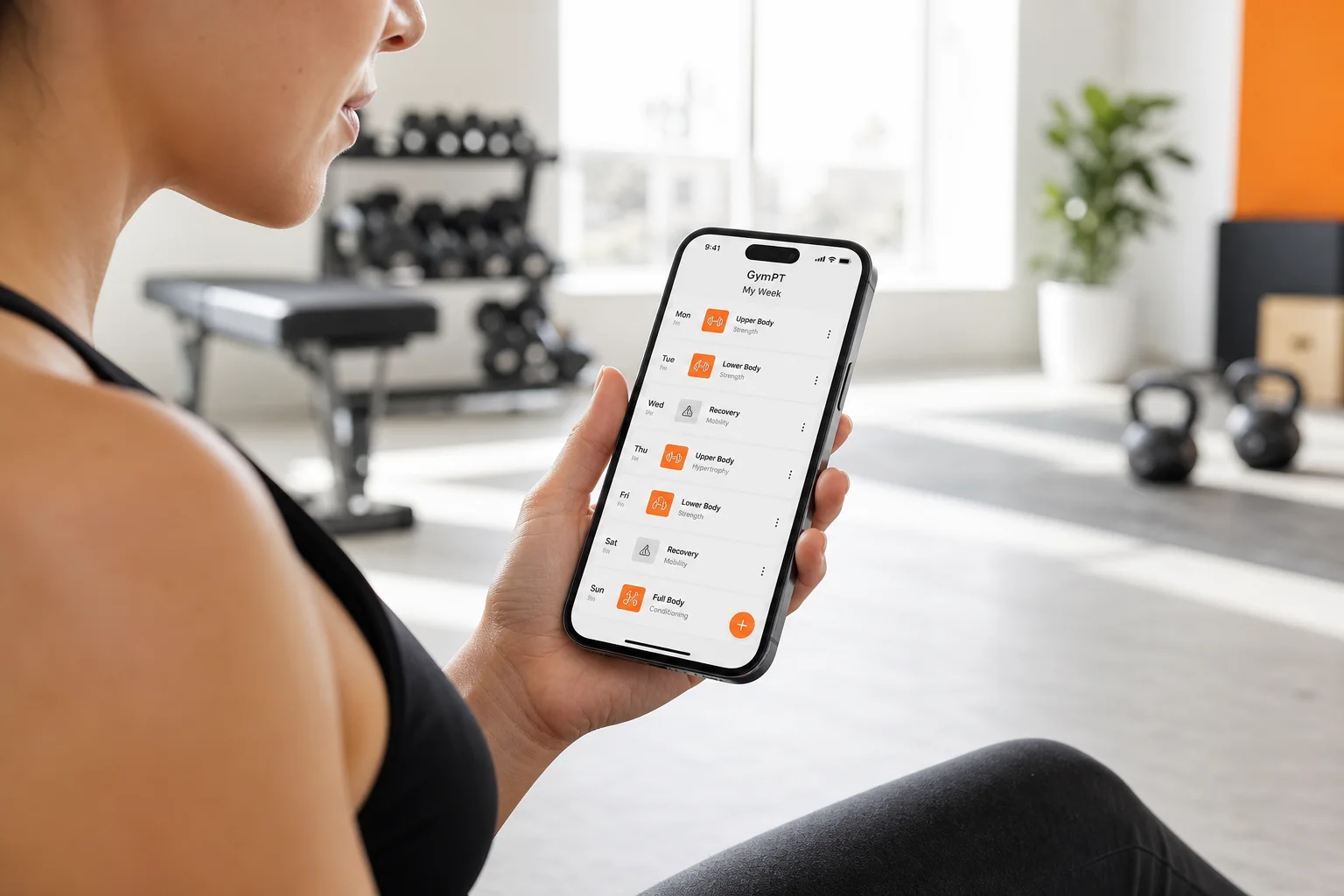
A workout plan generator can save you time, but the best tools do more than place random exercises into a calendar. A useful plan should connect your goal to a realistic weekly structure, match the equipment you have, account for recovery, and adjust when your schedule or performance changes.
That matters because effective training is rarely about finding one perfect routine. It is about following a plan consistently, progressing gradually, and making sensible adjustments when life gets in the way.
What should a workout plan generator actually do?
At a minimum, a workout plan generator should turn your starting information into a clear training schedule. That information may include your primary goal, experience level, preferred training days, available equipment, session length, and the types of workouts you enjoy.
A more useful generator also explains the structure behind the plan. Instead of simply telling you to train on Monday, Wednesday, and Friday, it should help answer questions such as:
- How many resistance-training sessions fit your week?
- Which muscle groups or movement patterns should be trained together?
- Where should rest or lighter sessions go?
- How much work can you realistically complete in each session?
- What should change if you miss a workout or feel unusually fatigued?
This is the difference between a static routine and a personalized workout plan. The routine is not valuable because it looks complicated. It is valuable because it is specific enough to follow and flexible enough to survive real life.
Start with the goal, not the exercise list
Your goal should influence the weekly design before individual exercises are selected. Strength, muscle growth, general fitness, and fat loss can all involve resistance training, but they do not necessarily require the same emphasis.
For strength
A strength-focused week usually benefits from prioritizing key compound movements, practicing them consistently, and managing fatigue so performance stays high. Sessions may use heavier loads, longer rest periods, and fewer exercises performed with more attention to technique.
For muscle growth
A muscle-growth plan generally needs enough weekly work for each major muscle group, spread across sessions that you can recover from. Multiple sets and a repeatable progression method are usually more important than constantly changing exercises.
For general fitness
A general-fitness plan can combine full-body resistance training, cardiovascular work, mobility, and enjoyable activities. The most effective schedule is often the one that makes regular movement easy to maintain rather than the one with the highest training volume.
For fat loss
Training can support fat loss by helping you maintain muscle and stay active, but the plan should remain sustainable. A practical schedule leaves enough energy for daily life and does not assume that every workout must be maximal.
A good workout plan generator should ask about your goal first, then use that answer to guide exercise selection, volume, intensity, and recovery.
Build the week around your available time
The number of days you can train is one of the most important planning decisions. More days are not automatically better. A four-day routine that you complete consistently is more useful than a six-day plan that repeatedly gets interrupted.
Here are several practical weekly structures:
- Two days: Full-body sessions with a small number of high-value movements.
- Three days: Full-body training with rest days between sessions, or a rotating emphasis across the week.
- Four days: An upper-lower split or two full-body sessions with different priorities.
- Five days: A structured split with shorter sessions, provided recovery and scheduling are realistic.
For many adults, resistance training on at least two days per week is a useful baseline for health and physical function. Your personal plan may include more sessions depending on your goals, experience, time, and ability to recover.
The weekly calendar should also reflect your life. If Tuesdays are consistently busy, placing your hardest session there creates unnecessary friction. A personalized schedule can use shorter sessions, flexible training windows, or a rolling sequence instead of assuming that every week looks identical.
For more ideas, compare different structures in our guide to the weekly workout planner.
Use training frequency to distribute the workload
Training frequency describes how often you train during the week. It can refer to total workout sessions or how often you train a specific muscle group or movement pattern.
Frequency is mainly a planning tool. It helps distribute weekly work so that individual sessions are manageable. If all your lower-body training is placed into one very long session, the later exercises may suffer from fatigue. Splitting that work across two sessions may make the plan easier to complete with better quality.
Research on resistance-training frequency suggests that when total weekly volume is similar, frequency alone is not the deciding factor for muscle growth. In practice, you can often choose a frequency based on your schedule and preference. Training a muscle group more than once per week may make it easier to distribute volume, but it is not a requirement for every person or goal.
This is why a generator should not treat a particular split as universally superior. It should help you find the lowest-complexity structure that supports your target amount of work.
Plan recovery as part of the program
Recovery is not empty space between workouts. It is part of the weekly design. A plan that ignores recovery can become difficult to maintain even if each individual workout looks reasonable.
When organizing your week, consider:
- Repeated stress: Avoid placing demanding sessions for the same muscle groups or movement patterns too close together when performance is likely to suffer.
- Session length: Very long workouts may be harder to complete and track accurately.
- Life stress: Busy periods, poor sleep, travel, and physically demanding work can affect how much training you can handle.
- Easy options: Keep a lower-volume or shorter-session alternative available for difficult days.
- Planned flexibility: Decide in advance what happens if you miss a session instead of trying to squeeze everything into the next day.
A flexible plan does not mean lowering the standard every time training feels challenging. It means using clear rules. For example, you might reduce the number of accessory exercises, select a shorter workout, or continue the sequence on the next available day.
If recovery is a major concern, an adaptive workout plan can help you think through how training should respond to changing readiness and availability.
Match the plan to your equipment
Exercise selection only works when it matches your environment. A plan built around barbells is not useful if you train at home with adjustable dumbbells. Likewise, a home routine may underuse the equipment available in a full gym.
An equipment-aware generator should make practical substitutions while preserving the purpose of the exercise. For example, a horizontal pushing pattern might be trained with a barbell bench press, dumbbell press, machine press, or a suitable bodyweight variation depending on what you have available.
The goal is not to make every variation identical. The goal is to maintain a similar movement pattern or target while respecting your equipment, skill level, and comfort.
Equipment selection can also improve consistency. If a plan requires a different setup for every exercise, your sessions may take longer and become harder to follow. A focused plan with familiar equipment can be easier to execute and progress.
See our guide to equipment-based workout plans for more ways to organize training around the tools you actually use.
Make progression simple and measurable
A plan becomes more useful when it tells you how to progress. Progression does not always mean adding weight every workout. It can also involve completing more repetitions with the same load, improving technique, adding a set, reducing unnecessary rest, or using a more challenging variation.
One practical approach is double progression:
- Choose a repetition range, such as 8 to 12 repetitions.
- Keep the load stable while you work toward the upper end of the range.
- When you can complete the target repetitions with good form, increase the load slightly.
- Return to the lower end of the range and build again.
For beginners, the first form of progression may simply be learning the movement and completing the planned sessions. For more experienced trainees, tracking sets, repetitions, load, and perceived effort can make adjustments more precise.
Progress should be evaluated over several weeks, not from one workout. Daily performance can vary, so the plan should look for trends such as repeated improvements, stalled lifts, consistently shortened sessions, or a growing need to reduce workload.
Look for adaptation, not random variation
Some workout generators change exercises constantly to appear personalized. That can make a plan feel fresh, but too much variation makes it difficult to know what is working.
Useful adaptation is purposeful. A plan might change when:
- Your available training days change.
- You no longer have access to a particular piece of equipment.
- A movement does not fit your experience level or preferences.
- Your performance is improving and the current workload is too easy.
- Your performance is repeatedly declining and the plan needs less stress.
- You want to shift emphasis toward a different goal.
The best adjustments preserve continuity. They do not discard the entire plan after one missed workout. They use your training history to make the next decision more relevant.
This is where an AI coach can be helpful: not as a replacement for judgment, but as a way to organize your data, explain options, and reduce the friction of making small changes.
Our article on the personalized fitness coach explores what AI can contribute to training and where human judgment still matters.
How GymPT approaches workout planning
GymPT is designed to make workout planning more personal and easier to maintain. You can use your goals, schedule, available equipment, and training preferences to create a starting routine, then use workout tracking and progress insights to understand how that routine is working.
Its AI coach chat can help you think through substitutions, scheduling changes, and questions that come up during training. Body analysis and progress information can provide additional context, while the plan remains centered on practical workouts you can complete.
The most important step is still consistency. Start with a weekly structure that fits your life, follow it long enough to collect useful information, and make adjustments based on performance and recovery rather than impulse.
A simple checklist for choosing a workout plan generator
Before committing to a tool, check whether it can:
- Build around a clearly defined training goal.
- Use your actual number of available training days.
- Adapt to home, gym, or limited equipment.
- Include rest days and flexible alternatives.
- Track sets, repetitions, load, and completed workouts.
- Explain how progression is supposed to work.
- Adjust the plan when your schedule or performance changes.
- Keep the routine clear enough to follow without constant guesswork.
A workout plan generator should make training decisions easier, not make your routine more complicated. Choose the structure you can repeat, use progression you can measure, and let your plan evolve as your goals and circumstances change.