personalized fitness coach
Personalized Fitness Coach: What AI Can—and Cannot—Do for Your Training
A personalized fitness coach should do more than generate random workouts. Learn how AI can adapt training to your goals, schedule, equipment, and progress while keeping expectations realistic.
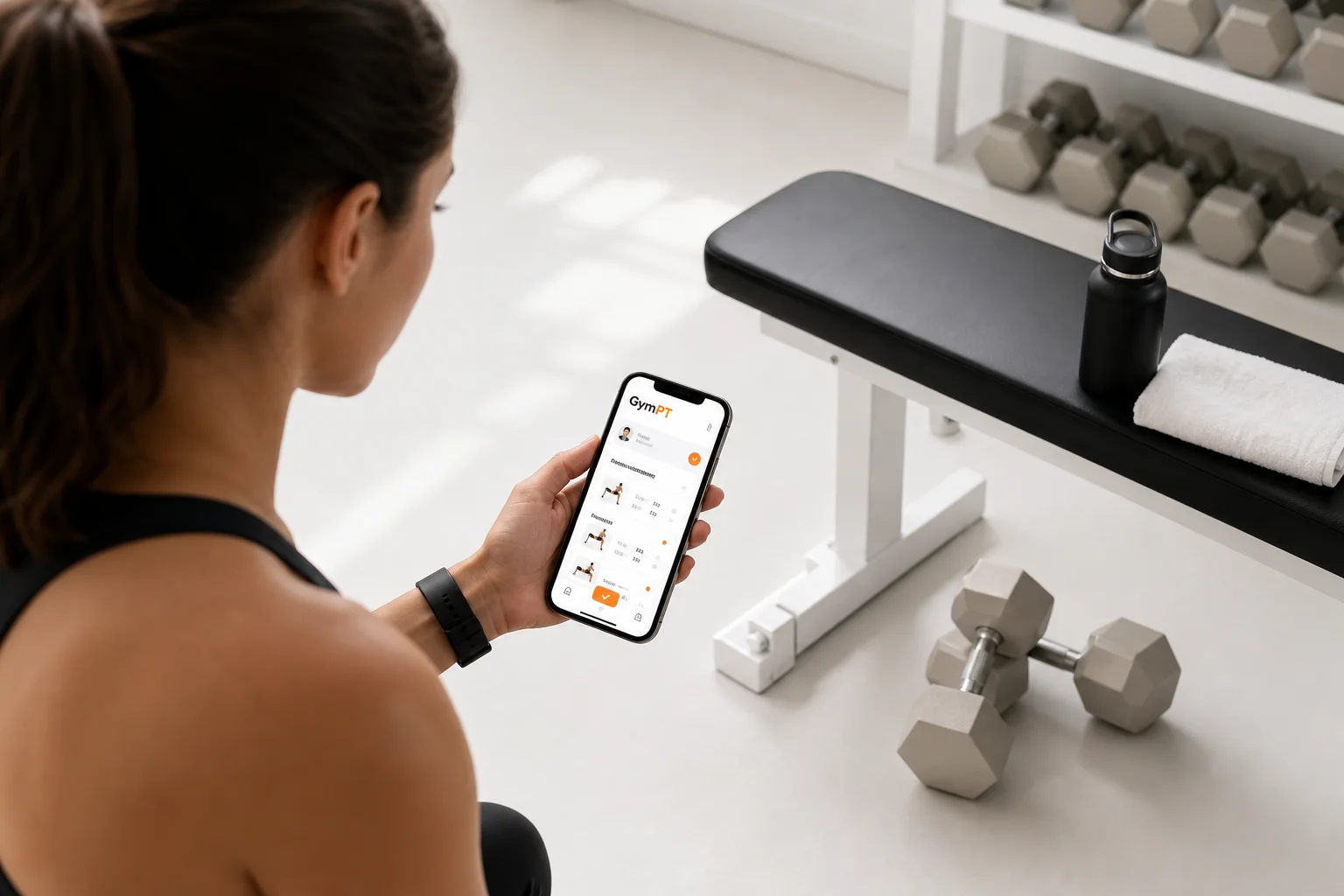
A personalized fitness coach should do more than give you a list of exercises. It should help you decide what to do today, explain why the session fits your goal, and make sensible adjustments as your schedule, equipment, and performance change.
That is where AI can be useful. An AI coach can organize training information, recognize patterns in your workout history, and make practical recommendations faster than a static plan. But it is not magic, and it should not pretend to replace medical advice, expert supervision, or your own judgment.
The most useful approach is to treat AI as a responsive training assistant: something that helps you plan, follow, and review your workouts with less guesswork.
What makes a personalized fitness coach different?
A generic workout plan usually assumes that everyone has the same goals, availability, experience, recovery, and equipment. Real training is rarely that simple.
A personalized fitness coach starts with the variables that actually affect your week, such as:
- Your main goal: strength, muscle growth, general fitness, conditioning, or building a consistent routine.
- Your training experience: beginner, returning after time away, or experienced lifter.
- Your schedule: how many days you can realistically train and how much time you have per session.
- Your available equipment: a full gym, a few dumbbells, resistance bands, machines, or bodyweight only.
- Your performance history: completed workouts, exercises, sets, repetitions, and loads.
- Your preferences: movements you enjoy, exercises you want to avoid, and training styles you can maintain.
Personalization is not about making every workout completely different. In many cases, it means keeping the right structure while adjusting the details. For example, an effective plan may continue using the same movement patterns for several weeks while gradually changing repetitions, resistance, exercise variations, or rest periods.
That balance matters. Too little structure makes progress difficult to evaluate. Too much rigidity makes a plan hard to follow when life gets busy.
How AI can support better coaching decisions
1. Turning a goal into a workable training structure
Many people know what they want but are unsure how to organize it. “I want to get stronger” is a goal, not yet a weekly plan. An AI personal trainer can help translate that goal into a realistic schedule, such as a full-body routine three times per week or an upper-lower split built around four shorter sessions.
The important question is not whether one split is universally best. It is whether the structure gives you enough practice, recovery, and consistency for your current situation.
If you are comparing different structures, this guide to smart workout apps versus static plans explains why adaptability can matter more than having an impressive-looking routine.
2. Matching exercises to your equipment
A plan is only useful if you can perform it. If your routine requires a cable machine but you train at home, you are forced to improvise—or skip the session entirely.
AI can use equipment information to suggest appropriate alternatives while preserving the intended training goal. A dumbbell press, for example, may be replaced with a push-up variation or another pressing movement when your setup changes. The exact exercise may differ, but the broader movement pattern can remain similar.
This does not mean every substitution is identical. Exercise difficulty, stability, range of motion, and loading potential can vary. The value of an equipment-based system is that it gives you a starting point instead of leaving you to search randomly for replacements.
For more practical examples, see this guide to equipment-based workout plans.
3. Adjusting around missed sessions
One missed workout should not ruin an entire training week. A rigid plan may leave you unsure whether to double up, skip ahead, or start over. A responsive coach can help reorganize the week based on what you actually completed.
A sensible adjustment might involve moving the next session, reducing unnecessary overlap between muscle groups, or shortening a workout when time is limited. The goal is not to “make up” every missed set. It is to return to a sustainable rhythm.
This is one reason an adaptive workout plan can be more practical than a calendar that assumes perfect attendance.
4. Using workout history to guide progression
Progressive overload does not always mean adding more weight every session. Depending on your goal and experience, progress may involve more repetitions, better technique, an additional set, a slightly harder variation, or improved control.
A workout tracking app can make these changes easier to see. Instead of relying on memory, you can review what you performed previously and use that information to make the next session appropriately challenging.
For healthy adults, current resistance-training guidance emphasizes consistency and matching training choices to the goal rather than relying on complicated methods. That supports a simple principle: a plan you can repeat and gradually improve is often more useful than an advanced plan you cannot maintain.
What GymPT can do as an AI fitness coach
GymPT is designed to support the practical parts of coaching that often create friction between intention and action. It can help you build personalized workout plans, ask questions through AI coach chat, account for your available equipment, record training, and review progress insights.
That combination is useful because planning and feedback work better together. A plan created without tracking has limited information to improve from. Tracking without a plan can become a collection of numbers without clear direction.
GymPT can help connect the process:
- Start with context: define your goals, training preferences, experience, schedule, and equipment.
- Follow a structured session: use a workout that is organized around your current needs.
- Record what happened: log completed exercises and performance details.
- Review the pattern: notice consistency, completed sessions, and areas that may need adjustment.
- Ask better questions: use coach chat to clarify exercise choices, scheduling, or ways to modify a session.
If you are deciding what to look for in an app, our AI fitness app guide covers the features that matter most when comparing tools.
What AI cannot reliably do on its own
A personalized fitness coach powered by AI still has limits. Understanding them helps you use the technology more effectively.
It cannot perfectly assess how you feel
An app may know what you logged, but it does not automatically know whether you slept poorly, feel unusually fatigued, or are struggling with exercise technique. Your feedback remains essential. If a session feels inappropriate, change it or stop rather than following an algorithm blindly.
It cannot diagnose pain or injury
Fitness guidance is not a substitute for clinical evaluation. Persistent pain, sudden injury, unusual symptoms, or concerns about exercising with a health condition should be discussed with an appropriately qualified healthcare professional.
It cannot guarantee results
No app can promise a specific change in strength, body composition, or performance. Results depend on many factors, including training quality, consistency, nutrition, sleep, stress, genetics, and starting point.
It cannot replace coaching in every situation
Human coaches can observe movement in real time, ask nuanced questions, and respond to complex circumstances. Beginners who feel uncertain, athletes with specific performance goals, and people returning from injury may benefit from in-person or professional support alongside digital tools.
How to use a personalized fitness coach well
- Be specific about your goal. Choose the outcome that matters most right now. A plan designed for strength may not look like one designed for general conditioning.
- Set an honest schedule. Start with the number of sessions you can usually complete, not the number you wish you had time for.
- List your real equipment. Include what you can consistently access, not equipment available only on occasional visits.
- Give useful feedback. Note when a workout was too easy, too difficult, too long, or difficult to perform correctly.
- Track consistently. Even basic records help reveal whether your plan is being followed and where adjustments may be useful.
- Review every few weeks. Look for patterns rather than reacting to one unusually good or bad workout.
- Keep the plan simple enough to repeat. More features and more exercises do not automatically create better training.
For a broader look at how adaptive planning works, read why personalized workout plans can outperform generic routines when they are built around realistic constraints.
The practical role of AI in your training
The best role for AI is not to act like an all-knowing coach. It is to reduce planning friction, make your options clearer, and help you learn from your own training history.
A useful personalized fitness coach should help answer practical questions:
- What should I train today?
- How can I adapt this workout to the equipment I have?
- What should I do if I only have 25 minutes?
- How can I organize the rest of this week after missing a session?
- Am I repeating the same performance, or showing signs of gradual progress?
When used this way, AI becomes a tool for better decisions—not a promise of effortless transformation. GymPT can help you build that feedback loop by combining personalized planning, coach chat, equipment-aware training, workout tracking, and progress insights in one place.
The result is not a perfect plan. It is a clearer, more flexible process for showing up, training with purpose, and making informed adjustments over time.