adaptive workout plan
Adaptive Workout Plan: Build a Week That Adjusts to Your Goals and Recovery
An adaptive workout plan gives you structure without forcing every workout to stay identical. Learn how to organize your week, adjust training, and keep progressing.
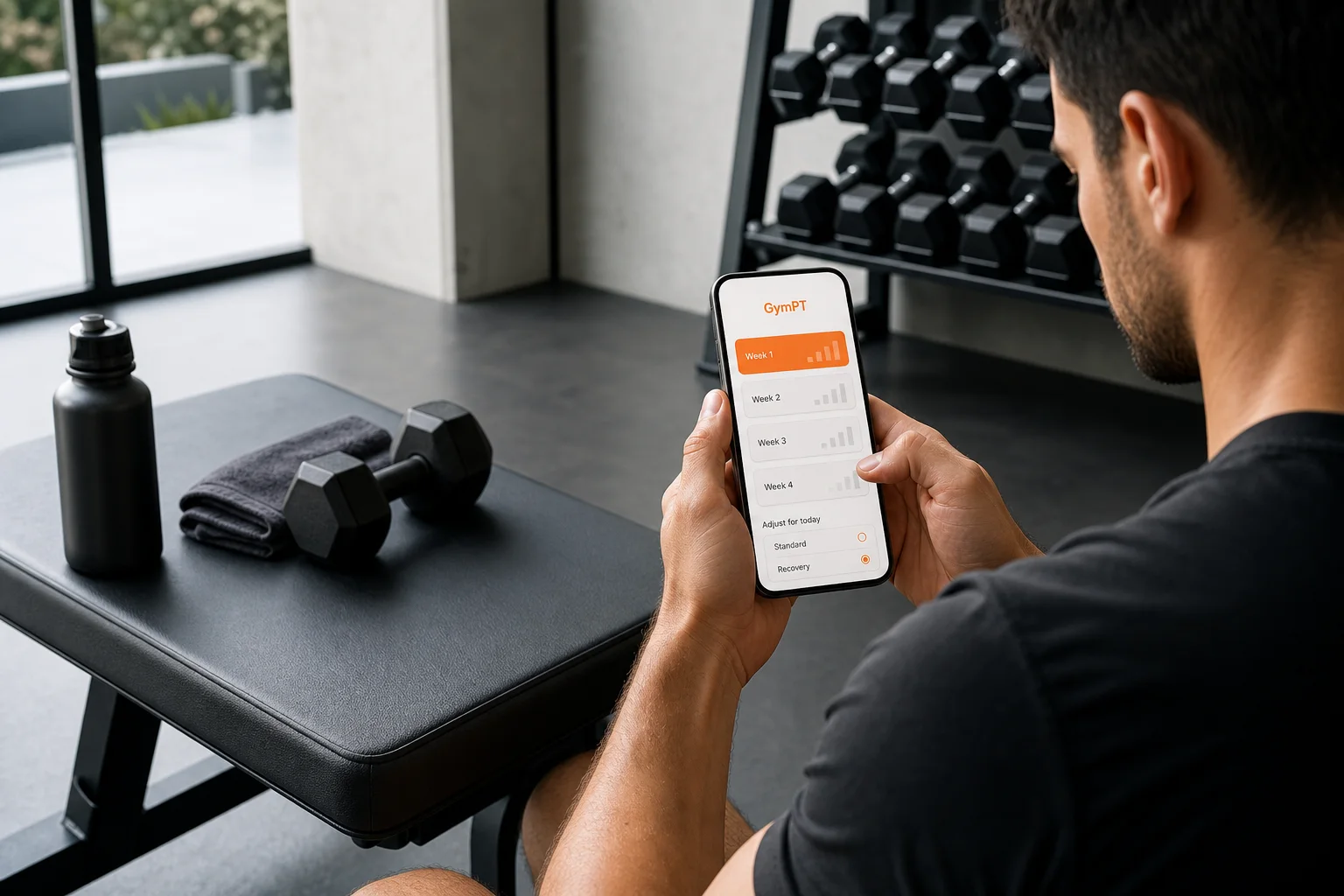
A good training plan should give you direction without ignoring real life. Sleep changes, work stress, soreness, schedule conflicts, and fluctuating energy can all affect how well you train on a given day. That is why an adaptive workout plan can be more useful than a rigid routine that expects identical performance every session.
Adaptive training does not mean exercising randomly. It means starting with a clear weekly structure, then making sensible adjustments based on your goal, available equipment, recent performance, and recovery. You still know what you are training and why. The difference is that the plan can respond when your readiness changes.
What is an adaptive workout plan?
An adaptive workout plan is a structured routine that can change its exercises, volume, intensity, or schedule while keeping the main training goal consistent. For example, a strength-focused plan may still prioritize squats, presses, and pulls, but it could reduce the number of working sets after a poor night of sleep or offer a shorter alternative when your schedule changes.
The key idea is planned flexibility. A static plan tells you exactly what to do regardless of context. An adaptive plan sets priorities and decision rules, such as:
- Which muscle groups or movement patterns should be trained during the week
- How many sessions are realistic for your current schedule
- Which exercises match your equipment and experience
- When to add load, repetitions, or sets
- When to reduce training stress or use an easier variation
Research on autoregulation describes a similar approach: adjusting training according to performance or perceived ability on the day. In practice, this can involve effort ratings, repetitions in reserve, movement speed, or recent workout performance. These tools help a plan account for normal changes in fatigue and readiness rather than treating every day as identical.
Why weekly structure matters more than perfect daily workouts
Adaptation happens over repeated weeks, not because of one flawless workout. Your weekly structure should therefore answer three questions:
- What is the main goal? Strength, muscle growth, general fitness, conditioning, or a combination?
- How often can you train consistently? A realistic three-day routine is usually more valuable than an ambitious six-day plan you cannot maintain.
- How will you recover between sessions? Training frequency should account for overlapping muscle groups, demanding exercises, other sports, and daily activity.
For general fitness, major muscle groups should be trained regularly throughout the week. A useful starting point is two or more muscle-strengthening sessions weekly, then adjusting frequency and volume according to your experience and goals.
For more specific goals, you can organize the week around movement patterns or muscle groups. A beginner might use full-body sessions on Monday, Wednesday, and Friday. Someone with more training experience might use an upper/lower split or a push-pull-legs structure. The best option is the one that fits your schedule and allows enough quality work and recovery.
Explore the differences between common structures in this guide to an effective weekly workout planner.
How to build an adaptive workout plan
1. Define the primary outcome
Start with one main outcome for the next training block. If your priority is strength, the plan may emphasize heavier compound lifts, longer rest periods, and gradual load progression. If your priority is muscle growth, the plan may use more weekly sets, moderate repetitions, and enough exercise variety to train each major muscle group effectively.
Choosing a primary goal does not prevent you from improving other qualities. It simply helps you decide what to protect when time or recovery is limited. When a busy week forces you to shorten a session, keep the exercises and training qualities most closely connected to your main goal.
2. Set a realistic number of training days
Choose the minimum number of sessions you can complete consistently, then define optional additions. For example:
- Two days: Full-body training with one session focused slightly more on lower-body movements and the other on upper-body movements
- Three days: Full-body training with alternating emphasis across the week
- Four days: Upper/lower training, with two exposures for each broad region
- Five or more days: More specialized sessions, provided recovery and scheduling remain manageable
This creates a robust plan instead of an all-or-nothing routine. If you miss an optional session, you have not failed; you have simply completed the core version of your week.
3. Assign priorities to each session
Every workout should have a short list of priorities. Put the most important movement or muscle group first, when concentration and energy are usually highest. Then add secondary work that can be shortened or substituted if necessary.
A session might be organized like this:
- Primary lift or movement pattern
- Secondary compound exercise
- Accessory work for a target muscle group
- Optional core, conditioning, or mobility work
This order makes your plan adaptable. If you have only 30 minutes, you can complete the first two priorities. If you feel strong and have more time, you can finish the accessories.
4. Use effort to guide the day
One practical method is to leave a small number of repetitions in reserve rather than forcing every set to failure. If the prescribed weight feels unusually heavy, reduce the load or stop the set earlier. If the exercise feels easier than expected and your technique remains solid, you may add a small amount of weight or complete an additional repetition within the planned range.
For example, a workout could prescribe three sets of six to eight repetitions at an effort that feels challenging but controlled. On a high-readiness day, you might complete eight repetitions with a slightly heavier load. On a lower-readiness day, you might use the lower end of the range and preserve good technique.
The goal is not to make every adjustment subjective or vague. Use consistent signals such as completed repetitions, perceived effort, technique quality, soreness, and recent performance. Over time, these records make your decisions more reliable.
5. Plan substitutions before you need them
An adaptive plan should not depend on one specific machine or exercise. Create alternatives that train a similar movement pattern or muscle group:
- Squat variation to leg press or split squat
- Barbell press to dumbbell press or push-up variation
- Pull-up to lat pulldown or supported row
- Barbell hinge to dumbbell Romanian deadlift or machine-based posterior-chain exercise
Substitutions should match your equipment, skill level, comfort, and available time. They do not need to be identical exercises to support the same overall goal.
For more ideas, read how an equipment-based workout plan can adapt to the gym or home setup you actually use.
How recovery changes your training week
Recovery is not a separate idea from programming. It helps determine how much training stress you can handle and how often you can repeat demanding work. Useful inputs include sleep quality, muscle soreness, recent performance, stress, appetite, and how motivated or coordinated you feel during your warm-up.
These signals should guide adjustments, not dictate every decision. A little soreness does not automatically require rest, and feeling energetic does not mean you need to add more work. Consider the full picture:
- Good readiness: Follow the planned session and progress gradually if performance and technique support it.
- Mixed readiness: Keep the main movement but reduce one or two accessories, lower the load slightly, or use the lower end of the repetition range.
- Low readiness: Choose a shorter session, easier exercise variation, technique-focused work, or active recovery. Reschedule demanding training if needed.
Persistent pain, unusual symptoms, or a sudden decline in performance is not something an app or generic plan should diagnose. Stop or modify the activity and seek appropriate professional guidance when necessary.
Progression: how an adaptive plan keeps moving forward
Flexibility only works when it is paired with progression. Track at least the exercise, load, repetitions, sets, and how the session felt. Then use simple progression rules.
- Add repetitions within a planned range before increasing load
- Increase weight in small steps when all working sets are completed with stable technique
- Add a set only when current volume is recoverable and consistently completed
- Hold or reduce training stress when performance repeatedly declines
- Review progress over several sessions rather than reacting to one unusual workout
For muscle growth, weekly volume and consistency matter. For strength, repeated practice of key movements and gradual exposure to challenging loads matter. In both cases, an adaptive plan should make progression understandable instead of constantly changing exercises for novelty.
A personalized workout plan can make these decisions easier by connecting your goal, training history, equipment, and available days. The value is not simply generating a routine; it is helping you maintain a useful direction as your circumstances change.
How GymPT can support adaptive workout planning
GymPT is designed to turn flexible training into a practical process. You can use your goals, schedule, available equipment, and training experience to create a starting plan, then use workout tracking and progress insights to understand what is working.
When your day changes, AI coach chat can help you think through substitutions, shorter sessions, or adjustments to training priorities. Body analysis and progress data can provide additional context, while equipment-based planning helps keep workouts realistic for your environment.
The best use of technology is not to remove judgment from training. It is to make good decisions easier to repeat. Your adaptive workout plan should remain clear enough to follow, flexible enough to fit real life, and specific enough to measure.
Final takeaway
An adaptive workout plan combines structure with feedback. Build your week around a clear goal, choose a realistic number of sessions, prioritize the most important work, adjust effort when readiness changes, and track enough information to progress over time.
You do not need a perfect week to make progress. You need a plan that can survive busy weeks, changing energy, limited equipment, and normal recovery fluctuations while still moving you toward the outcome you want.