no equipment workout plan
No Equipment Workout Plan: A Practical 4-Week Routine for Home
A no equipment workout plan can be simple, progressive, and effective. Use this four-week home routine to train your full body with limited space and no gym gear.
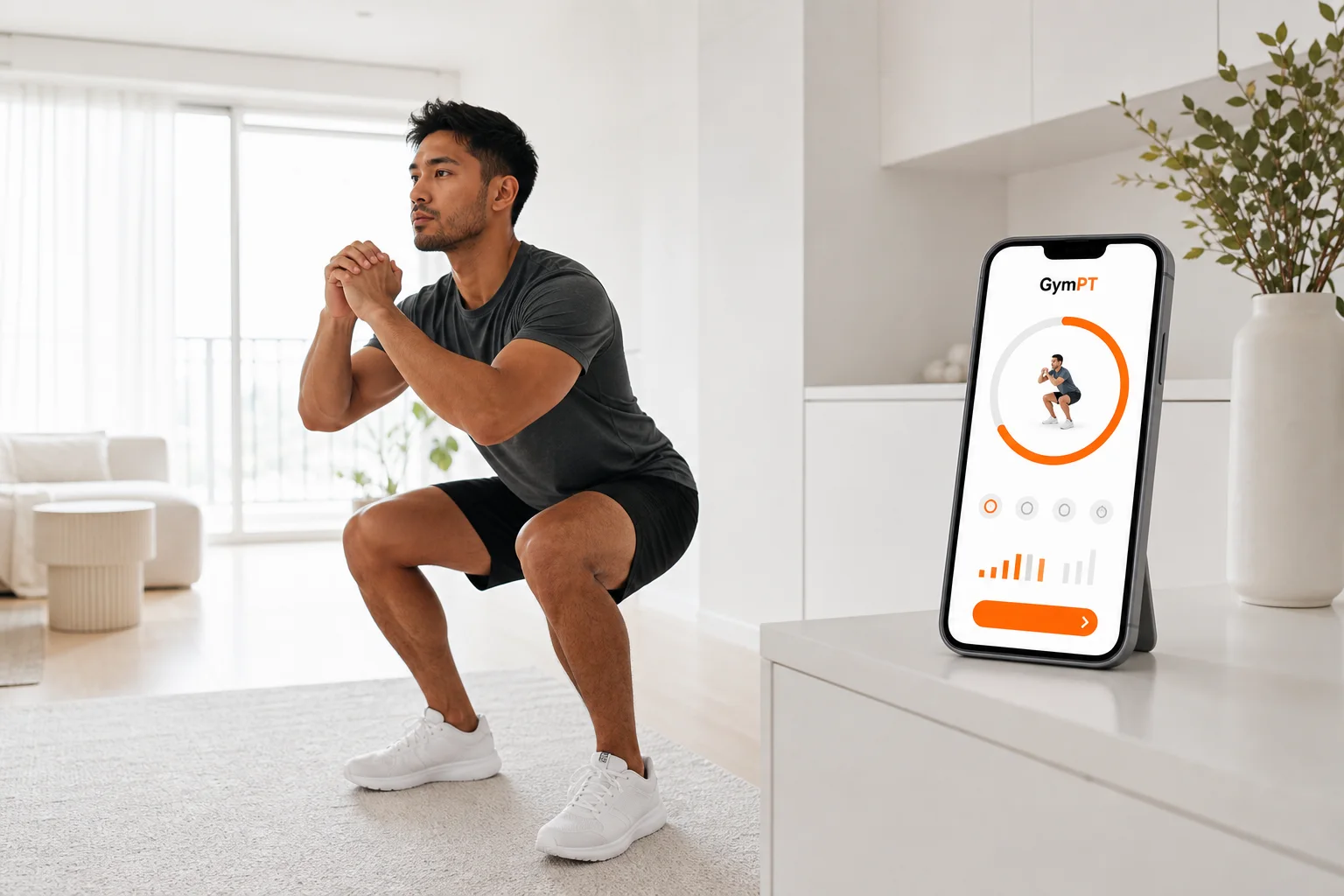
You do not need a gym, a rack of weights, or a large training area to build a consistent fitness routine. A well-designed no equipment workout plan can use your body position, tempo, range of motion, and exercise selection to challenge the major muscle groups at home.
The key is not making every workout exhausting. The key is choosing practical movements, repeating them consistently, and gradually making them more demanding. This four-week plan is designed for limited space, limited equipment, and people who want a clear structure they can actually follow.
What makes a no equipment workout plan effective?
Bodyweight training works best when it includes movement patterns that cover your whole body. Instead of collecting random exercises, build each session around five categories:
- Squat: trains your thighs, hips, and glutes.
- Push: trains your chest, shoulders, and triceps.
- Single-leg: challenges your legs, balance, and hip stability.
- Core: develops trunk control and resistance to unwanted movement.
- Posterior chain: targets your glutes, hamstrings, and back through hip-focused movements.
This approach gives your routine balance without requiring complicated equipment. Federal activity guidance also recognizes bodyweight movements such as push-ups, sit-ups, and planks as muscle-strengthening activities. For general health, adults are encouraged to include muscle-strengthening work on at least two days each week.
For more help choosing a weekly schedule, compare this plan with a 3 Day Home Workout Plan or a 2 Day Home Workout Plan.
How to use this bodyweight workout plan
Train three days per week with at least one rest day between sessions when possible. For example, you could train on Monday, Wednesday, and Friday. Each session should take approximately 25 to 40 minutes, including a short warm-up.
Begin with the lower end of the recommended repetitions. Leave roughly one or two controlled repetitions in reserve during most sets. You should feel challenged, but your technique should remain stable and repeatable.
Weekly structure
- Day 1: Squat and push emphasis
- Day 2: Single-leg, glute, and core emphasis
- Day 3: Full-body conditioning and strength
- Optional days: Walking, easy cycling, mobility, or relaxed recreational activity
If three sessions are too much at first, start with two. Completing two manageable workouts every week is more useful than planning five sessions and repeatedly missing them.
The 3-day no equipment workout plan
Day 1: Squat and push strength
- Bodyweight squat: 3 sets of 8 to 15 repetitions
- Push-up variation: 3 sets of 5 to 12 repetitions
- Reverse lunge: 2 sets of 8 to 12 repetitions per leg
- Glute bridge: 3 sets of 10 to 20 repetitions
- Forearm plank: 3 sets of 20 to 45 seconds
Rest for approximately 60 to 90 seconds between sets. If standard push-ups are too difficult, place your hands on a sturdy elevated surface or perform them from your knees. If bodyweight squats feel easy, slow the lowering phase to three seconds or pause briefly near the bottom.
Day 2: Single-leg control and core
- Split squat: 3 sets of 8 to 12 repetitions per leg
- Pike push-up or incline push-up: 2 to 3 sets of 5 to 12 repetitions
- Single-leg glute bridge: 2 sets of 8 to 12 repetitions per leg
- Bird dog: 3 sets of 6 to 10 controlled repetitions per side
- Side plank: 2 to 3 sets of 15 to 35 seconds per side
Move slowly during this session. The goal is not to rush through repetitions. Keep your hips controlled during split squats and glute bridges, and avoid rotating your torso during bird dogs and side planks.
Day 3: Full-body bodyweight circuit
Complete three rounds. Rest for 60 to 120 seconds after each round.
- Tempo squat: 10 repetitions
- Push-up variation: 6 to 12 repetitions
- Alternating reverse lunge: 8 repetitions per leg
- Bear plank shoulder tap: 6 to 10 taps per side
- Glute bridge march: 8 to 12 repetitions per side
- Mountain climber: 20 to 30 total repetitions
Keep the circuit controlled rather than turning it into a race. If mountain climbers bother your wrists or feel too intense, replace them with marching in place, step-back climbers, or a plank hold.
Warm-up for a small-space home workout
You can warm up without equipment in five minutes. The goal is to raise your temperature, move through comfortable ranges of motion, and rehearse the exercises you will perform.
- March in place for 60 seconds.
- Perform 8 slow bodyweight squats.
- Perform 6 alternating reverse lunges per side.
- Complete 8 wall or incline push-ups.
- Do 10 hip hinges with your hands on your hips.
- Move through 20 to 30 seconds of gentle plank or dead-bug variations.
Do not treat the warm-up as a test. You should finish feeling ready to train, not tired before the first working set.
How to progress without weights
Progressive overload does not require heavier dumbbells. When an exercise becomes easier, change one training variable at a time.
- Add repetitions: Move from 8 repetitions toward 12 or 15 while keeping good form.
- Add a set: Increase from two sets to three when recovery is good.
- Use a slower tempo: Take three seconds to lower your body instead of dropping quickly.
- Add a pause: Pause at the hardest point of the movement.
- Increase range of motion: Use a comfortable deeper squat or longer lunge position.
- Choose a harder variation: Progress from incline push-ups to floor push-ups, or from regular bridges to single-leg bridges.
- Reduce rest slightly: Use this mainly for conditioning circuits, not at the expense of strength or technique.
A simple rule is to progress only after you can complete the top end of the repetition range with consistent form. For example, once you can perform three sets of 12 controlled push-ups, consider a slower tempo or a more challenging variation.
Exercise substitutions for limited space
Your home environment may not be ideal, and that is normal. Adapt the plan instead of skipping the workout.
- Noise-sensitive apartment: Replace jumping with step-back lunges, marching, and slow mountain climbers.
- Wrist discomfort: Use fists, push-up handles if available, or perform incline pressing against a wall or sturdy surface.
- Knee-sensitive movements: Reduce depth, use a supported squat, or choose glute bridges and hip hinges.
- Very limited floor space: Use wall sits, standing knee drives, calf raises, and wall push-ups.
- Beginner-level training: Use shorter sets, more rest, and easier exercise angles.
Exercise should be challenging but controllable. Stop a movement if you experience sharp pain, unusual symptoms, or a loss of control. If you have a health condition, injury, or specific training concern, consider getting individual guidance from a qualified professional.
How to follow the plan for four weeks
Week 1: Learn the movements
Complete two sets for most exercises and focus on smooth, repeatable technique. Use easier variations whenever necessary.
Week 2: Build consistency
Move toward three sets for the main exercises. Keep at least one rest day between strength sessions and record what you complete.
Week 3: Add a small challenge
Add one or two repetitions per set, slow the lowering phase, or introduce a harder variation. Do not change every exercise at once.
Week 4: Review and adjust
Repeat the exercises and compare your performance with Week 1. If you feel recovered and your technique is strong, progress one or two movements. If fatigue has accumulated, keep the same difficulty or reduce volume slightly.
Tracking matters because progress is not always visible in the mirror. Record repetitions, hold times, exercise variations, and how difficult each set felt. A workout app with progress tracking can make this review easier and help you spot patterns over time.
How to stay consistent with home training
The best home workout is the one you can repeat. Use a few practical habits to reduce friction:
- Choose a regular training time and protect it on your calendar.
- Keep the workout area clear enough that you can begin immediately.
- Prepare a short version of the session for busy days.
- Use the same exercise order for at least one training block.
- Measure completed sessions, not just perfect sessions.
- Adjust the plan when your schedule, recovery, or available space changes.
If you later add dumbbells or resistance bands, you can expand the routine without starting over. The movement patterns stay useful, while the added resistance gives you more ways to progress. See this dumbbell workout plan for ideas on matching exercises to the equipment you have.
Can a no equipment workout plan build strength?
Yes, especially for beginners and people returning to training. Bodyweight exercises can create enough resistance to improve strength and muscular endurance when the variation is appropriately difficult and the sets are performed with control.
As you become stronger, some movements may stop providing enough challenge for your goals. That is when you can increase range of motion, use more demanding unilateral exercises, slow the tempo, or add external resistance. A personalized approach can also help you choose progressions based on your goal, current ability, and available training space. GymPT can help organize those choices into a routine that adapts as you train.
For a broader approach to combining strength, goals, and weekly structure, explore this full body workout plan.
Final takeaway
A useful no equipment workout plan does not need to be complicated. Train the major movement patterns, choose variations that match your current level, progress gradually, and track what you do. With three focused sessions per week and sensible adjustments for your space, you can build a reliable foundation for strength and fitness at home.