workout app with progress tracking
Workout App With Progress Tracking: What to Measure and When to Review It
A workout app with progress tracking should do more than count completed sessions. Learn how to log performance, monitor trends, and review your training at the right intervals.
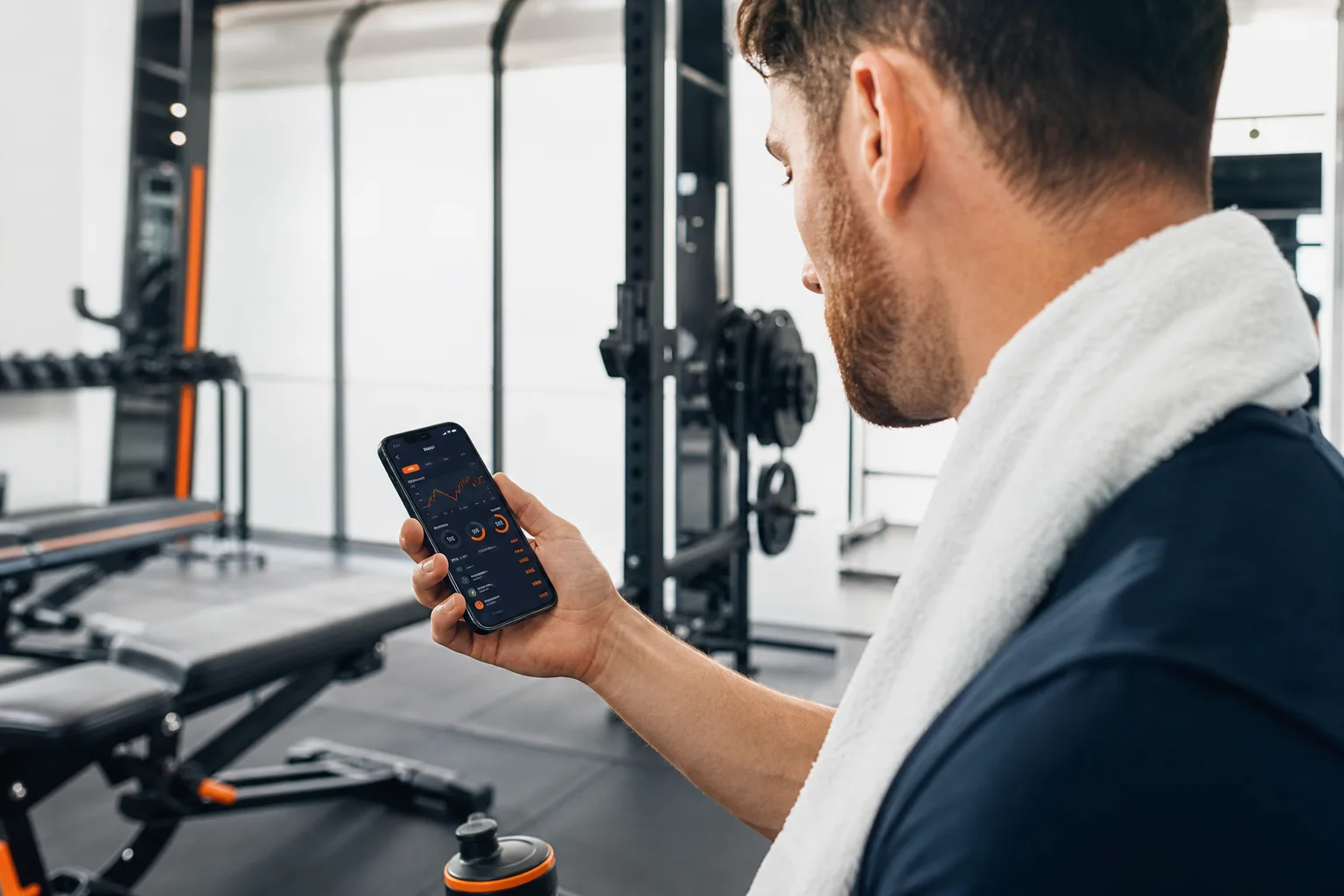
Progress is easier to achieve when you can see what is changing, what is staying the same, and what needs to be adjusted. That is why choosing a workout app with progress tracking can be more useful than following a static routine and relying on memory.
The best tracking system does not overwhelm you with numbers. It helps you record the right information, recognize meaningful trends, and make practical decisions about your next workout. GymPT combines personalized workout planning, workout logs, progress insights, equipment-based training, and AI coach support so your training history can guide what happens next.
What should a workout app track?
A useful workout tracker app should capture both what you did and how consistently you did it. No single metric tells the whole story. A stronger progress picture comes from combining several simple measurements.
1. Workout consistency
Start with the most basic question: are you completing the sessions your plan asks for? Track planned workouts, completed workouts, skipped sessions, and modified sessions.
Consistency is not the same as perfection. A completed 30-minute session, a shortened workout during a busy week, and a rescheduled session can all be useful training decisions. A good app should help you see the pattern without treating one missed workout as failure.
Review your consistency weekly. Look for recurring obstacles such as difficult training days, long sessions, or equipment you do not have access to. Those patterns may indicate that your schedule or workout plan needs adjusting.
2. Exercises, sets, reps, and load
For resistance training, record the exercise, number of sets, repetitions, and resistance used. These details help you compare similar workouts over time.
Progress can appear in several ways:
- You lift more weight for the same number of repetitions.
- You complete more repetitions with the same resistance.
- You perform the same workload with better control.
- You complete an exercise with less perceived effort.
- You use a more challenging variation while maintaining good technique.
Tracking these details is especially useful when your goal is strength or muscle development. Current resistance-training guidance emphasizes matching training variables to the goal, while also making the plan personal and sustainable. That means your progress should be judged against your own training history, not someone else’s numbers.
3. Effort and exercise quality
Numbers alone cannot explain how a workout felt. Add a simple effort rating after each exercise or session, such as easy, moderate, hard, or very hard. You can also record whether your technique felt stable and whether you had to reduce the load.
Two workouts can have the same sets and repetitions but create very different experiences. If your performance is falling while effort feels unusually high, that may be a reason to reduce volume, change the exercise, or allow more recovery. A tracking app should make this context easy to record rather than forcing you to remember it later.
4. Range of motion and movement confidence
Progress is not always a heavier dumbbell or a faster time. You may also notice better range of motion, smoother movement, improved balance, or greater confidence with an exercise.
These improvements are worth logging because they often appear before major changes in measurements or performance. A short note such as “more stable on split squats” or “fuller range on presses” can make your training history much more informative.
5. Body measurements and progress photos
Depending on your goal, you may choose to track body weight, waist measurement, circumference measurements, or progress photos. These are optional tools, not requirements.
Body weight can fluctuate because of hydration, food intake, stress, sleep, and other normal factors. If you use it, compare trends over several weeks rather than reacting to a single reading. Take measurements under similar conditions, use the same method, and avoid treating small short-term changes as definitive results.
A fitness progress tracking app can help organize these records, but it should not make medical assessments or promise a specific physical transformation. Use measurements as additional context alongside performance, consistency, and how you feel during training.
Why logging workouts improves decision-making
Logging creates a feedback loop:
- Plan: Choose a workout that matches your goal, level, schedule, and available equipment.
- Train: Complete the session and adapt when necessary.
- Record: Save the exercises, performance, effort, and useful notes.
- Review: Look for trends instead of judging one isolated workout.
- Adjust: Change the plan when the evidence suggests that an adjustment is needed.
This approach turns an app from a digital checklist into a training reference. Research on self-monitoring and behavior change suggests that monitoring, feedback, and goal setting can support adherence, although results vary and tracking is not a guarantee of long-term success. The practical lesson is simple: tracking works best when the information leads to a clear action.
For example, if you repeatedly skip a workout because it takes too long, the solution may be a shorter session. If your repetitions have increased for several weeks while technique remains strong, your plan may be ready for a gradual progression. If your performance is inconsistent because your gym setup changes, equipment-based exercise substitutions may be more useful than forcing the original routine.
Which progress metrics matter for different goals?
Your goal should determine which numbers receive the most attention.
For strength
- Load used for key exercises
- Repetitions completed at a given load
- Number of challenging sets
- Technique consistency
- Effort and recovery between sessions
Do not increase resistance simply because the calendar says you should. Progress when you can perform the target repetitions with controlled technique and an appropriate level of effort.
For muscle development
- Weekly sets for major muscle groups
- Repetitions and resistance across similar exercises
- Training frequency
- Exercise quality and range of motion
- Consistency across several weeks
More training is not automatically better. A useful app should help you see whether additional volume is improving your performance or simply making recovery harder.
For general fitness
- Completed sessions
- Time spent training
- Cardio duration or distance
- Perceived effort
- Movement variety and weekly activity
For adults, general physical activity guidance commonly recommends regular aerobic activity and muscle-strengthening activity on at least two days each week. If you are starting from a low activity level, building gradually is more realistic than trying to complete an advanced schedule immediately.
For body composition goals
- Training consistency
- Strength or performance trends
- Body-weight averages, if appropriate for you
- Optional circumference measurements
- Energy, sleep, and workout quality
Use several signals together. A single scale reading cannot show whether your training routine is becoming more consistent or whether your performance is improving.
How often should you review workout progress?
Reviewing too often can create noise. Reviewing too rarely can allow an unhelpful plan to continue for too long. A practical rhythm is to use three different review intervals.
After every workout
Record the essentials while they are fresh: exercises, sets, repetitions, resistance, effort, and any important note. This should take only a minute or two once the habit is established.
Every one to two weeks
Check consistency, missed sessions, exercise substitutions, and whether the current schedule fits your life. This is the right time to make small practical changes, such as moving a workout day or reducing unnecessary complexity.
Every four to six weeks
Review larger trends. Are key exercises improving? Are you completing enough sessions to support your goal? Is your plan still appropriate for your experience level and available equipment? Are you recovering well enough to train consistently?
A four- to six-week review is not a deadline for dramatic physical change. It is a reasonable checkpoint for evaluating the quality of your process. Some improvements appear quickly, while others take longer and depend on training history, sleep, nutrition, stress, and consistency.
What makes a progress tracking app genuinely useful?
When comparing a workout app with progress tracking, look beyond charts and streaks. The most useful features are connected to better decisions.
- Fast workout logging: Recording a set should not interrupt your session.
- Clear history: You should be able to compare recent performance with earlier workouts.
- Goal-based insights: The app should show metrics that match your objective.
- Adaptive planning: Your next workout should reflect your level, schedule, equipment, and previous performance.
- Exercise substitutions: You should be able to keep training when equipment or space changes.
- Coach support: You should have a way to ask why a workout changed or how to approach an exercise.
- Realistic feedback: Progress insights should encourage consistency without making exaggerated promises.
GymPT is designed around this connected experience. You can use personalized workout plans, log completed sessions, review progress insights, analyze body data, and chat with an AI coach when you need help understanding your plan. The goal is not to collect every possible data point. It is to make your training history useful.
How to start tracking progress this week
If you are new to workout tracking, keep your system simple:
- Choose one primary goal for the next four to six weeks.
- Track every planned workout, including modified sessions.
- Record sets, repetitions, resistance, and a short effort note.
- Review your consistency at the end of each week.
- Compare performance trends after four weeks, not after every workout.
- Make one or two focused adjustments instead of changing everything at once.
For more help building a realistic starting routine, read the workout plan for your first month at the gym. If your routine needs to change based on your progress, an adaptive workout plan can provide a more flexible structure. You can also compare the benefits of a smart workout app versus a static plan before choosing your tracking system.
A workout app with progress tracking should make training clearer, not more complicated. Log the work, review meaningful trends, and use the information to make the next session more appropriate. With the right feedback loop, progress becomes something you can manage week by week instead of something you only notice months later.