workout plan for first month at gym
Workout Plan for First Month at Gym: A Simple 4-Week Beginner Routine
A practical workout plan for your first month at the gym, including three simple full-body sessions, weekly progression, cardio guidance, and common beginner mistakes to avoid.
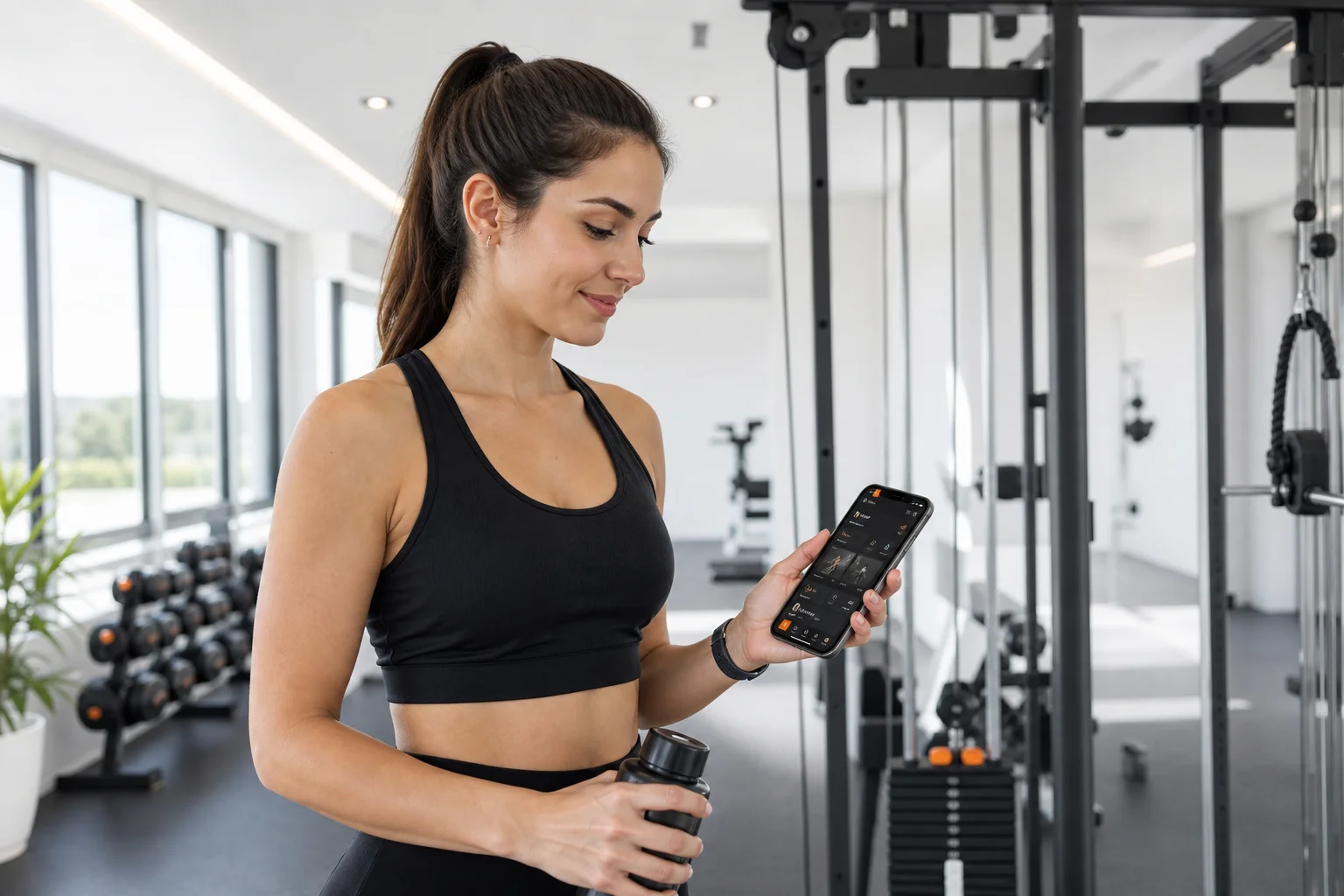
Your first month at the gym should be about building confidence, learning basic movement patterns, and creating a routine you can repeat. You do not need an advanced split, exhausting workouts, or heavy weights to make progress. A simple plan performed consistently is a much better starting point.
This workout plan for your first month at the gym uses three full-body sessions per week. It combines beginner-friendly machines, dumbbells, and bodyweight movements so you can practice the fundamentals without making your first weeks unnecessarily complicated.
How to use this first-month gym workout plan
Train on three non-consecutive days, such as Monday, Wednesday, and Friday. Rest or perform easy activity on the days between workouts. Each session should take approximately 45 to 60 minutes, including your warm-up.
The plan is intentionally repetitive. Repeating key exercises helps you learn technique, understand how each movement feels, and track whether you are gradually improving. You can change an exercise when equipment is unavailable, but avoid changing the entire routine every session.
- Frequency: Three strength workouts per week.
- Effort: Finish most sets with around two or three controlled repetitions still available.
- Rest: Rest 60 to 120 seconds between sets, using more time when you need it.
- Tempo: Lift with control and lower the weight smoothly.
- Progression: Add repetitions first, then add a small amount of weight when your form remains solid.
Adults are generally encouraged to include muscle-strengthening activity on at least two days per week, but people who are inactive can build up gradually. Three manageable sessions are enough to create a strong starting routine without trying to do everything at once.
Your 4-week workout plan for first month at gym
Workout A
- Leg press: 2 sets of 8 to 12 repetitions
- Seated chest press: 2 sets of 8 to 12 repetitions
- Seated cable row: 2 sets of 8 to 12 repetitions
- Dumbbell Romanian deadlift: 2 sets of 8 to 10 repetitions
- Front plank: 2 sets of 20 to 30 seconds
Workout B
- Goblet squat to a comfortable depth: 2 sets of 8 to 12 repetitions
- Lat pulldown: 2 sets of 8 to 12 repetitions
- Dumbbell shoulder press: 2 sets of 8 to 12 repetitions
- Seated leg curl: 2 sets of 10 to 12 repetitions
- Dead bug: 2 sets of 6 to 10 repetitions per side
Weekly schedule
- Week 1: Workout A, Workout B, Workout A
- Week 2: Workout B, Workout A, Workout B
- Week 3: Workout A, Workout B, Workout A
- Week 4: Workout B, Workout A, Workout B
If three days feels too demanding during your first week, complete two sessions instead. The goal is to establish a repeatable habit. You can also use a machine variation when a free-weight movement feels unfamiliar. For example, replace the goblet squat with a leg press or the dumbbell shoulder press with a shoulder press machine.
What to do before each workout
Begin with five to ten minutes of easy movement, such as walking on a treadmill, cycling, or using an elliptical. The purpose is to raise your body temperature and prepare mentally for training, not to exhaust yourself before lifting.
Next, perform one or two light practice sets of your first exercise. Use these sets to check your range of motion and prepare for the working weight. You do not need an elaborate stretching routine before every session. Gentle movement and exercise-specific warm-up sets are usually a practical approach for a beginner.
Before using unfamiliar equipment, adjust the seat and handles so the movement feels comfortable. If you are unsure how a machine works, ask gym staff for an explanation. Learning the setup is part of your first month, not something you need to master before you begin.
How to progress safely from week to week
Progress does not mean lifting the heaviest weight available. During your first month, progress can mean better technique, a smoother range of motion, more repetitions, or slightly more resistance.
Use a simple repetition-range method:
- Choose a weight that allows you to complete the lower end of the range with controlled form.
- Keep the same weight until you can complete the upper end of the range for every set.
- Increase the weight by the smallest available increment.
- Return to the lower end of the repetition range and build again.
For example, if the target is two sets of 8 to 12 repetitions, you might complete 10 and 9 repetitions in week one. Over several sessions, you may reach 12 and 12. At that point, increase the weight slightly and begin again around 8 or 9 repetitions.
Record the exercise, weight, repetitions, and how the set felt. GymPT can help you track sessions, review progress, and adapt workouts around your available equipment and training level. A training log also prevents you from guessing what you did last time.
Adding cardio during your first month
Cardio can support general fitness, but it does not need to dominate your first-month routine. Add two or three easy sessions of 15 to 25 minutes on non-lifting days if you enjoy it and recover well. Brisk walking, cycling, swimming, or an elliptical are all reasonable options.
Keep the intensity moderate enough that you can speak in short sentences. If you are completely new to exercise, start with less and add time gradually. Your strength sessions, sleep, work schedule, and overall recovery should determine how much additional activity you include.
If your main goal is building strength or muscle, avoid turning every gym visit into a high-intensity conditioning session. You should finish most workouts feeling that you could have done a little more, rather than feeling unable to train again for several days.
Common beginner mistakes to avoid
Starting with too much volume
More exercises and more sets are not automatically better. Too much training too soon can make soreness, fatigue, and poor technique more likely. Begin with the minimum amount that lets you practice consistently.
Changing the routine every workout
Novel exercises can be useful later, but constant change makes progress difficult to measure. Keep the main movements stable for at least several weeks before deciding whether they suit you.
Chasing maximum weight
Your first month is not the time to test a one-repetition maximum. Heavy, rushed repetitions can make it harder to learn the movement. Choose a load that lets you control both the lifting and lowering phases.
Ignoring pain signals
Muscle effort and mild post-workout soreness are not the same as sharp, sudden, or worsening pain. Stop an exercise that causes concerning pain and seek qualified guidance when needed. You can often substitute a more comfortable variation, but do not try to push through an injury.
Neglecting recovery
Training is only one part of progress. Aim for regular sleep, eat enough to support your goals, drink water, and leave recovery days between full-body sessions. If you feel unusually fatigued, reduce the number of sets or take an additional rest day.
How to make this plan fit your goal
The same beginner structure can support different goals with small adjustments. For general fitness, keep the three sessions and add moderate cardio as your schedule allows. For strength, focus on consistent technique and gradual increases in resistance. For muscle gain, maintain the repetition ranges, track your food and recovery, and progress patiently.
If weight loss is your priority, combine a sustainable nutrition strategy with strength training and regular daily movement. Avoid trying to compensate with punishing workouts. Consistency across weeks matters more than one exceptionally difficult session.
GymPT can help personalize the routine based on your goal, training level, available equipment, and progress. If you want more detail on choosing a suitable training direction, read AI Workout Plan by Goal: Choose the Right Training Week for Your Results. Beginners who want a plan that adjusts to their experience can also explore AI Workout Plan by Level: How to Train as a Beginner, Intermediate, or Advanced Athlete.
Your first-month checklist
- Schedule two or three realistic gym sessions each week.
- Learn how to adjust the equipment before adding weight.
- Use controlled repetitions and stop sets before technique breaks down.
- Track exercises, weights, repetitions, and how you felt.
- Add small amounts of difficulty only when the current workload feels manageable.
- Keep at least one recovery day between most full-body sessions.
- Ask for coaching help when an exercise or machine is unfamiliar.
The best workout plan for your first month at the gym is the one you can perform safely and repeat consistently. Start with a few fundamental movements, progress in small steps, and use your first four weeks to learn what your body and schedule can support. Once that foundation is in place, you can confidently build a more personalized plan.
For a different training environment, see Workout Plan for Beginners at Home: A Simple 4-Week Start. If you want to organize your routine around the machines and free weights available at your gym, Equipment Based Workout Plans: Match Your Training to the Gym You Use is a useful next step.