AI workout plan by level
AI Workout Plan by Level: How to Train as a Beginner, Intermediate, or Advanced Athlete
The best workout plan depends on your training level, available time, recovery, and goals. Use this practical guide to build a smarter routine for every stage.
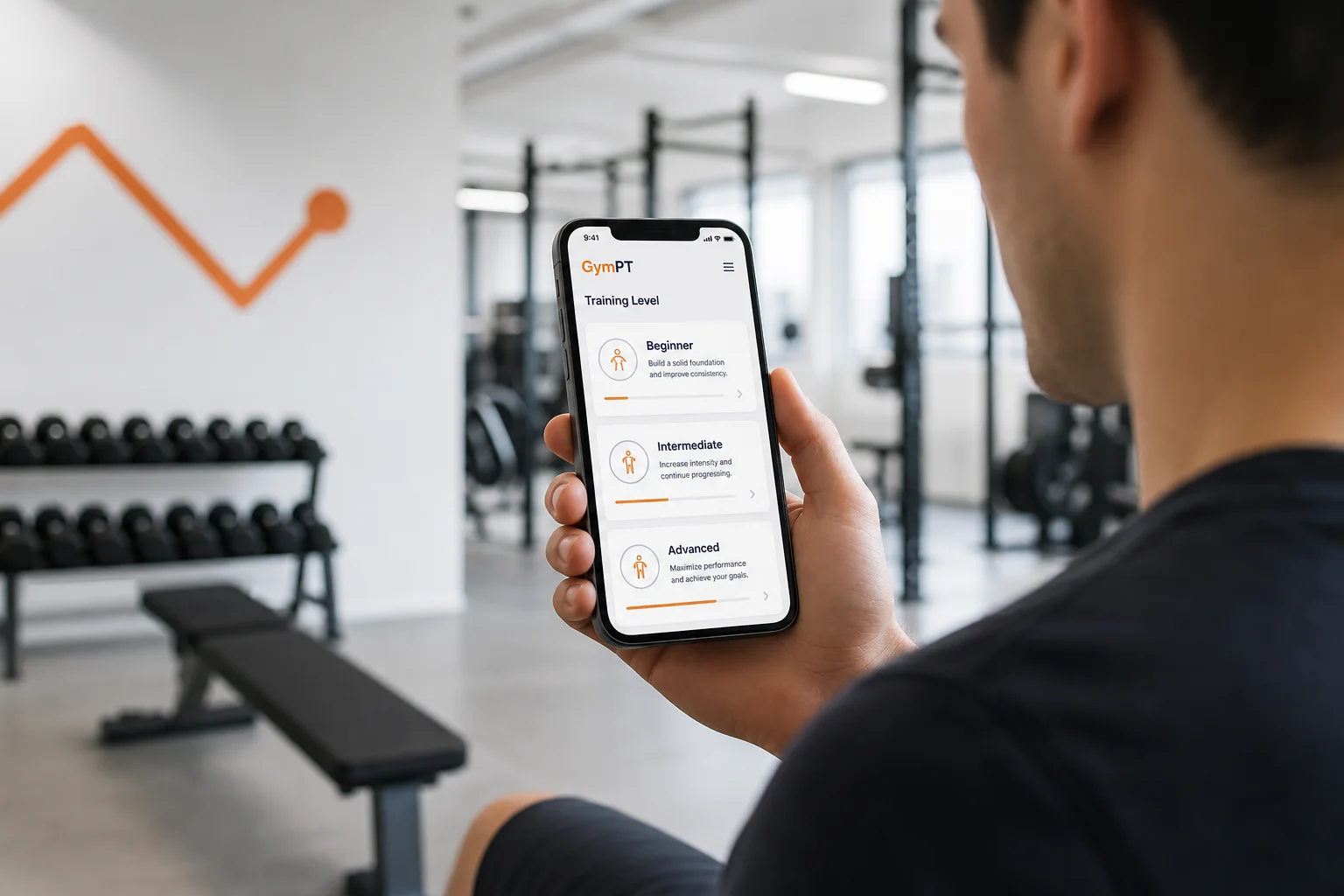
Your training plan should change as you change. A beginner needs practice, consistency, and manageable sessions. An intermediate lifter usually benefits from more weekly volume and better exercise organization. An advanced athlete needs careful fatigue management, targeted progression, and enough variation to keep moving forward.
That is why an AI workout plan by level can be more useful than a generic routine. Instead of assigning the same number of exercises to everyone, a smart plan can consider your experience, goals, schedule, equipment, recovery, and performance history.
This guide explains how to plan training at three levels, how often to work out, when to recover, and how to progress without adding difficulty too quickly.
Why training level matters
Training age affects how much work you can perform, how quickly you recover, and how much complexity your program really needs. The right plan is not necessarily the hardest plan. It is the plan that gives you a useful stimulus while leaving enough energy to repeat quality sessions week after week.
Current resistance-training guidance supports engaging all major muscle groups at least twice per week when possible, but frequency is only one part of the program. Weekly volume, effort, exercise selection, technique, sleep, and consistency also influence results. Research reviews generally suggest that when total weekly work is similar, training a muscle more often does not automatically produce better results. Frequency should therefore help you distribute quality work around your life and recovery.
Beginner AI workout plan by level: build skill and consistency first
A beginner is not defined only by being new to a gym. You may also be a beginner after a long break, after changing from home workouts to weights, or when learning unfamiliar movement patterns.
Recommended structure
- Frequency: 2–3 resistance-training sessions per week
- Format: Full-body workouts
- Session length: About 30–60 minutes
- Exercises: One movement pattern for each major area, such as squat, hinge, push, pull, and core
- Effort: Finish most sets with several controlled repetitions still available
- Recovery: Leave at least one day between demanding full-body sessions
The beginner phase should make training feel repeatable. A session might include a goblet squat, dumbbell Romanian deadlift, machine or dumbbell press, seated row, and a simple plank variation. Start with one or two work sets per exercise and use a load that allows controlled technique.
Do not rush to failure on every set. Learning how to brace, control the range of motion, and select an appropriate load is more valuable than chasing exhaustion. If an exercise causes sharp pain or feels unstable, stop and choose a suitable alternative rather than forcing the movement.
Example beginner week
- Monday: Full body A
- Tuesday: Walking, mobility, or rest
- Wednesday: Full body B
- Thursday: Rest or easy activity
- Friday: Optional full body A or light conditioning
- Weekend: Rest, walking, or recreational activity
For many beginners, the first progression is simply completing planned sessions consistently for several weeks. Once technique is stable and recovery is good, you can add a small amount of weight, one repetition, or an additional set.
Intermediate workout plan: distribute more productive work
An intermediate trainee usually has several months or more of consistent training experience and understands the basic movement patterns. Progress may no longer come from adding weight every session. You may need to manage weekly volume, train each muscle more deliberately, and use different levels of effort across the week.
Recommended structure
- Frequency: 3–5 resistance-training sessions per week
- Format: Full body, upper/lower, or another repeatable split
- Session focus: Compound movements supported by targeted accessory exercises
- Effort: Moderate to high effort, with heavier work balanced by less demanding sessions
- Recovery: Avoid stacking hard sessions that heavily stress the same muscle groups
A three-day full-body plan can work very well if your schedule is busy. A four-day upper/lower split may be useful when you want shorter sessions or more exercise variety. The best choice is the one that lets you train consistently without making recovery a constant problem.
For example, an intermediate upper-body session could include a horizontal press, vertical pull, row, shoulder-focused movement, and one or two arm exercises. A lower-body session could combine a squat pattern, hinge pattern, single-leg movement, hamstring exercise, and calves or core.
Example intermediate week
- Monday: Upper body, heavier emphasis
- Tuesday: Lower body, heavier emphasis
- Wednesday: Rest or low-intensity activity
- Thursday: Upper body, moderate volume
- Friday: Lower body, moderate volume
- Weekend: Rest, walking, or optional mobility
At this level, an AI plan should do more than list exercises. It should help balance movement patterns, identify repeated muscle stress, and adjust the next session when your performance or recovery changes. GymPT can use your workout history, available equipment, and feedback to make that weekly organization more practical.
Advanced workout plan: manage fatigue and specialize with purpose
An advanced trainee has usually built a strong technical foundation and can tolerate more training complexity. However, advanced does not mean every session should be maximal. At this stage, progress often depends on choosing where to spend recovery capacity.
Recommended structure
- Frequency: 4–6 sessions per week, depending on goals and recovery
- Format: Upper/lower, push-pull-legs, body-part emphasis, or a sport-specific structure
- Training focus: Specific strength, hypertrophy, power, performance, or weak-point development
- Effort: Planned variation between demanding, moderate, and lower-fatigue sessions
- Recovery: Scheduled rest days and regular reductions in training stress when needed
Advanced programming should have a reason for every major decision. If you add another session, what problem does it solve? If you increase volume, can you recover from it? If you change exercises, are you improving stimulus, reducing joint stress, or simply creating novelty?
For strength-focused training, advanced lifters may use heavier, lower-repetition work alongside technique or volume sessions. For muscle growth, they may distribute weekly sets across multiple sessions to maintain better performance. For general fitness, a simpler structure may still be the most effective if it is sustainable.
How to match workout frequency to your level
Frequency should reflect both training experience and life demands. A useful starting point is:
- Beginner: Train the full body two or three times per week.
- Intermediate: Train three to five times per week, often repeating each major muscle group across two sessions.
- Advanced: Use four to six sessions only when the extra frequency improves quality, specialization, or recovery between sessions.
More days are not automatically better. If your performance declines, soreness remains high, motivation drops, or your sleep and daily energy suffer, the plan may be asking for more recovery than you can provide. A smart workout planner should be able to reduce volume, move a session, or offer a lighter alternative instead of treating the calendar as fixed.
Recovery rules for every training level
Recovery is not a separate feature of a workout plan. It is part of the plan. Use these practical rules:
- Separate demanding sessions. Avoid training the same movement pattern hard on consecutive days unless the program is deliberately designed for it.
- Track performance. If normal loads feel unusually difficult for several sessions, reduce the planned effort or volume.
- Use rest days strategically. Rest can include complete rest, walking, mobility, or easy cardio depending on your needs.
- Increase one variable at a time. Add repetitions before load, or add a set before adding multiple new exercises.
- Keep technique consistent. A heavier load is not productive if it changes the movement substantially.
Recovery is individual. Work stress, sleep, nutrition, age, travel, and other activities can all affect how much training you can handle. This is one reason adaptive planning is often more realistic than a rigid program.
How to progress your plan without overcomplicating it
Progressive overload means gradually increasing the training stimulus over time. It does not require adding weight every workout. You can progress by:
- Adding one or two repetitions while maintaining form
- Increasing the load slightly after reaching the top of a repetition range
- Adding a set when current volume is no longer challenging enough
- Improving range of motion or tempo under control
- Using a more demanding variation after mastering the current one
- Completing the same work with less unnecessary rest or better technique
A simple double-progression method works for many people. Choose a repetition range, such as 8–12. Keep the same load until you can complete 12 controlled repetitions on all planned sets. Then increase the load slightly and begin again near the lower end of the range.
Beginners may progress frequently because nearly every session provides a new technical and strength challenge. Intermediate trainees often progress over several weeks. Advanced trainees may need longer blocks, more precise tracking, and planned periods of lower stress.
What to look for in an AI workout plan
The best AI workout plan by level should be personalized without becoming confusing. Look for a system that can:
- Classify your experience realistically instead of assuming advanced goals require advanced methods
- Build around your available days, equipment, and preferred exercises
- Explain why exercises, sets, repetitions, and rest periods are included
- Adjust sessions when you miss a workout or report low recovery
- Track completed sets, loads, repetitions, and personal feedback
- Show progress insights over time rather than focusing only on one workout
GymPT combines personalized workout planning with AI coach chat, equipment-based training, body analysis, workout tracking, and progress insights. That makes it easier to start with an appropriate level and refine the plan as your training history develops.
If you are comparing different planning approaches, this workout plan generator guide explains how a weekly routine can adapt to your goals. You can also explore this adaptive workout plan guide for a closer look at adjusting training around recovery and schedule changes.
Start at the level you can sustain
Your starting level should be based on what you can perform consistently today, not the level you hope to reach later. Begin with manageable sessions, learn the movements, and increase the challenge only when your recovery and technique support it.
Beginners need a clear foundation. Intermediate trainees need better organization. Advanced athletes need precision and fatigue management. An AI plan can help with all three, but the core principle remains the same: train with purpose, recover enough to repeat quality work, and use your results to guide the next adjustment.
For more guidance, read the personalized fitness coach guide to understand where AI can support your decisions, or see how an AI fitness app can fit into a broader training routine.