AI workout plan by goal
AI Workout Plan by Goal: Choose the Right Training Week for Your Results
The best workout plan depends on what you want to achieve. Learn how to structure training for strength, muscle growth, fat loss, fitness, or general health with the right frequency, recovery, and progression.
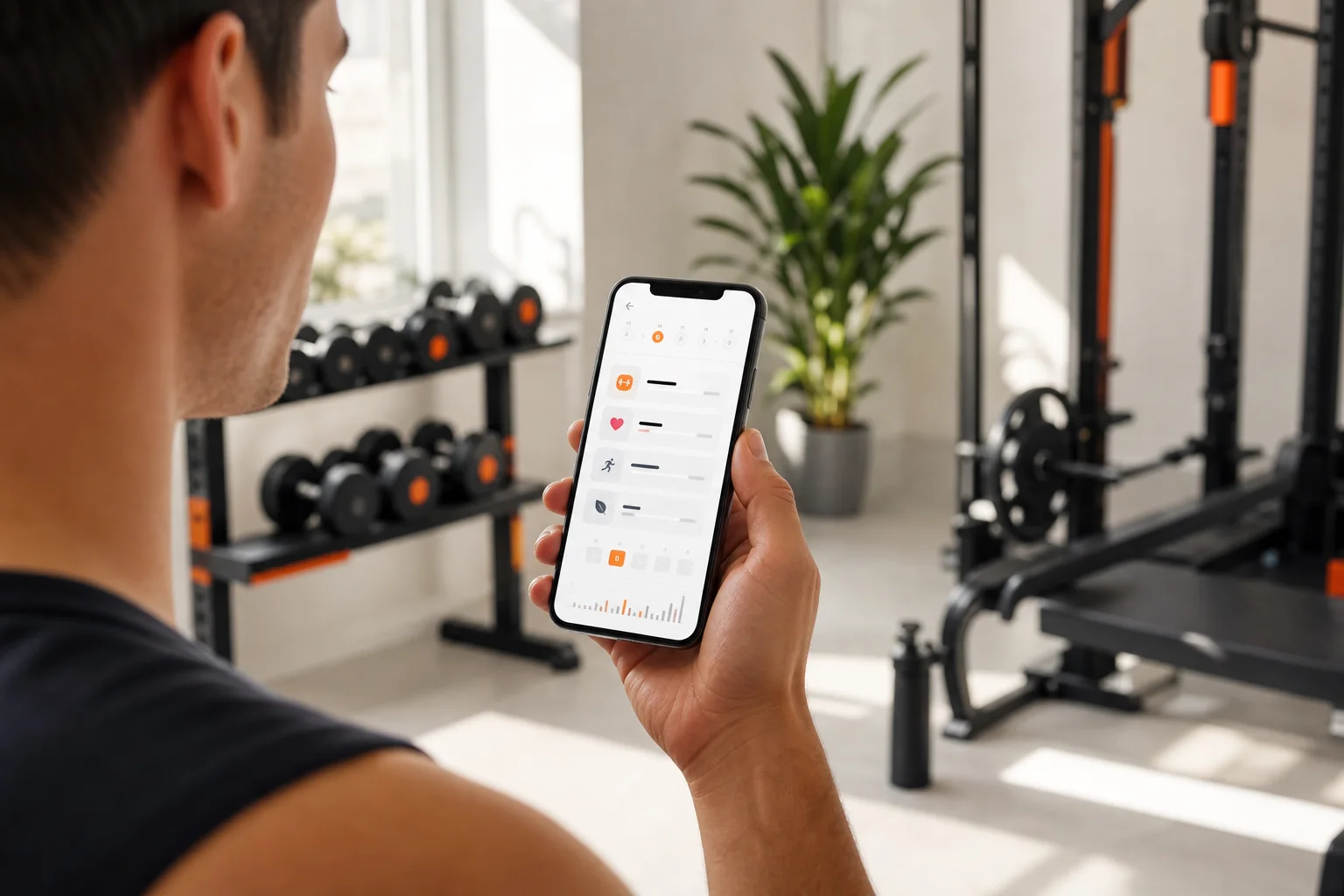
An AI workout plan by goal should do more than assign random exercises to different days. It should translate your goal into practical decisions about training level, weekly frequency, exercise selection, recovery, and progression.
Someone training for maximum strength needs a different emphasis than someone focused on muscle growth, fat loss, general fitness, or simply building a consistent routine. The good news is that most people do not need an unnecessarily complicated program. A plan that matches your goal, fits your schedule, and progresses gradually is usually more useful than a perfect-looking routine you cannot follow.
What should an AI workout plan by goal include?
A useful goal-based workout plan should answer five questions before your first session:
- What is the main outcome? Strength, muscle growth, fat loss, cardiovascular fitness, athletic performance, or general health?
- What is your training level? Beginner, intermediate, or advanced?
- How often can you train consistently? Two sessions, three sessions, four sessions, or more?
- What equipment and space do you have? A full gym, adjustable dumbbells, resistance bands, or bodyweight only?
- How will the plan adapt? What happens when you miss a session, recover slowly, or complete every target with ease?
This is where an AI personal trainer can be helpful. Instead of starting with a generic template, GymPT can use your goal, level, available equipment, schedule, workout history, and progress information to create a more relevant starting point.
Match your training structure to your goal
Goal 1: Build strength
Strength-focused training prioritizes challenging compound movements, controlled technique, and gradual increases in resistance. Your plan can include exercises such as squats, presses, rows, hinges, and loaded carries, adjusted to your experience and equipment.
A practical starting point is two to four resistance sessions per week. Beginners may make steady progress with two or three full-body workouts. More experienced lifters may benefit from distributing work across an upper-lower or similar split.
- Use relatively heavy loads that allow consistent technique.
- Perform multiple work sets rather than testing your maximum every session.
- Rest long enough to repeat strong, controlled efforts.
- Track repetitions, resistance, and perceived difficulty.
Progress does not always mean adding weight. You can also add a repetition, improve range of motion, use better technique, or complete the same work with less perceived effort.
Goal 2: Increase muscle size
Muscle growth depends on accumulating enough challenging weekly work while recovering from it. A goal-based plan for hypertrophy should train the major muscle groups regularly and distribute volume across the week when that makes sessions more manageable.
For many people, three to five training days per week can work well, but the best choice depends on time, experience, and recovery. A three-day full-body plan may be more sustainable than a five-day split for someone with a busy schedule.
- Use a mix of compound and isolation exercises.
- Train each major muscle group consistently rather than concentrating all work into one exhausting session.
- Start with a manageable number of sets and add volume only when recovery is good.
- Use a range of repetitions suited to the exercise and your preferences.
Research on training frequency suggests that frequency itself is not the only variable that matters. When weekly volume is similar, different schedules can produce comparable results. In practice, training a muscle more than once per week can make it easier to distribute work without making individual sessions too long.
Goal 3: Lose fat while preserving muscle
A workout plan can support fat loss, but training is only one part of the overall process. The most useful plan is one that helps you maintain strength, preserve muscle, and remain active without creating excessive fatigue.
A practical weekly structure may include:
- Two to four resistance sessions to provide a muscle-preserving stimulus.
- Two to four cardio sessions, such as brisk walking, cycling, jogging, or intervals selected according to your fitness level.
- Daily movement that is realistic for your lifestyle.
- At least one lower-stress day when your body and schedule need it.
Avoid treating every workout as a test of willpower. During a calorie deficit or a stressful period, an adaptive plan may reduce unnecessary volume while keeping the most important exercises and movement habits in place.
For more guidance on making this type of routine sustainable, read the AI fitness coach for weight loss guide.
Goal 4: Improve general fitness
General fitness usually benefits from a combination of resistance training, aerobic activity, mobility, and regular movement. You do not need to specialize immediately. Instead, build a balanced week that develops several qualities without making recovery difficult.
One example is:
- Two full-body strength sessions.
- Two moderate cardio sessions.
- Short mobility or movement sessions on several days.
- Frequent low-intensity activity such as walking.
Public health guidance commonly recommends at least 150 minutes of moderate-intensity aerobic activity per week and muscle-strengthening activity on at least two days. If you currently do much less, start below that target and build gradually rather than trying to change everything in one week.
Goal 5: Improve athletic performance
Performance-focused training should reflect the demands of your sport or activity. A runner may need more attention to aerobic development and running-specific strength, while a recreational court-sport athlete may need acceleration, deceleration, jumping, and change-of-direction work.
An AI workout plan can help organize these priorities around practices, competitions, work, and recovery. The plan should not simply add more sessions. It should decide when to emphasize intensity, when to reduce training stress, and how to avoid placing demanding sessions too close together.
Choose frequency based on your level and schedule
Your available training days are a planning constraint, not a flaw. The best frequency is the one you can repeat consistently while recovering well.
Beginner: two to three days per week
Beginners often benefit from full-body sessions built around basic movement patterns. Each workout can include a squat or knee-dominant movement, a push, a pull, a hinge, and optional core or conditioning work.
Keep the first few weeks simple. Use moderate effort, leave repetitions in reserve, and focus on learning technique. A beginner does not need advanced intensity methods to make progress.
Intermediate: three to four days per week
Intermediate trainees can usually handle more total work and may benefit from dividing training into full-body, upper-lower, or another practical split. The main goal is to increase productive training without allowing fatigue to reduce performance.
If sessions are becoming too long, distribute the same weekly work across more days. If consistency is poor, simplify the schedule instead.
Advanced: four or more days per week
Advanced training requires more precise management of volume, intensity, exercise selection, and fatigue. More days can make high workloads easier to distribute, but additional training is not automatically better.
Use advanced methods only when they solve a real problem. A clear plan with strong execution is often more valuable than constant variation.
Build recovery into the plan
Recovery is not a separate feature added after the workout plan. It is part of the plan itself. Your program should account for sleep, stress, work demands, soreness, and the difficulty of recent sessions.
Use these practical recovery rules:
- Alternate demanding sessions when possible. Avoid placing your hardest lower-body workouts on consecutive days.
- Keep at least one lower-stress day each week. This can mean complete rest, walking, or light mobility.
- Adjust when performance drops repeatedly. Reduce sets, lower effort, or take an additional recovery day instead of forcing the original plan.
- Do not confuse soreness with progress. A productive session does not need to leave you unable to move comfortably.
- Review trends, not one difficult day. A single poor workout may reflect sleep or stress. Several poor sessions suggest that the plan needs adjustment.
GymPT progress insights can help you compare completed workouts, effort, and performance over time so that adjustments are based on patterns rather than guesswork.
Use progression rules instead of random changes
A personalized workout plan should tell you what to do when an exercise becomes easier. One simple method is double progression:
- Choose a repetition range, such as 8 to 12 repetitions.
- Keep the same resistance until you can complete the upper end of the range with controlled form.
- Increase the resistance slightly.
- Return toward the lower end of the range and build again.
You can also progress by adding a set, improving technique, increasing range of motion, reducing rest slightly, or choosing a more demanding variation. The right option depends on your goal and the exercise.
For strength, resistance and technical quality may be the main progression targets. For muscle growth, weekly hard-set volume and exercise execution may matter more. For fat loss, maintaining resistance training while managing total fatigue is often more useful than adding endless high-intensity sessions.
How GymPT can personalize the week
A static plan gives you a list of workouts. A more useful AI fitness coach can help connect the plan to your real circumstances.
- Goal selection: Build the week around strength, muscle growth, fat loss, fitness, or another priority.
- Level adjustment: Modify exercise complexity, volume, and intensity for your experience.
- Equipment matching: Create sessions around the machines, free weights, bands, or bodyweight options you actually have.
- Coach chat: Ask why an exercise is included, how to substitute it, or what to do when your schedule changes.
- Body and progress insights: Use training history and body data as context for future planning without treating one measurement as the whole story.
If you want to compare different planning approaches, the workout plan generator guide explains how a weekly routine can become more adaptive.
A simple checklist for your next goal-based plan
Before starting, check that your plan includes:
- One clearly defined primary goal.
- A weekly schedule that fits your actual availability.
- Exercises matched to your level and equipment.
- At least one planned lower-stress or recovery day.
- A progression method you can understand.
- A way to record workouts and review trends.
- A backup option for missed sessions or unavailable equipment.
Your plan does not need to be perfect on day one. It needs to be appropriate enough to follow, clear enough to track, and flexible enough to improve as you learn more about your body and schedule.
For a broader look at how training can adapt to your experience, explore the AI workout plan by level guide. If your main challenge is choosing routines around available equipment, see the AI workout plan by equipment guide.
The best AI workout plan by goal is not the most complicated one. It is the one that connects your objective to a realistic weekly structure, supports recovery, and gives you a clear next step when progress slows or life changes.