virtual personal trainer
Virtual Personal Trainer: How AI Coaching Fits Into a Real Training Routine
A virtual personal trainer can help turn fitness goals into practical workouts, but the best results come from using AI for planning, feedback, and consistency—not unrealistic promises.
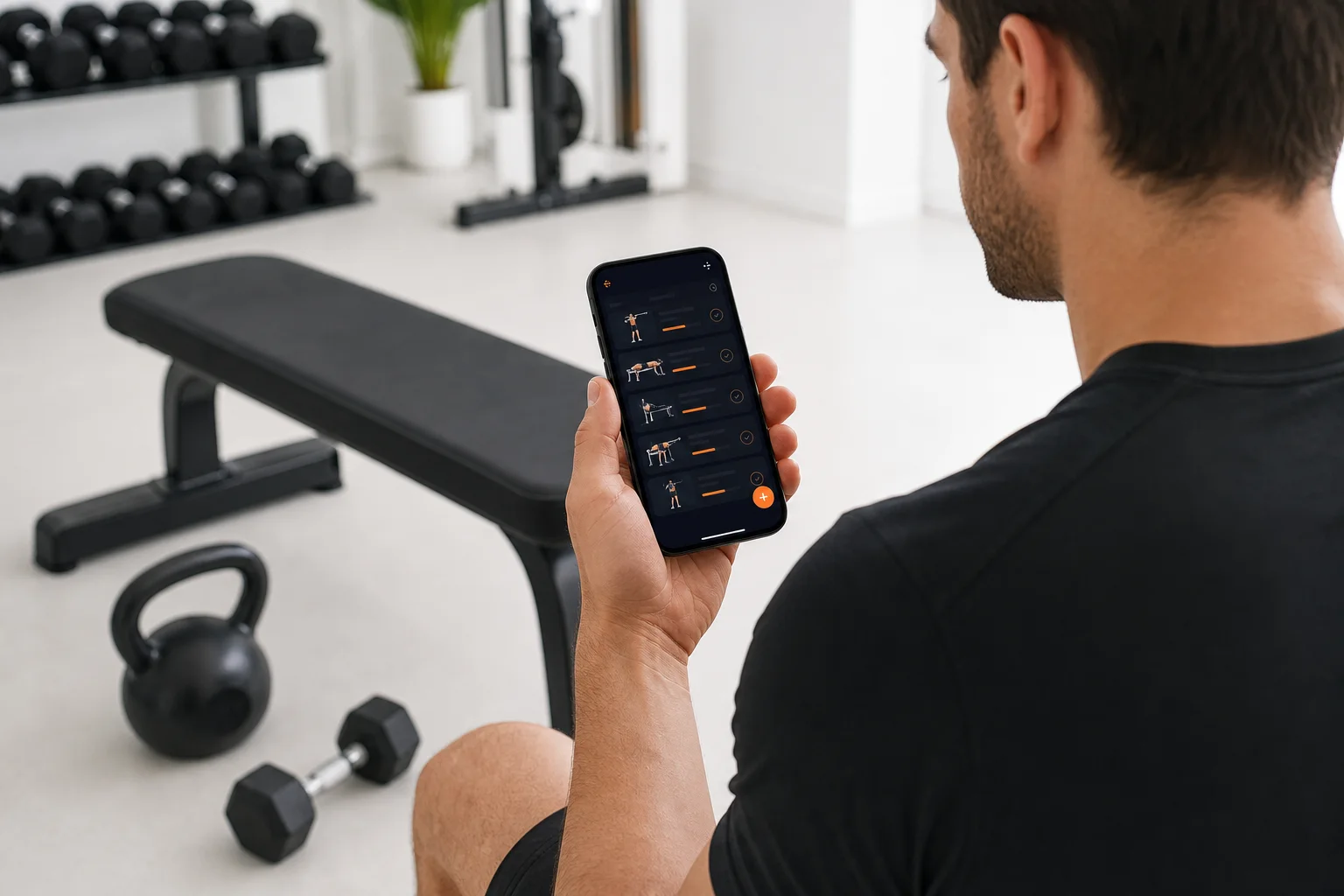
A virtual personal trainer can make structured training easier to start and easier to repeat. Instead of searching for a new workout every time you exercise, you can use an app to organize your plan, adjust sessions around your equipment and schedule, and review what you have actually completed.
That does not mean AI replaces every part of a qualified human coach. It cannot physically observe every movement, diagnose an injury, or understand your complete health history. Its practical value is different: it can reduce decision fatigue, provide useful training prompts, and help you follow a consistent process.
GymPT is designed around that role. It combines personalized workout planning, AI coach chat, body analysis, equipment-based training, workout tracking, and progress insights in one fitness app. The goal is not to promise instant results. The goal is to make better training decisions more available between workouts.
What is a virtual personal trainer?
A virtual personal trainer is a digital coaching system that helps you plan, perform, and review exercise. Depending on the platform, it may use your goals, training experience, available equipment, schedule, exercise history, and feedback to recommend workouts or adjustments.
The strongest systems support a coaching loop:
- Plan: Choose a realistic goal, schedule, training split, and exercise selection.
- Perform: Follow the session with clear instructions, sets, reps, rest periods, and progression guidance.
- Track: Record completed work, loads, repetitions, effort, and consistency.
- Adjust: Use your recent performance and feedback to make the next session more appropriate.
This process matters because a workout is only one event. Progress usually depends on how well your routine fits your life over many weeks. A digital coach is most useful when it helps you repeat good decisions rather than constantly chase novelty.
What can an AI personal trainer do well?
1. Turn a broad goal into a workable plan
“Get stronger” or “build muscle” is not yet a training plan. You also need to decide how often to train, which movements to practice, how much volume to use, and how to progress. An AI workout coach can organize those choices into a starting structure.
For example, someone with three available training days and adjustable dumbbells needs a different plan from someone training five days in a fully equipped gym. Personalization should begin with practical constraints, not just a goal label.
GymPT can use your goals, preferred schedule, and available equipment to create a more relevant starting point. You can also use our fitness program builder app guide to compare the features that make a plan easier to follow.
2. Reduce the friction before a workout
Many people do not skip training because they lack information. They skip because deciding what to do feels difficult after a busy day. A prepared session removes several small barriers: choosing exercises, ordering them, deciding on sets, and figuring out what to repeat next time.
This is one reason a virtual personal trainer can be useful for beginners and experienced lifters alike. Beginners get structure, while experienced users can spend less time managing routine details.
3. Adapt around equipment and time
A plan is more useful when it reflects the equipment you can actually access. A home routine may need bodyweight movements, resistance bands, or dumbbells. A commercial gym routine may include machines, cables, barbells, and benches.
Time also matters. If you have 30 minutes today instead of your usual hour, the best adjustment may be to keep the highest-priority movements and reduce optional work. This is more practical than abandoning the entire session.
For ideas on training with changing resources, read our guide to a workout plan with limited equipment.
4. Provide feedback that is available when you need it
Useful feedback should be specific and actionable. “Try harder” is vague. “Keep the same load next time and aim for one additional repetition if your technique remains controlled” gives you a decision you can use.
Research on digital physical-activity interventions suggests that feedback and self-monitoring can support activity behavior, although results vary by intervention and user. The important lesson is not that every app works equally well. It is that tracking becomes more valuable when it leads to a clear next action.
GymPT’s workout tracking and progress insights are intended to support that loop. Your records can help you see whether you are training consistently, repeating movements, and gradually increasing the challenge.
What a virtual personal trainer cannot do
AI coaching is helpful, but it has boundaries. A responsible fitness app should not present itself as a medical professional or guarantee a particular body transformation.
- It cannot diagnose pain or injury. Persistent, severe, or unusual symptoms deserve qualified medical attention.
- It cannot replace hands-on technique coaching in every situation. A coach in person may notice movement details that a phone or app cannot.
- It cannot know everything about your health. Relevant medical conditions, medications, pregnancy, or recovery needs may require professional guidance before changing training.
- It cannot remove the need for judgment. You still need to choose appropriate loads, stop when something feels unsafe, and communicate accurate feedback.
- It cannot guarantee results. Outcomes depend on training consistency, recovery, nutrition, starting point, and factors outside the app.
Think of AI as a planning and accountability layer. If you have a complex health situation, a history of injury, or uncertainty about whether exercise is appropriate, consult a qualified professional before relying on an app-based plan.
How to use an AI workout coach effectively
Start with a realistic brief
Give the app useful information: your goal, training experience, available days, equipment, preferred session length, and any movements you need to avoid. The more accurately you describe your constraints, the more practical the starting plan can be.
Do not choose an ambitious schedule simply because it looks impressive. A plan you can complete three times per week is usually more useful than a five-day plan that repeatedly gets abandoned.
Use the first two weeks as a calibration period
Your first plan is a starting hypothesis, not a final verdict. Pay attention to whether the sessions fit your schedule, whether the exercises are accessible, and whether the difficulty is appropriate.
After each workout, record what happened. Did you complete all sets? Did the final repetitions feel controlled? Did the session take longer than expected? This information gives the app—and you—better inputs for future adjustments.
Progress gradually instead of changing everything
Progress can come from adding a repetition, increasing resistance, improving technique, completing an extra set, or making the same workload feel easier. You do not need to make every variable harder at once.
Current resistance-training guidance emphasizes consistency and gradual progression over unnecessary complexity. For many healthy adults, a simple routine performed regularly is a stronger foundation than an advanced system that is difficult to sustain.
If you are deciding how often to train, our article on how many days beginners should train explains how to match frequency with recovery and experience.
Ask better questions in coach chat
AI coach chat becomes more useful when your questions include context. Instead of asking, “What should I do?”, try:
- “I have 25 minutes today. Which part of this workout should I prioritize?”
- “My last set felt much harder than expected. Should I repeat the load or reduce it?”
- “I only have dumbbells today. What is the closest practical substitute?”
- “I missed one session this week. How should I continue without doubling up?”
These questions help turn general advice into a concrete decision while keeping you involved in the process.
How to judge whether a virtual personal trainer is worth using
Look beyond the word “AI” and assess the actual coaching experience. A useful personal trainer app should make your next workout clearer, not merely provide a large exercise library.
- Personalization: Can it account for goals, schedule, experience, and equipment?
- Progression: Does it explain how to increase or maintain training difficulty?
- Adaptability: Can you adjust a session when time, energy, or equipment changes?
- Tracking: Can you record meaningful performance data rather than only checking off a workout?
- Feedback: Does the app turn your history into understandable next steps?
- Boundaries: Does it avoid medical diagnosis, unrealistic promises, and pressure to ignore pain?
- Usability: Can you open the app and understand what to do without unnecessary complexity?
For a broader comparison framework, see how to choose the best mobile personal trainer app for your goals.
Where GymPT fits
GymPT is built for people who want more structure than a generic workout list but more flexibility than a fixed program. You can use it to create personalized sessions, work with the equipment you have, ask questions through AI coach chat, track completed workouts, and review progress over time.
That makes GymPT a practical virtual personal trainer for the everyday decisions that happen between planning and progress: what to train today, how to adapt a session, what to record, and when to keep progressing versus repeating the current workload.
The most effective way to use it is as a consistent training companion. Set a realistic goal, follow the plan, record honest feedback, and review your progress regularly. AI can organize the process, but your consistency and judgment remain the most important parts of the routine.
Final takeaway
A virtual personal trainer is not a shortcut around training fundamentals. It is a tool that can make those fundamentals easier to apply: a clear plan, suitable exercises, gradual progression, recovery-aware decisions, and regular tracking.
Choose an app that is specific enough to guide you, flexible enough to fit real life, and honest about its limitations. Used that way, AI coaching can help you spend less time wondering what to do and more time completing workouts you can sustain.