AI personal trainer
AI Personal Trainer: What It Can Do, What It Cannot, and How to Use One Well
An AI personal trainer can make fitness more personalized and consistent, but it is not a replacement for expert judgment. Here is how to use one effectively.
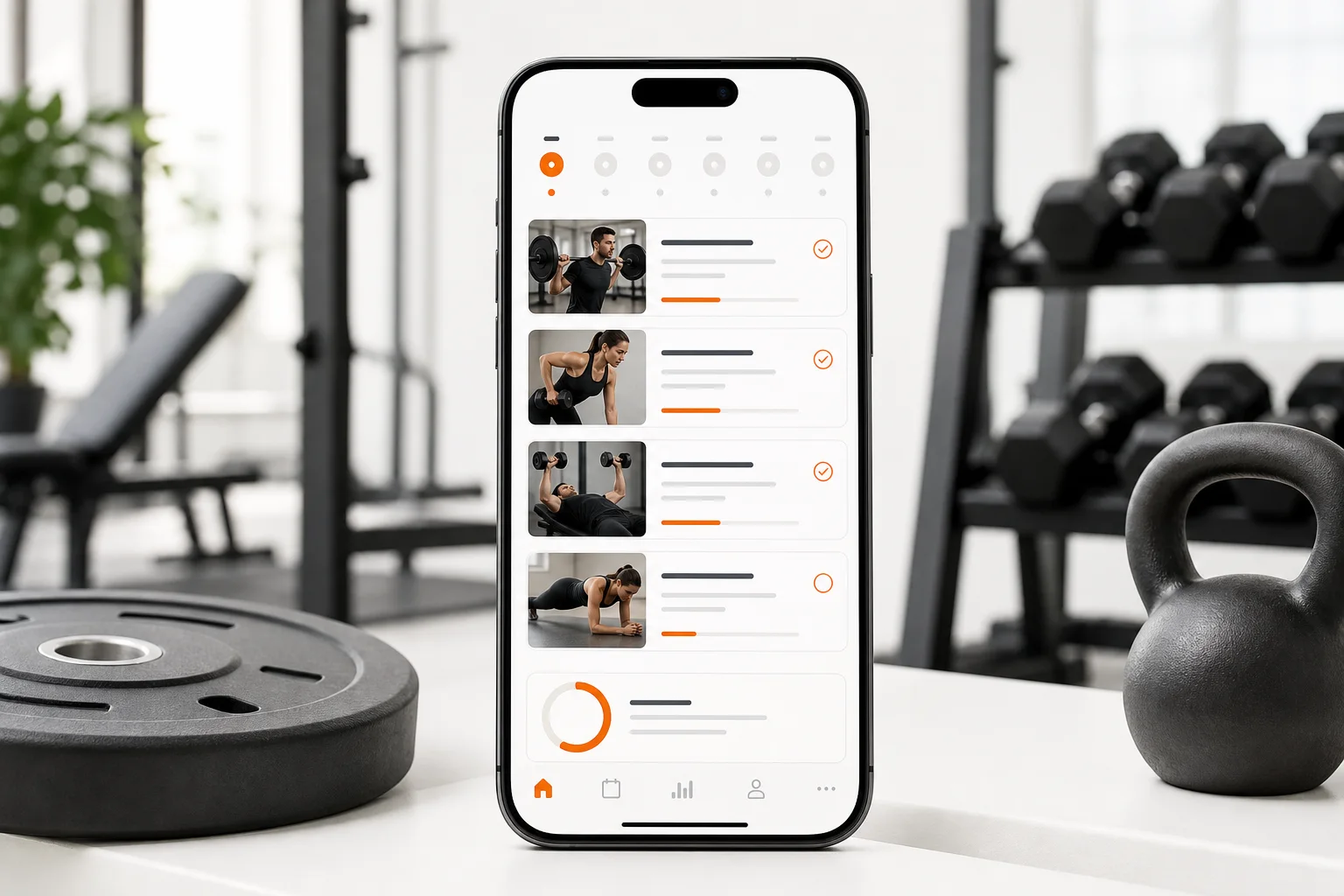
An AI personal trainer can help you turn a vague fitness goal into a practical routine. Instead of searching through random workouts, you can describe your goal, schedule, experience level, available equipment, and preferences, then receive guidance built around those details.
That sounds useful—and it can be. But an AI coach is not magic, and it is not identical to working with a qualified trainer in person. The best results come from understanding both sides: what AI can automate well, and where human judgment, medical advice, or hands-on coaching may still be necessary.
This guide explains the realistic role of an AI personal trainer and shows how an app such as GymPT can support better planning, consistency, tracking, and day-to-day decision-making.
What is an AI personal trainer?
An AI personal trainer is a fitness app or digital coaching system that uses your inputs and training data to provide workout recommendations, exercise guidance, progress feedback, or conversational support.
Depending on the app, those inputs may include:
- Your main goal, such as building strength, gaining muscle, improving fitness, or becoming more consistent
- Your training experience and preferred workout style
- How many days and minutes you can train each week
- The equipment available at home or in your gym
- Your logged exercises, sets, repetitions, loads, and completed sessions
- Changes in schedule, energy, or exercise preferences
The important distinction is that a useful AI coach should do more than generate a list of exercises once. It should help you make a plan, follow it, adapt it when circumstances change, and learn from your training history.
What an AI personal trainer can do well
1. Build a starting plan around your real situation
Generic workout advice often assumes that everyone has the same schedule, equipment, experience, and recovery capacity. An AI workout planner can narrow the gap between general advice and a routine you are more likely to follow.
For example, a three-day beginner plan with dumbbells should not look the same as a five-day gym plan for an experienced lifter. A good system can adjust exercise selection, session length, training split, and progression strategy to match your context.
This personalization matters because the most advanced plan is not automatically the most effective plan. Current resistance-training guidance emphasizes starting simply, training major muscle groups regularly, and building gradually. Consistency is usually more valuable than a complicated routine that you abandon after two weeks.
2. Make equipment-based training more practical
Equipment is one of the biggest reasons a workout plan fails in the real world. You may have access to a full gym one day, only resistance bands the next day, or a limited home setup all week.
An AI personal trainer can help match exercises to what you actually have. It can suggest substitutions when a machine is busy, a bench is unavailable, or a movement does not fit your setup. That makes your plan more flexible without forcing you to start over.
For more ideas on adapting training to your setup, see Workout Plan With Limited Equipment.
3. Explain exercises and training decisions
A workout becomes easier to follow when you understand why it is included. AI coaching can explain the purpose of an exercise, identify the main muscles involved, suggest a warm-up approach, and clarify how to record sets and repetitions.
It can also answer practical questions during a session:
- What can I do instead of this exercise?
- Should I increase the weight next time?
- How long should I rest between sets?
- How can I shorten this workout if I only have 25 minutes?
- What should I train if the equipment I need is occupied?
This type of conversational support is especially helpful for beginners who do not yet know how to adjust a routine without losing its structure.
4. Help you track consistency and progress
Memory is not a reliable training log. If you do not record what you did, it becomes difficult to tell whether you are progressing, repeating the same effort, or changing exercises too often.
A fitness coaching app can organize your workout history and surface useful trends, such as completed sessions, repeated exercises, changes in load, or improvements in repetitions. These insights do not need to be dramatic to be valuable. More consistent attendance, better technique, an extra repetition, or a slightly heavier load can all represent progress.
GymPT combines workout tracking with progress insights so your plan is connected to what you actually complete—not just what was scheduled.
5. Reduce decision fatigue
Many people do not stop exercising because they dislike movement. They stop because every session requires too many decisions: What should I train? Which exercise comes first? How many sets should I do? What should I change if I am short on time?
An AI personal trainer can reduce that friction by giving you a clear next action. You still perform the work, but you spend less time planning and second-guessing.
What an AI personal trainer cannot do
It cannot observe every detail of your movement
Unless a system is specifically designed for real-time movement analysis, it cannot see every repetition, joint position, compensating movement, or change in technique. Even when camera-based analysis is available, it may not capture the full training environment or understand every reason a movement feels difficult.
Use exercise demonstrations and coaching cues as guidance, but learn to stay within a comfortable range of motion and stop if an exercise causes sharp or unusual pain. When you need hands-on instruction, an in-person professional may be the better option.
It cannot diagnose injuries or medical conditions
An AI personal trainer is a fitness tool, not a medical device. It should not diagnose pain, prescribe treatment, interpret medical symptoms, or replace advice from a physician or qualified healthcare professional.
If you have an injury, a chronic condition, significant pain, or specific medical restrictions, seek appropriate professional guidance before changing your training. You can then use an app to organize a routine that fits the boundaries you have been given.
It cannot guarantee a specific transformation
No app can promise exactly how much muscle you will gain, how quickly your body composition will change, or what your final results will look like. Progress depends on many factors, including training quality, nutrition, sleep, stress, genetics, experience, and consistency.
A trustworthy AI coach should help you manage the process rather than make unrealistic promises. Look for recommendations that emphasize gradual progress, repeatable habits, and measurable training behaviors.
It cannot replace motivation, judgment, or accountability completely
AI can remind you what to do and help you adapt a session. It cannot make the decision to train, notice every emotional barrier, or fully understand the social and personal context behind your goals.
Some people benefit from an in-person coach, training partner, class, or community. Others mainly need a simple plan and a reliable way to track it. The right level of support depends on you.
How to judge whether an AI coach is genuinely personalized
Not every app that uses the words “AI trainer” provides meaningful personalization. Before choosing one, ask whether it can do the following:
- Use more than your goal. A plan should account for schedule, experience, equipment, and preferences—not just whether you want to build muscle or lose weight.
- Adapt after you start. Your plan should respond to missed sessions, completed workouts, equipment changes, and feedback.
- Show progression clearly. You should understand how exercises, sets, repetitions, or loads may change over time.
- Support substitutions. A rigid plan is less useful when your gym or home setup changes.
- Keep a training history. Tracking helps the system make better recommendations and helps you see your own consistency.
- Set appropriate boundaries. The app should be clear that it provides fitness guidance and does not diagnose or treat medical issues.
These criteria are more useful than judging an app by how impressive its first generated workout looks. The real test is whether the system remains helpful after several weeks of ordinary training.
How GymPT fits into the process
GymPT is designed to make AI coaching practical rather than theoretical. You can use it to create personalized workout plans, chat with an AI coach, analyze your body metrics, train around available equipment, log workouts, and review progress insights.
The workflow is straightforward:
- Define your direction. Start with a goal, schedule, experience level, and preferred training environment.
- Build a realistic plan. Use your available equipment and time limits to create sessions that fit your week.
- Train and record the details. Log completed exercises, sets, repetitions, and loads instead of relying on memory.
- Ask questions when conditions change. Use AI coach chat to explore substitutions, shorter sessions, or adjustments.
- Review patterns over time. Use progress insights to evaluate consistency and make measured changes.
If you are deciding between different digital coaching options, our guide to personal trainer app alternatives explains which features are worth prioritizing. You may also find our guide to choosing a mobile personal trainer app useful when comparing convenience, tracking, and personalization.
A simple way to use an AI personal trainer responsibly
Start with a plan that feels almost too manageable. Train two or three days per week, keep the exercise selection understandable, and leave room to increase gradually. Federal activity guidance recommends muscle-strengthening activity on at least two days each week for adults, while current resistance-training guidance also emphasizes working major muscle groups regularly and building over time.
Then pay attention to three signals:
- Performance: Are you completing more repetitions, using more load, or performing movements with better control?
- Recovery: Are you ready to train again, or does the plan need more rest and less volume?
- Adherence: Can you follow the plan during normal busy weeks?
If performance improves but adherence is poor, simplify the schedule. If adherence is strong but progress has stalled, review exercise selection, effort, recovery, and progression. If pain or medical concerns appear, pause and seek qualified advice rather than asking an app to diagnose the problem.
The bottom line
An AI personal trainer is best viewed as a planning and decision-support tool. It can help you create a personalized workout plan, match training to your equipment, answer practical questions, track sessions, and identify useful progress trends.
It cannot replace medical care, guarantee results, watch every repetition, or eliminate the need for personal judgment. The strongest approach is to use AI for structure and consistency while keeping your expectations realistic.
For many people, that combination is enough to make training easier to start and easier to sustain. GymPT brings those capabilities together in one fitness app, helping you move from “I should work out” to a clear plan you can actually follow.