cable machine workout plan
Cable Machine Workout Plan: A Simple 3-Day Routine for the Gym
A cable station can train your entire body when your workout is organized around movement patterns, available attachments, and progressive overload. Use this three-day cable machine workout plan to build a simple, repeatable gym routine.
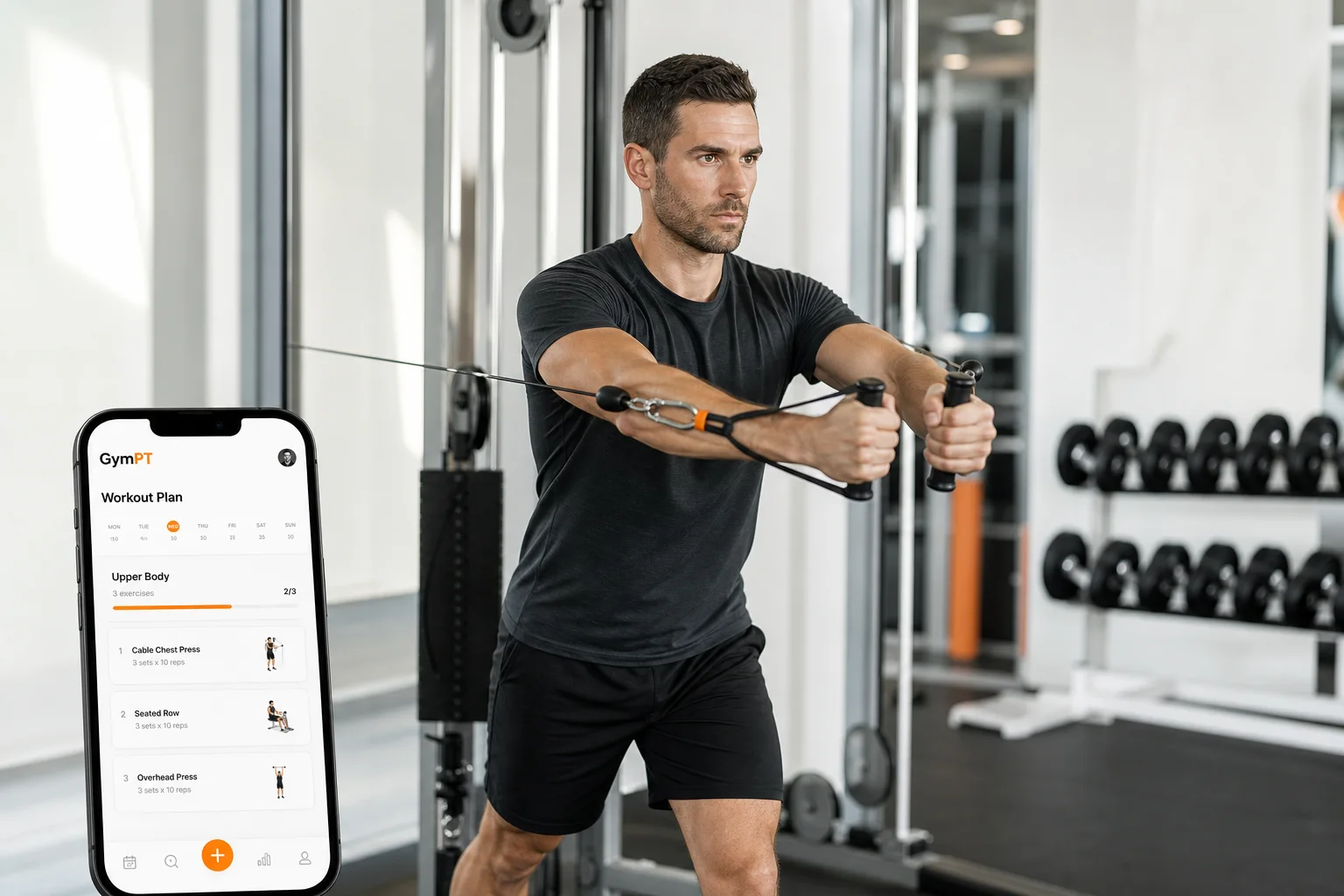
A cable station is one of the most versatile pieces of equipment in a gym. You can use it for presses, rows, pulldowns, squats, lunges, arm exercises, and controlled core movements without moving between several different machines.
The challenge is not finding one cable exercise. It is building a cable machine workout plan that covers your major movement patterns, fits the equipment available, and gives you a clear way to progress. The routine below uses three full-body sessions per week, but you can also complete two sessions by alternating the workouts from week to week.
Use a load that lets you perform the target repetitions with controlled technique. The final repetitions should feel challenging, but you should still be able to keep your posture and range of motion consistent.
Why build a workout around the cable machine?
Cables make it easier to adjust the direction of resistance and the position of the handle. That flexibility means one station can support many training goals, from general strength to muscle-building workouts.
- Easy equipment matching: You can choose a straight bar, rope, single handle, or ankle strap based on the exercise.
- Flexible movement angles: High, mid, and low pulley positions allow you to train pushing, pulling, rotation, and anti-rotation patterns.
- Simple unilateral training: A single handle lets you train one side at a time and adjust your stance naturally.
- Consistent resistance: The cable provides tension through much of the movement, which can make lighter loads feel productive.
- Efficient sessions: You can train your upper body, lower body, and core at one station instead of waiting for multiple machines.
A good plan does not require every possible attachment. It requires a small group of exercises that you can perform safely and repeat consistently.
How to structure your cable machine workout plan
Each session below follows the same basic order:
- Start with a general warm-up and one or two lighter practice sets.
- Perform a lower-body or full-body movement while you are fresh.
- Add a push and a pull for balanced upper-body training.
- Finish with an accessory exercise and a core movement.
For most exercises, rest for about 60 to 120 seconds between sets. Use the longer end of that range when the exercise is demanding or when your technique starts to slow down. For smaller movements, 45 to 75 seconds may be enough.
Adults are generally advised to include muscle-strengthening activity at least two days per week. This routine provides a practical way to organize those sessions, but your total weekly training should also account for recovery, activity outside the gym, and your current experience level.
Three-day full-body cable machine workout plan
Workout A: Squat, press, and row
Complete this session when you want a straightforward introduction to cable training or when you prefer foundational movements.
- Cable squat to row: 3 sets of 8–12 repetitions
- Standing cable chest press: 3 sets of 8–12 repetitions per side or 10–15 repetitions with both handles
- Seated or standing cable row: 3 sets of 8–12 repetitions
- Rope triceps pressdown: 2–3 sets of 10–15 repetitions
- Half-kneeling cable chop: 2–3 sets of 8–12 repetitions per side
For the cable squat to row, set the pulley around mid-chest height. Step back far enough to keep tension on the cable, squat with control, then stand and pull the handle toward your torso. If combining the movements feels too complicated, perform a cable squat and cable row as separate exercises.
For the chest press, keep your ribs stacked over your pelvis and avoid leaning aggressively into the cable. Press forward without locking your elbows forcefully, then return the handles under control.
Workout B: Hinge, pulldown, and single-arm work
This session emphasizes the posterior chain, vertical pulling, and side-to-side control.
- Cable pull-through: 3 sets of 10–15 repetitions
- Kneeling or standing cable pulldown: 3 sets of 8–12 repetitions
- Single-arm cable row: 3 sets of 8–12 repetitions per side
- Cable lateral raise: 2–3 sets of 12–15 repetitions per side
- Standing cable anti-rotation press: 2–3 sets of 8–12 repetitions per side
The cable pull-through trains a hip-hinge pattern. Stand with your back toward a low pulley, hold the rope between your legs, and step forward until the cable is taut. Push your hips backward, keep your spine neutral, and drive your hips forward to stand tall. The movement should come from the hips rather than from leaning backward at the top.
For the anti-rotation press, stand sideways to the pulley and hold the handle close to your chest. Press it straight forward without allowing your torso to rotate toward the machine. Use a lighter load than you might expect; the goal is controlled trunk stability, not maximum weight.
Workout C: Lunge, incline press, and upper-back work
Use this workout to add unilateral leg training, a different pressing angle, and rear-shoulder work.
- Cable reverse lunge: 3 sets of 8–12 repetitions per leg
- Low-to-high cable press: 3 sets of 8–12 repetitions per side
- High cable row: 3 sets of 10–15 repetitions
- Rope face pull: 2–3 sets of 10–15 repetitions
- Cable curl: 2–3 sets of 10–15 repetitions
For a reverse lunge, hold a single handle or rope near your chest, step backward, and lower under control. Keep most of your pressure through the front foot and return to standing without using momentum. If the cable pulls you off balance, reduce the load or hold the handle with both hands.
The low-to-high press can be performed with two single handles or one handle at a time. Set the pulley below chest height and press upward and forward while maintaining a stable stance. Keep the range of motion comfortable rather than forcing your hands together at the top.
How to choose the right cable exercises
When the gym is busy or your cable station has a different design, choose exercises by movement pattern rather than by the exact exercise name.
- Squat pattern: Cable squat or cable squat to row
- Hinge pattern: Cable pull-through
- Horizontal push: Standing cable chest press
- Vertical push: Single-arm cable press from a low pulley
- Horizontal pull: Seated, standing, or single-arm cable row
- Vertical pull: Kneeling or standing cable pulldown
- Single-leg pattern: Cable reverse lunge
- Core stability: Anti-rotation press or controlled cable chop
This approach makes your plan easier to follow because you are not dependent on one specific attachment or pulley height. If a rope is unavailable, a single handle may work. If there is no bench, select a standing variation. The replacement should train the same general pattern and muscle groups without forcing an awkward position.
How to progress your cable workout routine
Progress does not always mean adding a large amount of weight. Use a simple progression system that keeps your form consistent.
- Begin at the lower end of the repetition range. For a target of 8–12 repetitions, start with a load you can lift for about 8 controlled repetitions.
- Add repetitions gradually. When you can complete all sets at 12 repetitions with good technique, increase the weight slightly.
- Keep the exercise stable. Use the same handle, stance, pulley position, and range of motion when comparing sessions.
- Record the details. Track the load, repetitions, sets, and how difficult the final set felt.
- Reduce the load when technique changes. Swinging, twisting, shortening the range of motion, or leaning excessively are signs that the weight may be too heavy.
Cable stacks are not always calibrated the same way between gyms or machines, so compare your performance primarily with your own previous sessions. A smaller increase that preserves control is more useful than a heavier number achieved with momentum.
Common mistakes to avoid
Using too much weight
Heavy cable training can quickly turn a controlled movement into a balance exercise. Begin lighter than you would with a machine that supports your body, especially for standing presses, chops, and anti-rotation work.
Changing too many variables
If you change the handle, stance, pulley height, repetitions, and rest period every workout, it becomes difficult to know whether you are progressing. Keep the main variables consistent for several weeks.
Skipping lower-body and core patterns
Cable stations are often associated with arm exercises, but a complete plan should also include squatting, hinging, lunging, pulling, pressing, and trunk-control movements.
Rushing the return phase
The cable often pulls the handle back toward the stack. Resist that pull and return to the starting position slowly. This helps you maintain control and keeps the exercise consistent from repetition to repetition.
How GymPT can make equipment-based training easier
A cable machine workout becomes more practical when the plan reflects the equipment you can actually use. GymPT can help organize workouts around your goal, training level, schedule, and available equipment instead of giving you a routine that depends on machines you cannot access.
You can use GymPT to adjust exercises when the gym is crowded, ask the AI coach for technique or substitution ideas, record your sets and repetitions, and review progress over time. That makes it easier to stay consistent with the plan while still adapting to real training conditions.
If you are comparing different ways to train, read the machine-based workout plan guide for a broader equipment-focused structure. For a goal-specific approach, the hypertrophy workout plan explains how to organize weekly training volume. You can also explore the workout app with progress tracking guide to decide which training details are worth recording, or learn how to choose an AI gym routine app that fits your training style.
Final takeaways
The best cable machine workout plan is one you can repeat, track, and adjust. Start with three full-body sessions or alternate two workouts each week. Cover the main movement patterns, use a manageable load, and progress through repetitions before making small weight increases.
Most importantly, let your available equipment shape the plan rather than treating it as a limitation. When your exercises match the cable station, attachments, and space in front of you, your workouts become easier to follow and more consistent over time.