6 day gym workout plan
6 Day Gym Workout Plan: A Practical Weekly Schedule That Progresses
A six-day gym routine can work well when training volume, exercise order and recovery are planned together. Use this practical push-pull-legs structure to train consistently without turning every session into a maximum-effort workout.
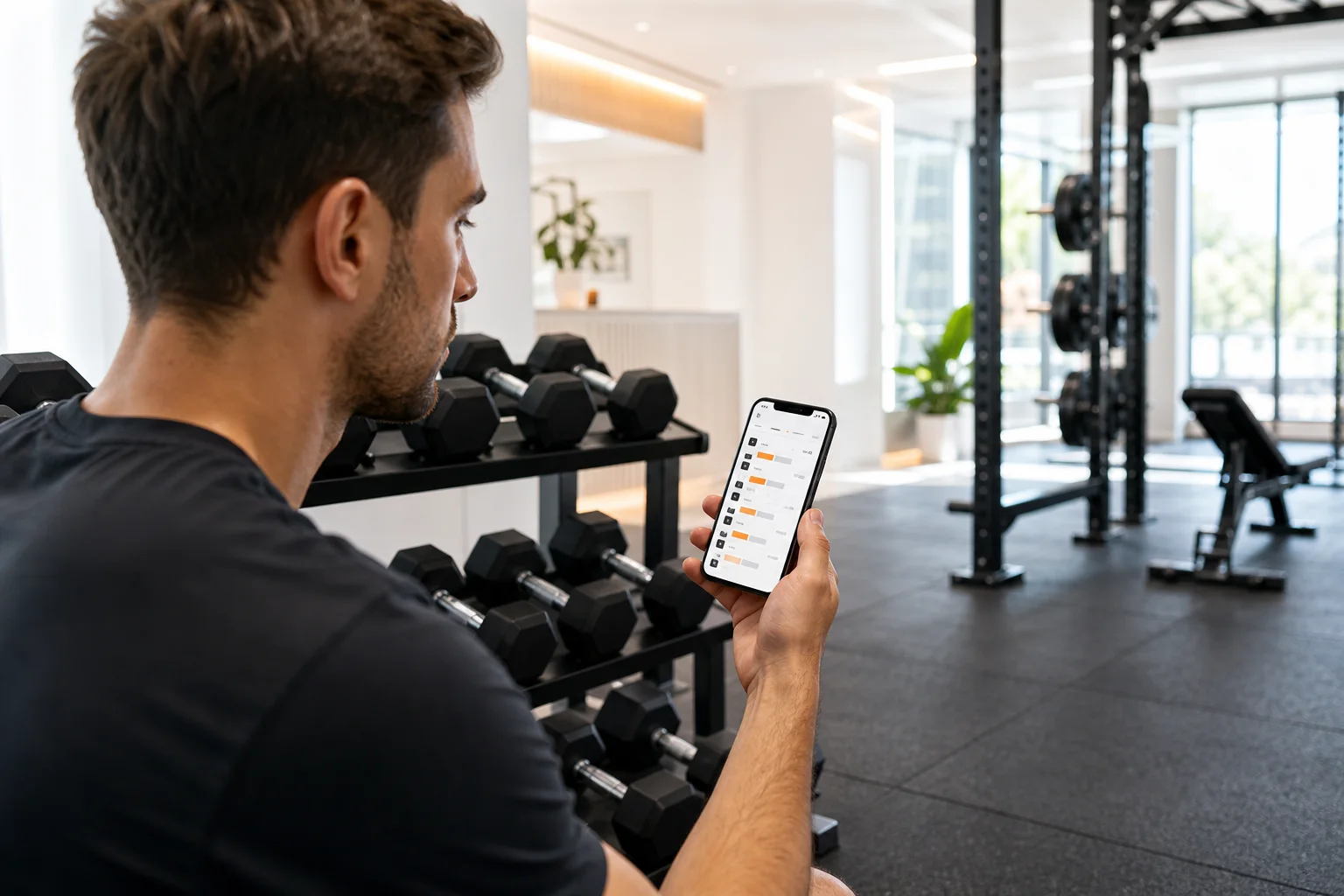
A 6 day gym workout plan can be effective for building strength, muscle and training consistency—but six sessions does not automatically mean better results. The structure needs to distribute weekly work sensibly, leave enough time for recovery and give you a clear way to progress.
For many lifters, a push-pull-legs split repeated twice per week is a practical starting point. You train pressing muscles together, pulling muscles together and legs together, then repeat the sequence with slightly different exercise choices or rep targets. The schedule below is written for an intermediate trainee who can train regularly and already understands basic lifting technique.
If you are new to resistance training, start with fewer weekly sessions and build gradually. A well-executed three- or four-day plan is more useful than a six-day plan you cannot recover from or follow consistently.
Is a 6 day gym workout plan right for you?
Six training days may suit you if you have a predictable schedule, enjoy frequent gym sessions and can keep most workouts focused rather than excessively long. It may also make sense when you want to spread weekly sets across more sessions instead of trying to fit everything into two or three very demanding workouts.
It is less suitable when you are a complete beginner, regularly sleep poorly, have a highly physical job or find that soreness and fatigue interfere with daily life. Frequency is a planning tool, not a requirement. When weekly training volume is similar, training a muscle more often does not automatically produce better muscle growth. More frequent sessions can simply make a manageable amount of work easier to organize.
- Beginner: use two to four resistance-training days while learning movement patterns.
- Intermediate: consider six days if you can maintain good performance and recovery.
- Advanced: use six days to distribute higher workloads, while monitoring fatigue closely.
Adults should also include regular aerobic activity and muscle-strengthening work each week. A six-day lifting schedule already creates a high training commitment, so keep additional cardio purposeful rather than automatically adding hard conditioning every day.
6 day push-pull-legs workout plan
This six-day workout split uses three training days followed by one rest day, then another three training days. The second round changes the emphasis slightly so that you are not repeating exactly the same session twice.
Day 1: Push strength
- Barbell or machine bench press: 3 sets of 5–8 reps
- Seated shoulder press: 3 sets of 6–10 reps
- Incline dumbbell press: 2–3 sets of 8–12 reps
- Cable or machine lateral raise: 3 sets of 10–15 reps
- Triceps pressdown: 2–3 sets of 10–15 reps
Keep the first two movements controlled and leave a small amount of effort in reserve. The goal is to accumulate quality work, not to test your one-repetition maximum every week.
Day 2: Pull strength
- Deadlift variation or Romanian deadlift: 3 sets of 5–8 reps
- Pull-up or lat pulldown: 3 sets of 6–10 reps
- Chest-supported row: 3 sets of 8–12 reps
- Single-arm cable row: 2 sets of 10–12 reps per side
- Face pull or reverse fly: 2–3 sets of 12–15 reps
- Dumbbell curl: 2–3 sets of 8–12 reps
If deadlifts create too much fatigue for the following leg session, use a less demanding hinge variation or reduce the number of working sets. Your best exercise selection is the one that lets you train hard while preserving technique for the rest of the week.
Day 3: Legs strength
- Back squat, front squat or leg press: 3 sets of 5–8 reps
- Romanian deadlift or hip thrust: 3 sets of 8–10 reps
- Walking lunge or split squat: 2–3 sets of 8–12 reps per leg
- Leg curl: 2–3 sets of 10–15 reps
- Standing calf raise: 3 sets of 10–15 reps
- Optional abdominal exercise: 2–3 controlled sets
Day 4: Rest or active recovery
Take a full rest day or do easy movement such as walking, gentle cycling or mobility work. Avoid turning active recovery into another hard workout. Use this day to review your records, prepare meals, plan your next sessions and assess whether soreness is affecting your movement quality.
Day 5: Push hypertrophy
- Incline barbell or dumbbell press: 3 sets of 8–12 reps
- Machine chest press: 2–3 sets of 10–12 reps
- Machine or dumbbell shoulder press: 2–3 sets of 8–12 reps
- Lateral raise: 3 sets of 12–20 reps
- Overhead triceps extension: 2–3 sets of 10–15 reps
Compared with Day 1, this session uses more moderate-repetition work and generally less emphasis on maximal loading. Stop a set when your technique begins to deteriorate rather than forcing repetitions that change the movement.
Day 6: Pull and posterior-chain hypertrophy
- Lat pulldown or assisted pull-up: 3 sets of 8–12 reps
- Seated cable row: 3 sets of 8–12 reps
- Rear-delt fly: 3 sets of 12–20 reps
- Back extension or light hip hinge: 2–3 sets of 10–15 reps
- Incline dumbbell curl: 2–3 sets of 10–15 reps
- Hammer curl: 2 sets of 10–15 reps
Day 7: Legs hypertrophy
- Leg press or hack squat: 3 sets of 8–12 reps
- Bulgarian split squat: 2–3 sets of 8–12 reps per leg
- Hip thrust: 3 sets of 8–12 reps
- Leg extension: 2–3 sets of 12–15 reps
- Seated leg curl: 2–3 sets of 10–15 reps
- Seated calf raise: 3 sets of 12–20 reps
If your calendar requires a different order, keep the key principle: avoid placing your hardest sessions back-to-back when the same muscles or joints are still fatigued. You can also move the rest day to the point where performance usually drops.
How much work should you do?
Start with the lower end of the set ranges. Two or three challenging sets per exercise are often enough to create a useful training stimulus, especially when the exercise is compound and other movements train the same muscles indirectly. Adding more exercises too quickly can make recovery difficult without improving the quality of your training.
Track weekly sets by muscle group, but do not treat a single number as a universal target. Your useful volume depends on training experience, exercise selection, sleep, nutrition and how close your sets are to failure. If performance is stable and recovery is good, add a small amount of work only when needed. If performance falls for several sessions, reduce sets before adding more intensity.
How to progress through the plan
Use a double-progression method for most exercises:
- Choose a load that lets you complete the bottom of the rep range with controlled technique.
- Keep the load the same until you can reach the top of the range on all prescribed sets.
- Increase the load by a small amount during the next session.
- Return to the lower end of the rep range and build up again.
For example, if an exercise is programmed for 3 sets of 8–12 reps, you might record 10, 9 and 8 reps this week. Keep the same load next time and aim for 10, 10 and 9. Once you can complete 12, 12 and 12 with sound form, make a modest increase.
Progress does not have to mean adding weight every workout. More repetitions, cleaner technique, a controlled range of motion or slightly shorter—but still adequate—rest periods can all represent progress. For strength-focused lifts, take enough rest to repeat high-quality efforts. For smaller isolation movements, shorter rests may be practical.
Recovery rules for training six days
- Manage effort: most working sets should finish with one or a few technically good repetitions still possible.
- Protect sleep: poor sleep is a reason to reduce load or sets, not proof that you need to train harder.
- Watch performance: repeated declines in reps, load or technique suggest that your current workload may be too high.
- Use easier weeks: occasionally reduce sets or loads when accumulated fatigue is high.
- Keep exercises stable: changing movements every session makes progression harder to judge.
Do not ignore persistent pain, unusual symptoms or a major change in physical function. Fitness programming is not a substitute for individualized medical or rehabilitation advice.
How to adapt the six-day routine to your level
For beginners
Run only Days 1, 3 and 5, or use a simpler full-body schedule. Practice the main movement patterns with conservative loads and record how each session feels. Add a fourth day only after you can recover consistently.
For busy members
Use the same exercise order but complete fewer accessories. Keep one or two priority movements per session, then finish with short, focused work. A repeatable four-day schedule may be a better fit; see this 4-day workout plan for strength for another structure.
For experienced lifters
Adjust the second push, pull and leg sessions toward your weaker areas, but make changes one at a time. You can also build a manual plan in GymPT, save your workout records and review which exercises are actually progressing instead of relying on memory.
Use GymPT to make the plan easier to follow
A good program is more useful when it is recorded and reviewed. With a free GymPT account, you can save your training records and connections, build a manual program without AI credits, or request optional assistance when you want help organizing a routine. AI support can help with planning, but it should not replace your judgment or a qualified trainer’s review.
If you work with a personal trainer, you can choose which programs, workout records and notes to share. Your trainer reviews only the information you permit them to access. A trainer can also prepare a program proposal manually or with optional AI support, then you decide whether to save and use it. For a closer look at that process, read Personal Trainer Workout Program Proposals: A Better Client Review Workflow.
Keep your plan practical: record the exercise, load, repetitions and a short note about technique or effort. If you later need to adjust the schedule, your records make the decision more specific. For ideas on turning records into a repeatable weekly habit, see this simple weekly gym plan.
Final checklist
- Choose six days only if your schedule and recovery support them.
- Use push, pull and legs sessions to distribute work across the week.
- Start at the lower end of the set ranges.
- Progress gradually through repetitions, load or improved technique.
- Keep at least one genuine recovery day.
- Record your sessions so you can make decisions from evidence rather than memory.
- Ask a real trainer for individualized guidance when your goals or constraints require it.
The best six-day gym routine is not the most complicated one. It is the one you can perform with good technique, recover from and improve over time.