4 day workout plan for strength
4-Day Workout Plan for Strength: Progress Safely and Lift More
A well-structured 4-day workout plan for strength gives you enough practice, recovery, and progression to build real strength. Here is a practical upper/lower routine with clear guidance for exercise selection, load increases, technique consistency, and fatigue management.
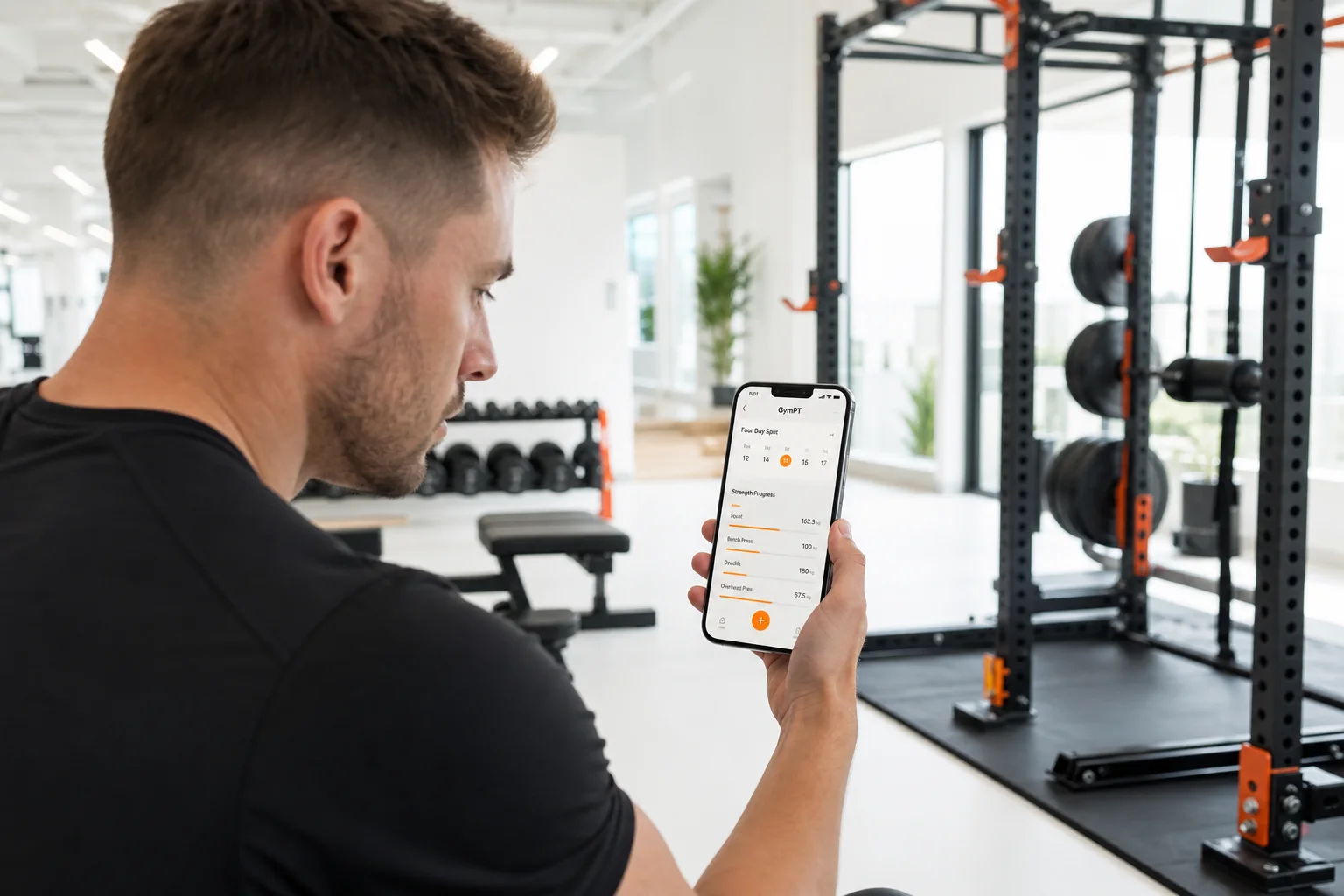
A 4 day workout plan for strength can be an excellent balance between training frequency and recovery. You practice the main movement patterns often enough to improve technique, while still leaving rest days for your muscles, joints, and nervous system to recover.
The goal is not to make every workout exhausting. The goal is to repeat high-quality training, gradually handle more load or more repetitions, and keep your technique consistent. The routine below uses an upper/lower structure, which makes it practical for many gym schedules and easy to adapt to barbells, dumbbells, machines, or limited equipment.
How to structure a 4-day workout plan for strength
A simple weekly layout is:
- Monday: Upper body strength
- Tuesday: Lower body strength
- Wednesday: Rest or easy activity
- Thursday: Upper body volume and technique
- Friday: Lower body volume and technique
- Saturday and Sunday: Rest, walking, mobility, or optional low-intensity cardio
You can move the days to fit your schedule. Try to avoid placing all four sessions back-to-back. A rest day in the middle of the week helps you perform better during the second half of the plan.
This type of 4 day strength training split trains each major muscle group twice per week. That frequency gives you repeated practice without requiring maximal effort every time you train. Current resistance-training guidance also emphasizes that consistency matters more than making a program unnecessarily complex.
The 4-day strength workout plan
Day 1: Upper body strength
- Barbell bench press or dumbbell bench press: 3 sets of 4–6 repetitions
- Chest-supported row or barbell row: 3 sets of 5–8 repetitions
- Overhead press: 3 sets of 5–7 repetitions
- Pull-up or lat pulldown: 3 sets of 6–10 repetitions
- Triceps pressdown: 2 sets of 8–12 repetitions
- Dumbbell curl: 2 sets of 8–12 repetitions
Start with the pressing and rowing movements while you are fresh. The final exercises support upper-body strength and balance but should not reduce the quality of your main lifts.
Day 2: Lower body strength
- Back squat, front squat, or leg press: 3 sets of 4–6 repetitions
- Romanian deadlift: 3 sets of 5–8 repetitions
- Walking lunge or split squat: 2 sets of 6–10 repetitions per leg
- Leg curl: 2 sets of 8–12 repetitions
- Standing calf raise: 3 sets of 8–12 repetitions
- Plank or loaded carry: 3 sets
Keep the first two exercises controlled. You should be able to maintain your bracing, range of motion, and bar path from the first repetition to the last. If your technique changes significantly, reduce the load rather than forcing the planned number.
Day 3: Upper body volume and technique
- Incline dumbbell press: 3 sets of 6–10 repetitions
- Seated cable row: 3 sets of 6–10 repetitions
- Close-grip bench press or machine press: 2 sets of 6–10 repetitions
- Single-arm dumbbell row: 2 sets of 8–12 repetitions per side
- Lateral raise: 3 sets of 10–15 repetitions
- Face pull or rear-delt fly: 2 sets of 10–15 repetitions
This session uses slightly higher repetitions and more exercise variety. The purpose is to build additional practice and training volume without turning every set into a test of maximum strength.
Day 4: Lower body volume and technique
- Deadlift variation or trap-bar deadlift: 3 sets of 3–5 repetitions
- Front squat, hack squat, or goblet squat: 3 sets of 6–10 repetitions
- Hip thrust: 3 sets of 6–10 repetitions
- Reverse lunge: 2 sets of 8–12 repetitions per leg
- Seated leg curl: 2 sets of 10–15 repetitions
- Side plank or Pallof press: 3 sets per side
If deadlifts create too much fatigue for your schedule, use a lighter variation or perform them every other week. The best exercise is one you can perform safely and recover from consistently.
How heavy should you lift?
For the main strength exercises, choose a load that allows you to complete the target repetitions with approximately one to three good repetitions left in reserve. This means the set should feel challenging, but you should not need to grind or lose your position.
For example, if an exercise calls for 3 sets of 4–6 repetitions, begin with a weight you can lift for about five controlled repetitions. Over the following sessions, aim to add repetitions before adding weight. This approach is often called double progression:
- Choose a manageable load.
- Work within the planned repetition range.
- When you can complete all sets at the top of the range with stable technique, increase the load slightly.
- Return to the lower end of the repetition range and build again.
Small increases are usually more sustainable than frequent large jumps. For upper-body exercises, a small plate increase may be enough. For lower-body exercises, you may be able to increase the load more, but only if your range of motion and control remain consistent.
Technique consistency matters more than impressive numbers
Strength is specific to how you perform a movement. If your squat depth, stance, grip, tempo, or range of motion changes every week, it becomes difficult to know whether you are truly getting stronger.
Use the same basic setup for several weeks:
- Keep your stance and grip as consistent as practical.
- Use a repeatable warm-up before heavy sets.
- Control the lowering phase instead of dropping into positions.
- Record repetitions, load, and any major technique notes.
- Stop a set if pain, instability, or a major loss of position appears.
Consistency does not mean every repetition must look identical. It means the exercise remains recognizable enough that your performance can be compared from session to session.
Safe strength progression: when to add load and when to hold
Progressive overload is important, but it does not require adding weight every workout. You can progress by increasing repetitions, improving control, completing an additional set, or using the same load with less effort. Load should be only one part of the progression strategy.
Hold the weight steady when:
- You are still learning the movement.
- Your final repetitions become noticeably slower or less controlled.
- You have missed the target range in the previous session.
- You are returning after illness, travel, or a long training break.
- Your sleep, stress, or general readiness is unusually poor.
Reduce the load temporarily when your technique repeatedly breaks down, soreness changes your movement, or fatigue carries into several sessions. This is not a failure. It is load management that allows you to continue training productively.
Warm-up and rest periods
Before the first heavy exercise, spend five to ten minutes gradually raising your temperature and moving through the joints you will use. Then perform a few lighter sets of the first exercise. Your warm-up sets should prepare you without creating fatigue.
For heavy compound lifts, rest for about two to four minutes between working sets. Accessory exercises may need about one to two minutes. Use the longer end of the range when your breathing has not settled or when the next set requires high concentration.
Longer rest is not wasted time. It can help you maintain repetitions and technique, which is especially important when strength is the main goal.
How to manage fatigue during a 4-day program
A four-day routine is demanding enough that recovery should be planned rather than treated as an afterthought. Keep at least one rest day in the week, eat regular balanced meals, and prioritize consistent sleep. You do not need to train to complete failure to make progress.
Consider a lighter week after several hard weeks if performance has stalled and fatigue is accumulating. During that week, reduce the load, sets, or both while keeping the movements familiar. You can also use a lighter week before a busy period, trip, or event when recovery will be limited.
Track more than the number on the bar. A useful workout log can include:
- Exercise and variation
- Load, sets, and repetitions
- Estimated effort or repetitions in reserve
- Technique notes
- Sleep and unusual fatigue
GymPT can help organize these details into a repeatable plan, adapt training to available equipment, and show progress trends over time. If you train in a small gym or at home, you can also use ideas from this workout app with equipment scan guide to match exercises to what you actually have.
Common mistakes to avoid
- Changing exercises too often: Keep key movements stable long enough to learn and measure them.
- Adding weight before earning it: Meet the repetition target with reliable form first.
- Making every set maximal: Save all-out efforts for occasional testing, not every workout.
- Ignoring recovery: Persistent fatigue can reduce training quality and make progression harder.
- Using a plan that does not fit your life: A slightly simpler routine completed consistently beats a perfect plan that you regularly skip.
If you want a broader look at how to build a sustainable weekly schedule, read this weekly gym schedule for muscle gain. For a more structured approach to exercise selection and progression, the strength training program guide offers additional tracking ideas.
How to personalize this plan
Beginners may start with two working sets for each exercise and focus on learning the movement patterns. More experienced lifters can use three or four sets for selected main lifts, provided they are recovering well. You can also replace exercises with similar options: a leg press for a squat, a machine chest press for a bench press, or a cable row for a barbell row.
Equipment, training history, schedule, and comfort all matter. GymPT is designed to help personalize workouts around those factors, with workout tracking, AI coach chat, body analysis, and progress insights available as part of the training process. To compare planning features and find a setup you can use consistently, see this fitness program builder app guide.
The most effective 4-day workout plan for strength is the one you can repeat with good technique, manageable fatigue, and clear progression. Start conservatively, record your sessions, and let your performance—not impatience—decide when the load increases.