6 day push pull legs workout plan
6 Day Push Pull Legs Workout Plan: Build Muscle With a Smarter Weekly Split
A practical 6 day push pull legs workout plan for intermediate lifters, including exercise selection, weekly scheduling, recovery, progression, and deload guidance.
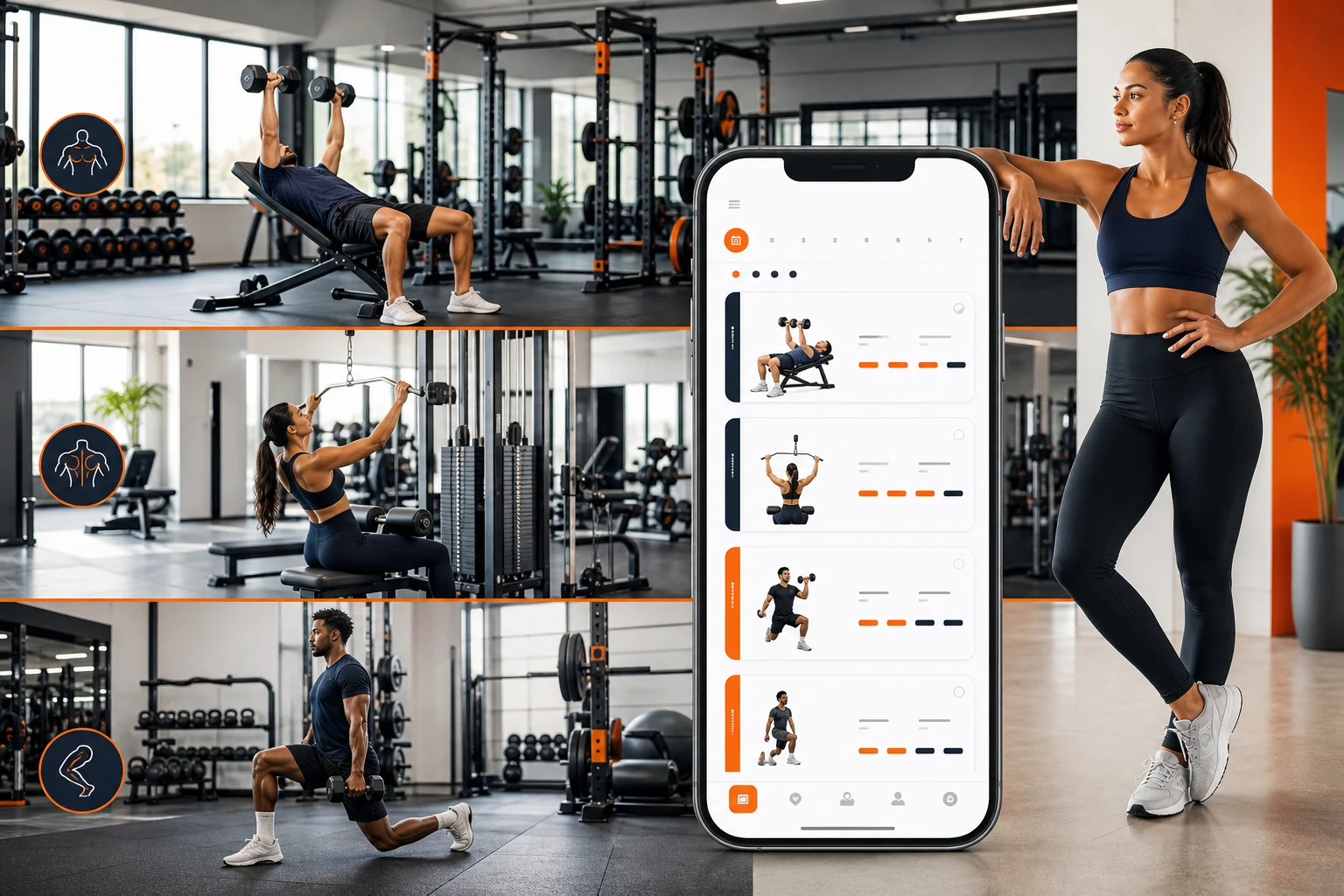
A 6 day push pull legs workout plan can be an effective way to organize strength and hypertrophy training without cramming every exercise into one long session. The basic structure is simple: train pushing muscles, pulling muscles, and legs twice per week.
However, six training days does not automatically mean better results. The plan works best when your weekly volume is manageable, your sessions are separated intelligently, and your recovery supports the workload. This guide shows how to build a practical six-day PPL routine for an intermediate lifter, how to progress it, and when to reduce the frequency.
What is a 6 day push pull legs workout plan?
A push pull legs split divides training into three movement-focused sessions:
- Push: chest, shoulders, and triceps
- Pull: back, rear delts, and biceps
- Legs: quadriceps, hamstrings, glutes, and calves
In a six-day version, you repeat the sequence twice during the week. A common schedule looks like this:
- Monday: Push A
- Tuesday: Pull A
- Wednesday: Legs A
- Thursday: Push B
- Friday: Pull B
- Saturday: Legs B
- Sunday: Rest
The two versions of each workout should not be identical. For example, the first push workout can emphasize heavier pressing, while the second uses moderate loads, different angles, and more controlled repetitions. This helps distribute stress instead of repeating the same fatigue pattern six or seven days later.
Who should use a six-day PPL routine?
This split is usually most appropriate for intermediate lifters who have consistent training experience, understand basic exercise technique, and can recover from frequent resistance training. It may also work for advanced lifters who need more opportunities to practice key movements or distribute higher weekly volume.
It is not automatically the best starting point for a beginner. New lifters can make excellent progress with fewer weekly sessions because they respond to relatively small amounts of training. If you are new to structured resistance training, start with a routine you can perform consistently, such as a three-day full-body plan or a four-day upper-lower split. GymPT’s guide to how many days beginners should train can help you choose a realistic starting frequency.
Use a six-day plan when:
- You enjoy training frequently and can maintain the schedule.
- Your sessions become too long when you combine more exercises into fewer days.
- You want to train each major muscle group approximately twice per week.
- Your sleep, nutrition, stress, and available time support the workload.
Choose fewer days if missing sessions is common, soreness remains high, or your performance declines across multiple workouts.
Example 6 day push pull legs workout plan
The following routine is a flexible template rather than a requirement to perform every listed exercise. Begin with the lower end of the set ranges, especially if you are moving from a lower-frequency plan.
Push A: heavier chest and shoulder focus
- Barbell or dumbbell bench press: 3 sets of 5 to 8 reps
- Incline dumbbell press: 3 sets of 8 to 10 reps
- Seated shoulder press: 2 to 3 sets of 6 to 10 reps
- Cable or machine lateral raise: 3 sets of 12 to 20 reps
- Triceps pressdown: 3 sets of 10 to 15 reps
Pull A: back thickness and strength
- Deadlift or controlled hip-hinge variation: 2 to 3 sets of 3 to 6 reps
- Pull-up or lat pulldown: 3 sets of 6 to 10 reps
- Chest-supported row: 3 sets of 8 to 12 reps
- Rear-delt fly: 3 sets of 12 to 20 reps
- Incline dumbbell curl: 2 to 3 sets of 8 to 12 reps
Legs A: squat emphasis
- Back squat or hack squat: 3 sets of 5 to 8 reps
- Romanian deadlift: 3 sets of 6 to 10 reps
- Leg press: 2 to 3 sets of 10 to 15 reps
- Seated leg curl: 3 sets of 10 to 15 reps
- Standing calf raise: 3 sets of 8 to 15 reps
Push B: moderate-load chest and arms
- Incline barbell or machine press: 3 sets of 6 to 10 reps
- Flat dumbbell press: 3 sets of 8 to 12 reps
- Machine shoulder press: 2 sets of 8 to 12 reps
- Cable lateral raise: 3 sets of 12 to 20 reps
- Overhead triceps extension: 3 sets of 10 to 15 reps
Pull B: lat and upper-back emphasis
- Lat pulldown or assisted pull-up: 3 sets of 8 to 12 reps
- One-arm cable or dumbbell row: 3 sets of 8 to 12 reps
- Seated cable row: 2 to 3 sets of 10 to 15 reps
- Reverse pec deck: 3 sets of 12 to 20 reps
- EZ-bar or cable curl: 3 sets of 8 to 15 reps
Legs B: unilateral and posterior-chain emphasis
- Front squat, safety-bar squat, or leg press: 3 sets of 6 to 10 reps
- Hip thrust: 3 sets of 8 to 12 reps
- Bulgarian split squat: 2 to 3 sets of 8 to 12 reps per leg
- Lying leg curl: 3 sets of 10 to 15 reps
- Seated calf raise: 3 sets of 10 to 20 reps
If your gym has limited equipment, replace each movement with a similar pattern rather than abandoning the session. For example, use dumbbell presses instead of barbell presses, split squats instead of a leg press, or a resistance-band row instead of a cable row. See the guide to a workout plan with limited equipment for more substitution ideas.
How much volume should you perform?
Weekly set volume is one of the most important variables to manage in a PPL routine. More sets can provide more stimulus, but only when you can perform them with good technique and recover between sessions.
A sensible starting point for many intermediate lifters is approximately:
- Chest, back, and quadriceps: 10 to 16 challenging sets per week
- Hamstrings and glutes: 8 to 14 challenging sets per week
- Shoulders, biceps, and triceps: 6 to 12 direct sets per week, plus indirect work
- Calves: 6 to 12 sets per week
These are planning ranges, not universal targets. Pressing already trains the triceps and front delts, while rows and pulldowns contribute work to the biceps and rear delts. Count direct and indirect work together when deciding whether you need more isolation exercises.
Start conservatively for two to four weeks. Add a set only when your recovery is good and your performance has stopped improving with the current workload. If your six-day routine becomes difficult to sustain, reduce isolation volume before removing the main movements.
How to progress on a six-day PPL workout
Use double progression for most exercises. Choose a rep range, keep the weight stable, and gradually add repetitions until you reach the top of the range on all working sets. Then increase the load slightly and return to the lower end of the range.
For example:
- Perform dumbbell presses for 3 sets of 8 to 12 reps.
- Keep the same weight until you can complete 12, 12, and 12 reps with controlled technique.
- Increase the dumbbell weight by the smallest practical amount.
- Build back toward 12 reps over the next several sessions.
For compound lifts, leave approximately one to three good repetitions in reserve most of the time. Isolation exercises can be taken closer to technical failure, provided your form remains controlled. You do not need to reach absolute failure on every set to make progress.
Track the weight, repetitions, sets, and a short note about effort. A workout tracker makes it easier to identify genuine progress instead of relying on memory. GymPT can help organize equipment-based exercises, record completed sessions, and use your performance history to guide future workouts.
Recovery rules for a six-day split
Recovery determines whether a six-day plan is productive or simply exhausting. Keep at least one complete rest day each week, and consider placing an additional rest day between the first and second half of the split if fatigue accumulates.
Use these practical checks:
- Performance: repeated drops in load or repetitions may indicate excessive fatigue.
- Soreness: mild soreness is manageable, but severe soreness that changes your technique is a reason to adjust.
- Sleep: consistently poor sleep can reduce your ability to recover from high training frequency.
- Motivation: persistent dread before every session may signal that the plan is too demanding.
- Joint comfort: modify an exercise if a movement repeatedly causes discomfort rather than normal muscular effort.
If fatigue is high, reduce sets by around 25% to 40% for one week, keep the exercises familiar, and resume progression gradually. You can also use a rotating schedule, such as three workouts followed by one rest day, instead of forcing the routine into a Monday-to-Saturday calendar.
Should you train six days every week?
Not necessarily. Research on resistance-training frequency suggests that frequency is mainly a way to distribute weekly work. When total volume is similar, training a muscle more often does not guarantee more muscle growth. The advantage of a six-day split is often practical: shorter sessions, more frequent practice, and easier distribution of challenging sets.
For many people, a four-day routine produces equal or better results because it is easier to repeat consistently. Compare the six-day plan with GymPT’s six-day upper-lower workout plan if you prefer a different way to divide weekly volume. A four-day strength workout plan may be a better choice when recovery or schedule flexibility is your priority.
How GymPT can personalize the plan
A template is a useful starting point, but your best routine depends on your goals, training age, available equipment, schedule, and recovery. GymPT can help adapt a PPL structure around the equipment you actually have, suggest exercise alternatives, track your completed work, and provide progress insights over time.
The goal is not to complete the most complicated six-day gym workout plan. The goal is to create a routine you can perform with consistent effort, recover from, and improve over many weeks.
Bottom line
A well-designed 6 day push pull legs workout plan can support strength and muscle gain by training each major movement group twice per week. Keep the first and second sessions slightly different, begin with manageable volume, progress gradually, and treat recovery as part of the program.
If six sessions leave you constantly fatigued, reduce the frequency rather than forcing the schedule. The best split is the one that fits your life and allows you to train consistently enough to make measurable progress.