push pull legs workout plan
Push Pull Legs Workout Plan: Build a Week That Fits Your Goals
A push pull legs workout plan can organize your week around movement patterns while giving you flexibility to train for strength, muscle growth, or general fitness. Learn how to structure your sessions, choose exercises, manage recovery, and adapt the plan to your schedule and equipment.
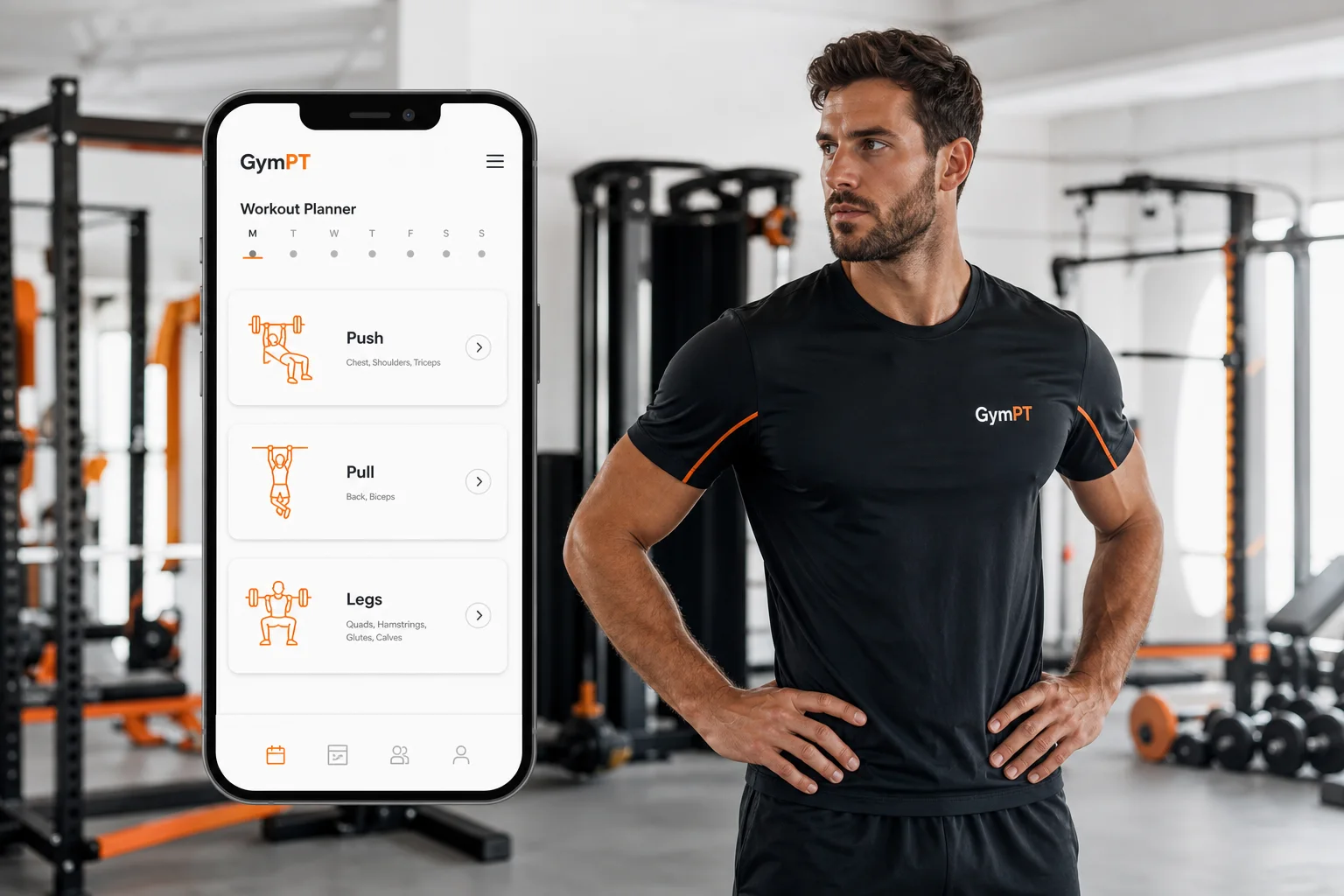
A push pull legs workout plan divides resistance training into three focused sessions: push exercises, pull exercises, and leg exercises. It is popular because it gives each workout a clear purpose without requiring every session to train the entire body.
The best push pull legs split is not necessarily the hardest or most complicated one. It is the version you can perform consistently, recover from, and adjust as your schedule changes. A beginner may benefit from three sessions per week, while an experienced lifter may repeat the cycle over six training days. Your goal, available equipment, recovery, and training history should determine the structure.
What Is a Push Pull Legs Workout Plan?
A push pull legs routine groups exercises according to the primary movement and muscles involved:
- Push day: chest, shoulders, and triceps, using movements where you press weight away from your body.
- Pull day: back, rear shoulders, and biceps, using movements where you pull weight toward your body.
- Leg day: quadriceps, hamstrings, glutes, and calves, using squats, hinges, lunges, and other lower-body movements.
This structure can make exercise selection easier and help you avoid building every workout from scratch. It also creates a natural way to distribute weekly training volume. Instead of performing a long full-body session, you can focus on fewer movement patterns and give more attention to technique and progression.
However, the split itself does not guarantee better results than a full-body routine. Research comparing split and full-body resistance training suggests that both approaches can produce similar strength and muscle gains when total training volume is comparable. In practice, the better option is the one that matches your preferences, schedule, and ability to recover.
How Many Days Should You Train?
There is no single correct schedule for a PPL workout plan. Choose the frequency you can sustain for several weeks rather than selecting the maximum number of days you could manage during an unusually motivated week.
Three-day push pull legs plan
This is the simplest version and often the best starting point. Each movement pattern is trained once per week.
- Monday: Push
- Wednesday: Pull
- Friday: Legs
Rest days between sessions can make this schedule practical for beginners, busy adults, or anyone returning to training. The main limitation is that each muscle group receives only one dedicated session per week, so the session may need to include enough quality work to support your goal.
Four-day flexible PPL plan
A four-day schedule allows you to continue the rotation without forcing the same weekdays every week.
- Day 1: Push
- Day 2: Pull
- Day 3: Rest
- Day 4: Legs
- Day 5: Repeat the next session in the rotation, or rest
This approach works well when your weekly availability changes. You can keep rotating through the sessions instead of restarting at push day every Monday.
Six-day push pull legs split
The classic six-day setup repeats each session twice:
- Monday: Push A
- Tuesday: Pull A
- Wednesday: Legs A
- Thursday: Push B
- Friday: Pull B
- Saturday: Legs B
- Sunday: Rest
This schedule can distribute weekly volume across shorter sessions, but it demands more time and recovery. It is not automatically better than three or four days per week. If performance declines, soreness remains high, or sessions regularly interfere with sleep and daily responsibilities, reduce frequency or volume.
A Practical Push Pull Legs Workout Plan
The following example is a balanced starting framework. Adjust exercises to your experience, equipment, mobility, and goals. Perform a short warm-up before training, then use controlled repetitions and stop a set when technique begins to break down.
Push day
- Bench press or dumbbell bench press: 3 sets of 5–10 reps
- Overhead press or machine shoulder press: 2–3 sets of 6–12 reps
- Incline dumbbell press: 2–3 sets of 8–12 reps
- Lateral raise: 2–4 sets of 10–20 reps
- Triceps pressdown or overhead extension: 2–3 sets of 8–15 reps
Start with the exercise most closely connected to your goal. If strength on the bench press is the priority, place it first. If shoulder comfort or general muscle development matters more, a machine or dumbbell variation may be easier to control.
Pull day
- Pull-up, assisted pull-up, or lat pulldown: 3 sets of 6–12 reps
- Chest-supported row or cable row: 3 sets of 8–12 reps
- Single-arm dumbbell row: 2–3 sets of 8–12 reps per side
- Face pull or reverse fly: 2–4 sets of 10–20 reps
- Barbell, dumbbell, or cable curl: 2–3 sets of 8–15 reps
Use a full, comfortable range of motion and avoid turning every pulling exercise into a lower-back movement. A supported row can be a useful option when fatigue makes it difficult to maintain a stable torso.
Leg day
- Squat, leg press, or goblet squat: 3 sets of 5–10 reps
- Romanian deadlift or another hip hinge: 3 sets of 6–12 reps
- Walking lunge or split squat: 2–3 sets of 8–12 reps per side
- Leg curl: 2–3 sets of 10–15 reps
- Calf raise: 2–4 sets of 10–20 reps
Leg day does not need to be a test of exhaustion. Combine one major knee-dominant exercise, one hip-dominant exercise, and a few targeted movements. If your lower body is still heavily fatigued by the next session, reduce sets before changing every exercise.
How to Adjust the Plan for Your Goal
For muscle growth
Prioritize enough weekly volume, repeatable technique, and gradual progression. A useful starting point is to perform a moderate number of challenging sets per muscle group and increase only when recovery and performance are stable. Current resistance-training guidance generally supports higher weekly volume for hypertrophy, but more is not always better if it reduces training quality.
Use a range of loads and repetitions rather than believing that one repetition range is mandatory. Keep most sets close enough to muscular fatigue to be challenging, while leaving some repetitions in reserve when needed for technique or recovery.
For strength
Place your main compound lift first on each training day. Use heavier, technically consistent sets and longer rest periods when necessary. Track the load, repetitions, and perceived difficulty so you can distinguish a genuine plateau from an unusually poor day.
Strength-focused training may benefit from practicing key lifts regularly, but your program should still include supporting exercises for balance and development. The push, pull, and legs structure can work well when the main lifts receive priority and accessory work remains purposeful.
For general fitness
Choose exercises you enjoy and can perform safely with the equipment available. You do not need a barbell-based plan to use the PPL structure. Machines, cables, dumbbells, resistance bands, and bodyweight exercises can all fit into the same movement categories.
If you also perform cardio, place demanding conditioning sessions where they interfere least with lower-body recovery. A weekly workout planner can help you see how strength training, cardio, work, and rest fit together before fatigue becomes a problem.
How to Progress Without Changing the Plan Every Week
Progression does not always mean adding weight. Use a simple progression system:
- Choose a repetition range, such as 8–12 reps.
- Keep the same load until you can complete the upper end of the range with good form.
- Add a small amount of weight when appropriate.
- Return to the lower end of the range and build again.
You can also progress by adding a repetition, improving control, increasing range of motion, or completing the same work with less unnecessary fatigue. Log every session so decisions are based on your actual performance rather than memory.
GymPT can support this process by tracking workouts and showing progress insights over time. If a movement is unavailable, an equipment-based plan can also help you replace it with an exercise that trains a similar pattern. For more guidance on choosing movements around your gym setup, see equipment based workout plans.
Recovery Is Part of the Program
A push pull legs workout plan works best when training stress and recovery are balanced. Schedule rest days when needed, especially after demanding leg sessions or when the same joints feel repeatedly irritated. Sleep, nutrition, hydration, and daily activity all affect how well you perform, but your plan should remain manageable even during a normal busy week.
Rest between sets according to the exercise and goal. Heavy compound movements often require more recovery than smaller isolation exercises. For hypertrophy, current evidence does not support treating a very short rest period as automatically superior; use enough rest to perform the next set with useful effort and stable technique.
If you feel consistently run down, adjust one variable at a time. Reduce a few sets, add a rest day, lower the load temporarily, or choose a less demanding variation. A personalized workout plan should adapt to your current readiness instead of assuming every week will feel identical.
Common Push Pull Legs Mistakes
- Training six days because it looks optimal: Frequency should match your recovery and schedule.
- Adding too many exercises: More movements can make sessions longer without improving results.
- Ignoring indirect work: Pressing trains triceps and shoulders; rows and pulldowns train the biceps. Account for this when adding isolation sets.
- Changing exercises constantly: Keep core movements long enough to evaluate progression.
- Skipping recovery signals: Persistent performance drops are a reason to modify the plan, not simply push harder.
For beginners, a beginner gym workout plan may be easier to follow than a high-frequency PPL schedule. If you already know your preferred training days, a personalized workout plan can make the split more practical by adapting exercise selection, equipment, and progression to you.
How to Make Your PPL Plan More Adaptive
Start with the weekly structure, then personalize the details. Consider your training goal, experience, available equipment, preferred exercises, session length, and recovery. Your push day may need to be shorter during a busy week. Your leg day may need a machine-based alternative if free weights are unavailable. Your pull day may need more support if your lower back is already tired.
That is where an AI personal trainer can be useful. GymPT can help create workouts around your goals and equipment, provide AI coach chat for practical questions, analyze body-related progress data, track completed sessions, and use your training history to support better decisions. The goal is not to follow a rigid template forever. It is to build a repeatable plan that becomes more useful as GymPT learns how you train.
Bottom Line
The best push pull legs workout plan is the one that gives you a clear structure while leaving room for real life. Three days per week can be highly effective and sustainable. Four days can provide flexibility. Six days can distribute volume for experienced lifters who recover well.
Choose a schedule, keep the main movement patterns consistent, progress gradually, and monitor recovery. When your plan reflects your goals, equipment, and availability, the push pull legs split becomes more than a popular routine—it becomes a practical training system you can continue to improve.