digital personal trainer app
Digital Personal Trainer App: 9 Features That Make Training More Personal
A digital personal trainer app should do more than display workouts. Learn which features make training personal, adaptable, measurable, and easier to sustain.
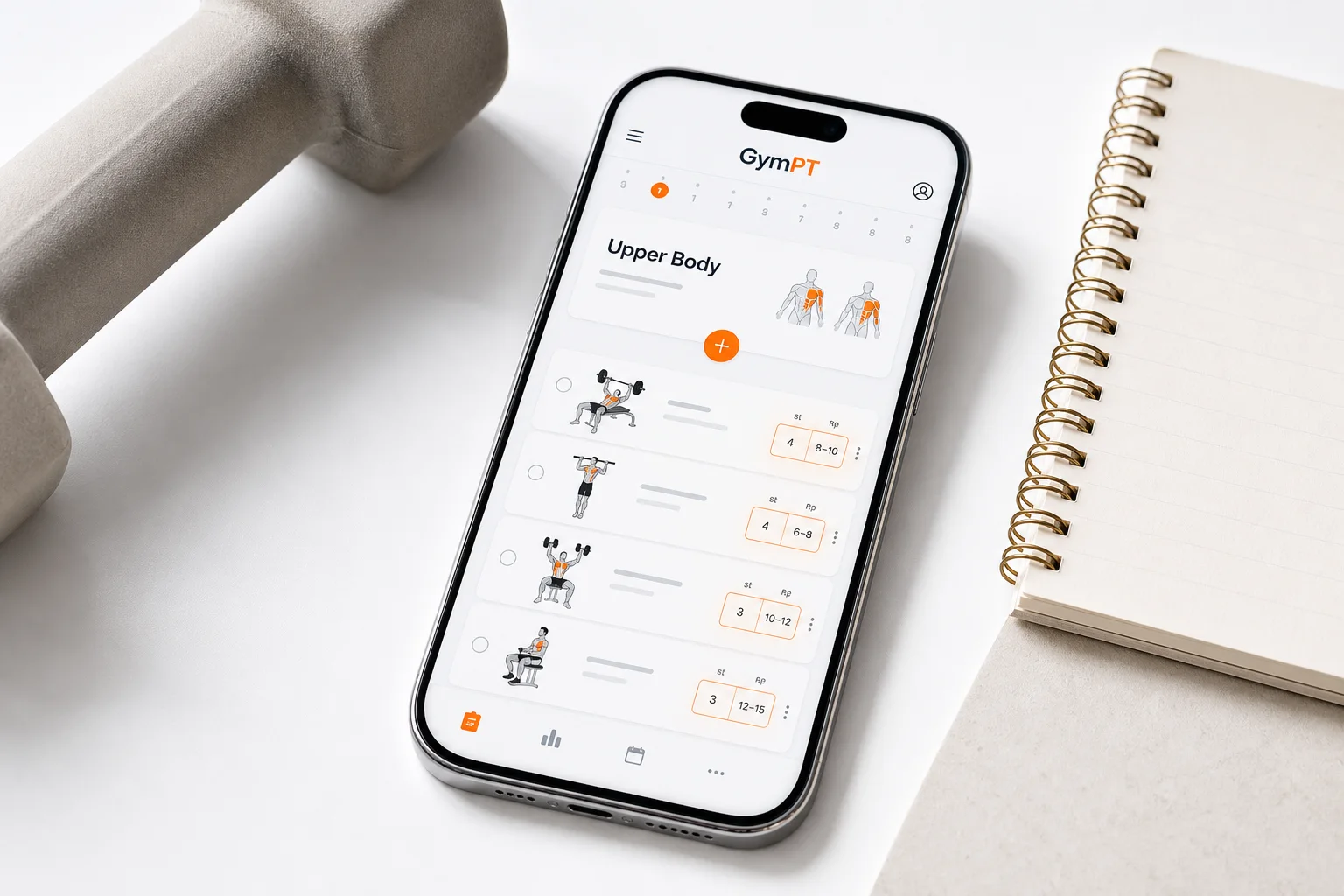
A digital personal trainer app can make structured training more accessible, but not every fitness app provides the same level of guidance. Some offer a library of exercises. Others create a plan around your goals, available equipment, training experience, schedule, and progress.
The difference matters. A useful app should reduce guesswork without pretending to replace professional medical or in-person coaching. It should help you decide what to do today, understand why you are doing it, and adjust your routine as your circumstances change.
This guide explains the most important features to compare, with GymPT as a practical example of how an AI-supported training experience can work.
What should a digital personal trainer app actually do?
The basic job is simple: turn your goals and starting point into actionable workouts. However, a genuinely useful app should support the full training cycle:
- Planning: Build a weekly routine that matches your goal, experience, availability, and equipment.
- Execution: Explain exercises, sets, repetitions, rest periods, and useful form cues.
- Adaptation: Adjust future sessions when your schedule, energy, equipment, or performance changes.
- Tracking: Record completed workouts, loads, repetitions, and other relevant training data.
- Reflection: Show progress trends so you can make more informed decisions.
Research on digital physical-activity interventions suggests that features such as self-monitoring, feedback, goal-setting, and prompts can support behavior change. The practical takeaway is that an app should not only contain information; it should help you consistently act on that information.
9 features to compare before choosing an AI personal trainer app
1. Personalization beyond your stated goal
“Build muscle” or “lose weight” is not enough information for a useful plan. A better app also asks about your training level, preferred workout style, schedule, limitations, and the space or equipment you have available.
Look for personalization based on several inputs rather than a single goal. A beginner who can train three days per week at home should not receive the same routine as an experienced lifter training five days in a fully equipped gym.
GymPT uses personal details and training preferences to create a more relevant starting point. That makes it closer to a personalized workout plan app than a static exercise library.
2. A plan that fits your real equipment
Equipment mismatch is one of the fastest ways to make a workout impractical. If a plan repeatedly recommends machines, barbells, or benches you do not have, you either skip exercises or spend time improvising.
Compare whether the app can build sessions around your actual setup, including bodyweight-only training, dumbbells, resistance bands, home equipment, or a commercial gym. It is also useful when the app can suggest alternatives instead of forcing you to abandon the session.
GymPT’s equipment-based approach helps connect the plan to the tools you can use today. That is especially valuable when you train in different locations or move between home and the gym.
3. Adaptation when your week changes
A plan is only helpful if it survives real life. Travel, missed sessions, fatigue, a busy workday, or an unexpected equipment change can all disrupt a fixed schedule.
Look for an adaptive workout app that lets you reschedule sessions, adjust training frequency, or modify a workout without losing the overall structure of the week. Adaptation should preserve the intent of the program while making the next step achievable.
This does not mean the app should change everything after one difficult workout. Good adaptation is measured and understandable: it responds to meaningful changes while keeping your long-term direction clear.
4. Clear exercise instructions
A list of exercise names is not the same as coaching. Useful instructions should clarify the setup, movement pattern, range of motion, breathing or bracing considerations, and common mistakes in language you can understand.
Video or visual demonstrations can improve usability, but they should support—not replace—your attention to controlled movement and comfort. If an exercise feels painful or unusually difficult, stop and choose a suitable alternative or seek qualified guidance.
5. Coaching you can ask questions about
One advantage of an AI personal trainer app is the ability to ask questions in the moment. You may want to know why an exercise appears in your plan, how to substitute equipment, how long to rest, or how to organize a busy week.
An AI coach chat can make the experience more conversational than browsing a database. Still, evaluate the quality of the answers. The app should communicate clearly, avoid overconfident medical advice, and encourage professional support when a question goes beyond general fitness guidance.
GymPT combines planned workouts with AI coach chat so you can get context around the routine instead of simply following isolated instructions.
6. Tracking that supports better decisions
Tracking should be quick enough that you actually use it. At minimum, look for the ability to record completed sessions, sets, repetitions, weights, and notes. Depending on your goals, you may also want to track workout duration, perceived effort, or body measurements.
A good workout tracking app turns those entries into useful feedback. For example, you may notice that a lift has progressed steadily, that one training day is frequently missed, or that your weekly volume is inconsistent.
Tracking is not about collecting every possible metric. It is about capturing enough information to identify patterns and make your next training decision more informed.
7. Progress insights instead of isolated numbers
Seeing a heavier dumbbell or one extra repetition can be encouraging, but progress is rarely linear. An app should help you view trends over time rather than judging your training by one session.
Useful insights may include completed-workout consistency, exercise performance, changes in training volume, or adherence to your planned schedule. Body analysis can also provide another reference point, but it should be interpreted cautiously. Measurements can vary with hydration, timing, lighting, and other factors, so they are best viewed as trends rather than definitive judgments.
GymPT includes body analysis and progress insights to help connect individual workouts with the broader direction of your training.
8. A realistic approach to progression
Progressive training usually means gradually increasing a relevant challenge over time. That might involve more repetitions, slightly more load, an additional set, improved control, or a more demanding variation.
Be cautious of apps that promise dramatic outcomes or push maximum effort in every session. A sustainable plan should allow room for recovery and should match your experience level. For generally healthy adults, international guidance also emphasizes regular aerobic activity and muscle-strengthening work on at least two days per week, while encouraging people to begin with manageable amounts and build gradually.
The best app makes progression understandable. It should show what changed, why it changed, and what you can focus on next.
9. Transparent privacy and data controls
Fitness apps may handle sensitive information, including body measurements, training history, goals, and photos. Before signing up, check what data the app collects, why it needs that data, how it is used, and whether you can delete it.
Look for a clear privacy policy, understandable permission requests, and settings that let you control optional data sharing. An app should not need access to unrelated information simply because it offers fitness features.
Privacy is part of product quality. If you do not understand how your information is handled, that uncertainty can undermine confidence in the entire training experience.
How GymPT fits the digital trainer category
GymPT is designed to bring several of these features into one training workflow:
- Personalized plans: Workouts are shaped around your goals, experience, schedule, and preferences.
- AI coach chat: Ask practical questions about your routine and receive context while you train.
- Body analysis: Use body-related information as one input for more informed planning and progress review.
- Equipment-based training: Build sessions around the equipment and training environment available to you.
- Workout tracking: Record sessions and performance so your plan has useful history behind it.
- Progress insights: Review patterns over time instead of relying only on day-to-day motivation.
The goal is not to make training complicated. It is to make the next workout clearer, more practical, and easier to repeat.
Who benefits most from a digital personal trainer app?
This type of app can be especially useful if you:
- Want structure but do not know how to organize a weekly routine.
- Train at home and need workouts matched to limited equipment.
- Move between different gyms or training spaces.
- Prefer guidance without paying for constant one-to-one coaching.
- Need accountability through reminders, tracking, and visible progress.
- Want to understand the reasoning behind your plan rather than follow random workouts.
It may be less suitable as a standalone solution for someone who needs medical rehabilitation, diagnosis, or close supervision for a complex injury. In those situations, a qualified healthcare or fitness professional should guide the plan.
A simple checklist for comparing apps
Before choosing, ask these questions:
- Does the app create a plan from several personal inputs?
- Can it work with the equipment I actually have?
- What happens when I miss a workout or change my schedule?
- Are exercise instructions clear enough for me to train confidently?
- Can I ask questions about the plan?
- Does tracking feel quick and useful?
- Can I see meaningful progress trends?
- Does the app explain how my personal data is handled?
If the answer is yes to most of these questions, you are looking at more than a workout database. You are looking at a training system that can help connect planning, execution, feedback, and progression.
Final takeaway
The best digital personal trainer app is not necessarily the one with the largest exercise library or the most dramatic promises. It is the one that understands your starting point, fits your available resources, helps you train consistently, and turns your workout history into practical next steps.
For many people, GymPT provides that combination through personalized workout plans, AI coach chat, body analysis, equipment-aware training, tracking, and progress insights. Start with a realistic goal, use the app consistently, and let your training data inform—not dictate—your next decision.