AI workout planner with dumbbells
AI Workout Planner With Dumbbells: Build a Smarter Home Strength Plan
An AI workout planner with dumbbells can turn limited equipment into a structured strength routine. Learn what to look for, how to progress, and where AI coaching helps most.
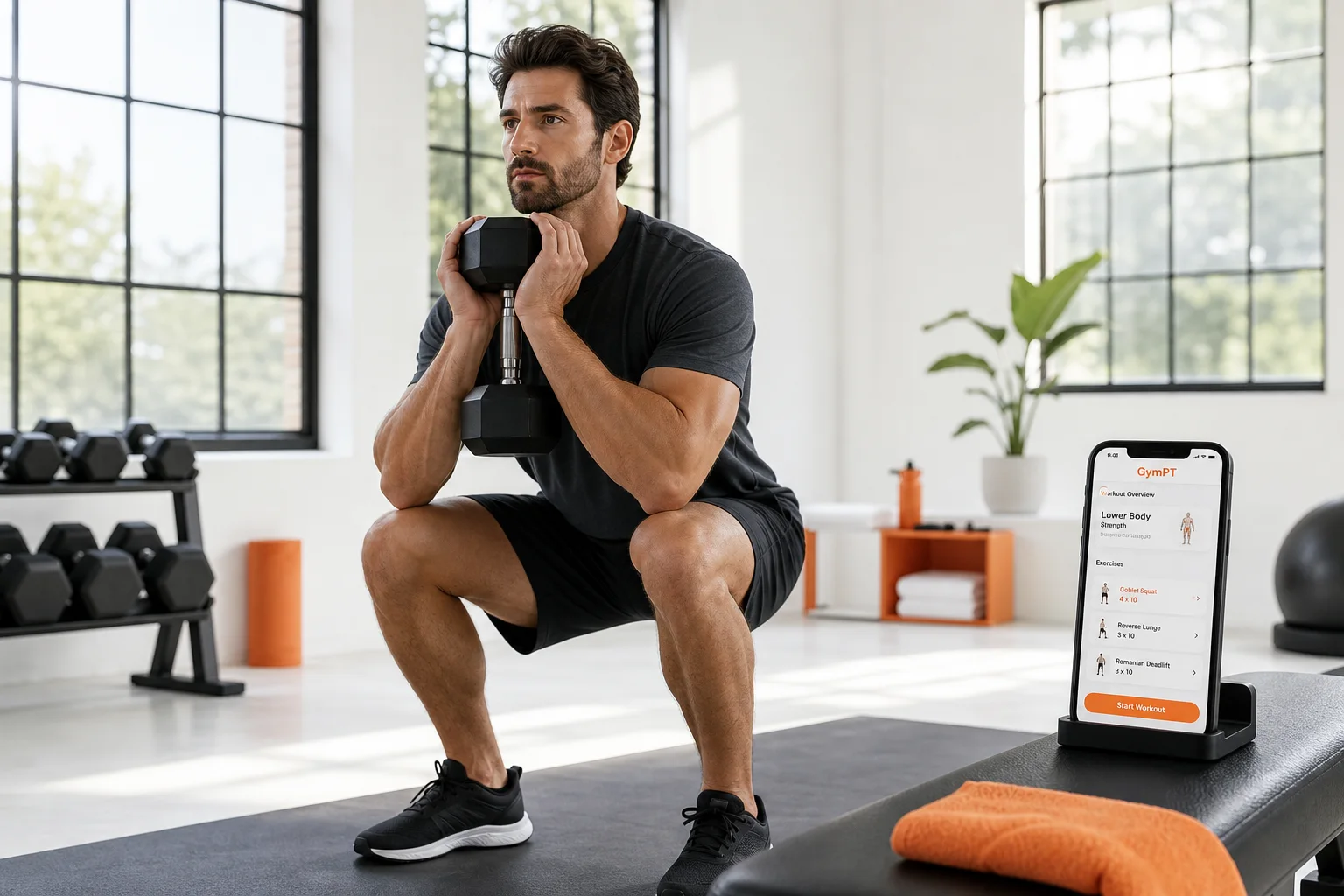
Dumbbells are one of the most practical tools for building strength at home or in a small gym. A single pair can support squats, presses, rows, hinges, lunges, carries, and many accessory exercises. The challenge is not finding exercises. It is turning those exercises into a balanced plan that matches your goal, experience, available weights, schedule, and recovery.
That is where an AI workout planner with dumbbells can help. Instead of giving you a fixed list of exercises, a useful planner should organize your training week, adapt movements to your equipment, track what you complete, and help you make sensible progress over time.
AI should not replace qualified medical or fitness support when you need it. However, for general fitness, it can reduce guesswork and make consistent training easier—especially when your equipment or schedule changes.
Why dumbbells work well for personalized training
Dumbbells provide external resistance while allowing each side of the body to work independently. That makes them useful for both simple beginner routines and more advanced strength training. They also make it easier to train through different movement patterns without needing a large collection of machines.
A well-designed dumbbell plan can include the following categories:
- Squat patterns: goblet squats and split squats for the legs.
- Hinge patterns: Romanian deadlifts and single-leg hinges for the posterior chain.
- Horizontal pushes: floor presses or bench presses for the chest, shoulders, and triceps.
- Horizontal pulls: one-arm rows for the upper back and arms.
- Vertical pushes: overhead presses when appropriate for your ability and space.
- Loaded carries: suitcase or farmer carries for grip and full-body bracing.
The best exercise selection depends on more than the equipment itself. Your movement experience, training goal, available space, balance, comfort, and ability to control each repetition all matter.
What an AI workout planner with dumbbells should personalize
Not every AI fitness app is equally useful. A strong planner should use meaningful training inputs rather than simply placing the word “AI” above a static routine.
1. Your primary goal
Strength, muscle development, general fitness, and weight management can all use dumbbells, but they do not require identical programming. A strength-focused plan may emphasize lower repetitions, longer rests, and gradual load increases. A muscle-focused plan may use more weekly volume and a broader range of repetition targets. A general fitness plan may prioritize full-body sessions, manageable time demands, and movement variety.
Start by choosing one primary goal for the next training block. You can still pursue secondary goals, but a clear priority helps the planner make better decisions about exercise order, volume, and progression.
2. Your experience level
A beginner may need fewer exercises, more practice with basic movement patterns, and conservative starting weights. An experienced lifter may benefit from more exercise variation, unilateral work, or a structured split.
A realistic planner should not assume that an advanced exercise is automatically better. The right movement is the one you can perform with control, repeat consistently, and progress without unnecessary discomfort.
3. Your actual dumbbell setup
There is a major difference between having one light pair, several fixed pairs, or adjustable dumbbells. Your plan should reflect what is genuinely available. If the heaviest dumbbell is too light for lower-body exercises, progression may come from additional repetitions, slower lowering phases, pauses, unilateral variations, or extra sets—not from pretending heavier equipment exists.
This equipment-aware approach is one of the most useful reasons to use an AI strength training app. You can build a plan around your real setup instead of constantly substituting exercises at the last minute.
4. Your schedule and recovery
A plan that requires five sessions per week will not be helpful if you can reliably train only two or three days. AI can organize a full-body routine, upper-lower split, or shorter training sessions around the time you actually have.
For many adults, two weekly muscle-strengthening sessions are a practical baseline. From there, frequency can increase if your schedule, recovery, and motivation support it. More sessions are not automatically better; consistent, recoverable training is the priority.
A practical dumbbell workout plan structure
Here is an example of how an AI planner might organize a simple three-day full-body routine. The exact weight and repetition target should be adjusted to your ability and the dumbbells available.
Day 1: Squat, press, and row
- Goblet squat: 2–3 sets of 8–12 repetitions
- Dumbbell floor press: 2–3 sets of 8–12 repetitions
- One-arm dumbbell row: 2–3 sets of 8–12 repetitions per side
- Suitcase carry: 2–3 controlled carries per side
Day 2: Hinge, press, and single-leg work
- Dumbbell Romanian deadlift: 2–3 sets of 8–12 repetitions
- Standing dumbbell press: 2–3 sets of 6–10 repetitions
- Reverse lunge: 2–3 sets of 8–10 repetitions per side
- Side plank or another trunk exercise: 2–3 sets
Day 3: Full-body variation
- Split squat: 2–3 sets of 8–12 repetitions per side
- Incline or floor dumbbell press: 2–3 sets of 8–12 repetitions
- Chest-supported or bent-over row: 2–3 sets of 8–12 repetitions
- Dumbbell hip hinge or loaded carry: 2–3 sets
This is a framework, not a prescription for every person. A planner should be able to replace an exercise when you lack a bench, need a lower-impact option, have limited space, or cannot perform a movement with reliable technique.
How AI can make dumbbell progression easier
Progressive overload means gradually asking your body to do more work over time. That does not always mean adding weight every session. With dumbbells, progression can include:
- Adding one or two repetitions while maintaining good form.
- Increasing the dumbbell load when your current target feels controlled.
- Adding a set when the existing workload is no longer challenging.
- Using a longer range of motion when it is comfortable and appropriate.
- Improving tempo, pauses, or control rather than rushing heavier weights.
- Reducing rest slightly for a general conditioning goal.
A useful AI planner can remember your completed sets, repetitions, and loads, then suggest a reasonable next step. This is more practical than relying on memory or changing exercises randomly every workout.
Progress should remain gradual. If your technique breaks down, your joints feel irritated, or the target muscles are no longer doing the work, the best next step may be to repeat the same load or reduce it temporarily.
Where AI coaching helps—and where it does not
AI coaching is most useful for organization, feedback, and decision support. In a dumbbell routine, it can help you:
- Choose exercises that match your equipment and training goal.
- Build a weekly schedule around your available days.
- Offer substitutions when a movement does not fit your space or comfort level.
- Explain exercise order, repetition targets, rest periods, and progression.
- Track completed workouts and highlight patterns in your consistency.
- Adjust a session when you are short on time or have less equipment available.
It cannot observe every detail of your technique, diagnose pain, or guarantee that a particular exercise is appropriate for a medical condition. Treat AI suggestions as general fitness guidance. Stop an exercise if you experience sharp or unusual pain, and seek qualified professional advice when you have an injury, health condition, or significant concern about exercising.
How GymPT supports dumbbell-based training
GymPT is designed to make personalized training more actionable. You can use it to create a plan around your goal, experience, schedule, and available equipment rather than starting from a generic routine.
Its AI coach chat can help you understand why an exercise appears in your plan, ask for a substitution, or adjust a workout when your circumstances change. Workout tracking gives you a record of the sets, repetitions, and weights you complete, while progress insights help you review consistency over time.
GymPT can also combine equipment-based planning with body analysis and personalized recommendations. The purpose is not to promise instant results. It is to help you make clearer training decisions and follow a routine long enough to learn what works for you.
If you are comparing different types of training apps, our guide to a smart AI strength training app explains which features matter most. You can also explore an equipment-based workout plan approach for adapting training to the tools you already own.
How to get better results from your planner
- Be precise about your equipment. List the dumbbell weights you actually have, along with benches, bands, or other tools.
- Choose a realistic weekly schedule. Two consistent sessions are more useful than a five-day plan you rarely complete.
- Record every workout. Load, repetitions, sets, and perceived difficulty give the planner better information for future recommendations.
- Keep exercises long enough to evaluate. Changing your routine every session makes it harder to see whether you are improving.
- Use substitutions intelligently. A replacement should preserve the general movement pattern or training goal whenever possible.
- Review your progress regularly. Look for improvements in repetitions, load, control, consistency, and confidence—not only body weight.
For more guidance on turning data into better decisions, read our article on a workout app with progress tracking. If you are new to training at home, our beginner home workout plan can help you establish a sustainable starting point.
The bottom line
An AI workout planner with dumbbells is most valuable when it connects personalization with sensible training principles. Dumbbells can support a complete strength routine, but the plan still needs appropriate exercise selection, manageable volume, gradual progression, and enough recovery.
Use AI to reduce planning friction, not to chase extreme workouts. With realistic inputs and consistent tracking, GymPT can help turn the dumbbells you already have into a structured, adaptable training system.