AI fitness coach for muscle gain
AI Fitness Coach for Muscle Gain: How to Build a Smarter Hypertrophy Plan
An AI fitness coach for muscle gain can help turn hypertrophy principles into a realistic weekly plan. Learn how to train, progress, recover, and adjust with purpose.
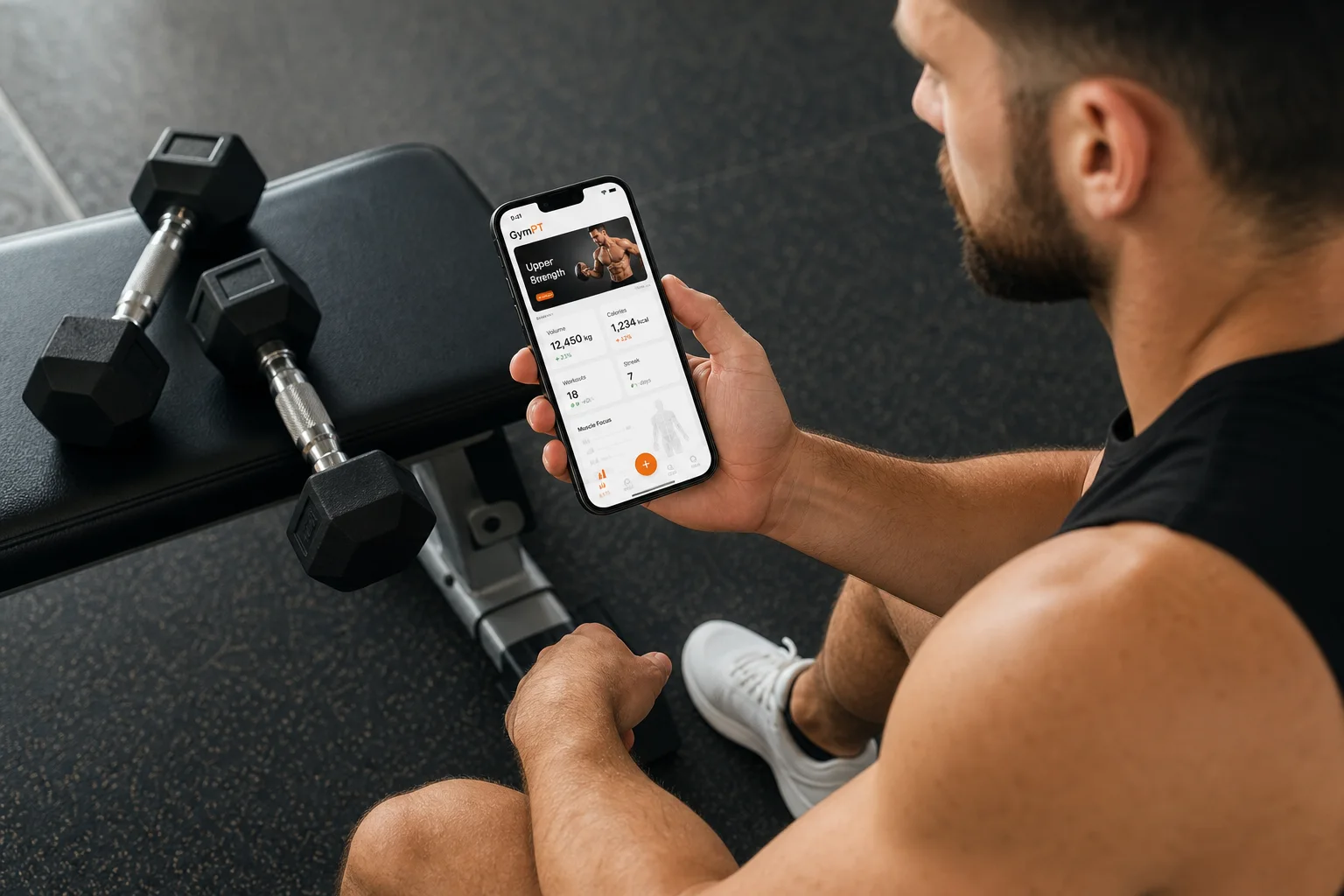
Building muscle is not about finding a single perfect exercise or copying the routine of an experienced lifter. It is about repeating the right training stimulus consistently, gradually asking your muscles to do more, and giving your body enough recovery to adapt. An AI fitness coach for muscle gain can make that process easier by turning those principles into a plan that fits your goal, equipment, schedule, and training experience.
The technology is useful, but the fundamentals still matter most. A good muscle-gain plan should help you train each major muscle group consistently, record meaningful performance data, progress at a manageable pace, and recognize when your recovery or schedule requires an adjustment. Here is how to put those pieces together.
What muscle gain actually requires
Muscle growth, often called hypertrophy, is the result of repeated resistance-training sessions that challenge muscle fibers. The body responds by adapting to the demand. That adaptation depends on more than simply lifting heavy weights once in a while.
A productive hypertrophy routine usually includes four connected elements:
- Enough weekly training volume: You need a sufficient number of challenging working sets for each muscle group.
- Effective effort: Sets should be difficult enough to provide a meaningful stimulus, while still allowing you to use safe, controlled technique.
- Progressive overload: Over time, you need to increase the challenge through more repetitions, more load, additional sets, improved control, or a harder exercise variation.
- Recovery: Sleep, nutrition, rest days, and sensible exercise selection allow you to perform well in future sessions.
Research does not support the idea that one specific load, machine, or training style is mandatory for hypertrophy. A wide range of loads can support muscle growth when sets are performed with appropriate effort and total training is well managed. Heavier loads are especially useful for developing maximal strength, while moderate loads are often practical for accumulating quality volume.
How an AI fitness coach for muscle gain can help
A generic routine may tell you what to do, but it does not always explain how the plan should change when your circumstances change. An AI fitness coach can help organize the decisions that make a program more personal.
1. Match the plan to your goal and level
A beginner who can train three times per week should not receive the same plan as an experienced lifter training five days per week. Your training history, available time, preferred exercises, and recovery capacity all influence how much work you can perform productively.
GymPT can use your goal, experience, and training preferences to create a more relevant starting point. That may mean a full-body routine for a newer trainee, an upper-lower structure for someone with moderate experience, or a more specialized split for an experienced lifter.
2. Work with the equipment you actually have
Muscle growth does not require one particular type of gym. Dumbbells, barbells, cables, machines, resistance bands, and bodyweight exercises can all be useful tools. The important question is whether an exercise lets you train the target muscles effectively and progress over time.
An equipment-based plan prevents a common problem: receiving exercises that are impossible to perform in your current environment. If your gym is busy or your home setup is limited, an AI coach can help identify practical substitutions instead of leaving you without a clear next step.
3. Turn performance data into adjustments
Workout tracking becomes valuable when it informs future decisions. Recording load, repetitions, sets, perceived effort, and notes about technique gives you a clearer picture of whether a movement is progressing.
For example, if you complete all prescribed sets at the top of a repetition range with solid form, the next session may be a good time to increase the load slightly. If performance drops repeatedly, the solution may be a lighter week, fewer sets, more rest between sessions, or a different exercise variation.
For a broader approach to using training data, see Workout App With Progress Tracking: What to Measure and When to Review It.
Progressive overload: the engine of muscle growth
Progressive overload means gradually increasing the training challenge. It does not mean forcing a heavier weight every workout. In fact, trying to add load too quickly can damage technique, increase fatigue, and make it harder to train consistently.
Use one or more of these progression methods:
- Add repetitions: Move from three sets of eight repetitions to three sets of nine or ten while maintaining form.
- Add a small amount of weight: Once you can complete the upper end of your target range comfortably, increase the load modestly.
- Add a set: If recovery is good and progress has slowed, one additional working set may increase useful volume.
- Improve execution: Use a controlled range of motion, stable positioning, and consistent tempo rather than rushing through repetitions.
- Choose a harder variation: Progress from an assisted movement to an unassisted version, or from a stable variation to one that requires more control.
A practical double-progression example
Suppose your dumbbell press is programmed for three sets of 8–12 repetitions. Start with a weight that allows you to perform 8, 8, and 9 repetitions with good technique. Over the following sessions, aim to add repetitions without changing the weight:
- Session 1: 8, 8, 9
- Session 2: 9, 9, 9
- Session 3: 10, 9, 10
- Session 4: 12, 11, 12
When you can consistently reach the top of the range, increase the weight slightly and return to the lower end. This approach is simple, measurable, and easier to sustain than chasing personal records every session.
How much training volume do you need?
Weekly volume is one of the most important variables for hypertrophy. A working set is generally a set performed with enough effort to challenge the target muscle. Warm-up sets usually should not be counted in the same way.
Many lifters can make progress with approximately 8–12 challenging sets per muscle group per week, while some may benefit from more or less depending on their experience, exercise selection, intensity, and recovery. The current evidence supports higher weekly volume as a useful hypertrophy strategy, but more is not automatically better.
A practical starting point is to distribute training across at least two sessions when possible. For example, instead of performing 12 demanding chest sets on one day, you might perform six sets on Monday and six on Thursday. This can improve set quality and make the weekly workload easier to recover from.
Start near the lower end of a productive range, track your performance for several weeks, and only add volume when progress has stalled and recovery remains good. An adaptive plan can help you avoid increasing workload simply because a higher number looks more advanced.
Choosing repetitions, effort, and rest periods
For most hypertrophy exercises, a moderate repetition range is a useful default. Sets of roughly 6–15 repetitions work well for many compound and machine exercises, while higher repetitions can be practical for isolation movements and bodyweight exercises.
You do not need to take every set to complete muscular failure. Leaving a small amount of effort in reserve can help you maintain technique and recover more reliably, especially on compound movements. The closer a set is to failure, the more important exercise stability and technical control become.
Rest long enough to perform the next set effectively. Compound lifts may require two or more minutes, while smaller isolation movements may need less. If your repetitions collapse from set to set because you are rushing, a longer rest period may improve the quality of your total workout.
Recovery is part of the muscle-gain plan
Training is the stimulus; recovery is when your body prepares for the next stimulus. You do not need to make recovery complicated, but you do need to respect it.
- Sleep consistently: Aim for a regular sleep schedule and enough total sleep to feel capable of training and functioning well.
- Eat enough overall: Building muscle is more difficult when your energy intake is consistently too low.
- Include protein-rich foods: Spread protein across your meals and choose foods that fit your preferences and dietary needs.
- Manage fatigue: If soreness, poor sleep, or declining performance accumulates, reduce training stress temporarily rather than forcing maximum effort.
- Keep rest days purposeful: Light movement can be useful, but rest days should not become extra hard workouts by accident.
Recovery also includes choosing a plan you can follow. A theoretically perfect routine that does not fit your work, family, or gym access is unlikely to outperform a simpler plan you can repeat for months.
A sample three-day muscle-gain structure
The following example is a framework, not a universal prescription. Adjust exercise choices, loads, and volume to your experience and available equipment.
Day 1: Full body emphasis
- Squat or leg press: 3 sets
- Bench press or dumbbell press: 3 sets
- Seated row or one-arm row: 3 sets
- Leg curl: 2 sets
- Lateral raise: 2 sets
Day 2: Rest or light activity
Day 3: Full body emphasis
- Romanian deadlift: 3 sets
- Overhead press: 3 sets
- Lat pulldown or assisted pull-up: 3 sets
- Split squat: 2 sets per side
- Biceps curl and triceps extension: 2 sets each
Day 4: Rest
Day 5: Full body emphasis
- Front squat, hack squat, or goblet squat: 3 sets
- Incline press: 3 sets
- Cable row: 3 sets
- Hip thrust: 2–3 sets
- Calf raise and core exercise: 2–3 sets each
Use a repetition range that suits each exercise, stop most sets with controlled effort remaining, and log the outcome. The next week should be based on what you actually completed—not what you hoped to complete.
How GymPT fits into a muscle-gain routine
GymPT can support the process from planning through review. You can begin with your muscle-gain goal, available equipment, schedule, and training level. During workouts, tracking helps preserve a record of loads, repetitions, and completed sets. AI coach chat can help you think through substitutions, progression questions, and practical adjustments.
Body analysis and progress insights can add context, but they should not replace performance data or patience. Day-to-day changes in body weight, measurements, and workout performance are normal. Look for trends over several weeks instead of reacting to one session or one measurement.
If you are still deciding which structure best fits your experience, compare the guidance in AI Workout Plan by Goal: Choose the Right Training Week for Your Results and AI Workout Plan by Level: How to Train as a Beginner, Intermediate, or Advanced Athlete. If your available equipment is the main limitation, Equipment Based Workout Plans: Match Your Training to the Gym You Use can help you plan around it.
What to look for in an AI muscle-gain coach
The best AI fitness coach for muscle gain should do more than generate a list of exercises. Look for a system that:
- Asks about your goal, training history, schedule, and equipment.
- Creates a clear weekly structure instead of random daily workouts.
- Tracks performance so progression is based on evidence.
- Offers exercise substitutions when equipment or comfort changes.
- Adjusts training when recovery, time, or performance changes.
- Explains the reason behind recommendations in straightforward language.
Muscle gain is a long-term process. The winning strategy is not the most complicated plan; it is a manageable plan that provides a consistent stimulus, progresses gradually, and leaves enough room for recovery. Use AI to make those decisions easier, then let your training record guide the next step.