4 day home workout plan
4 Day Home Workout Plan: Build Strength in Limited Space
A 4 day home workout plan can build strength without a full gym. Use this upper-lower routine, simple equipment swaps, and progressive overload strategies to train effectively in limited space.
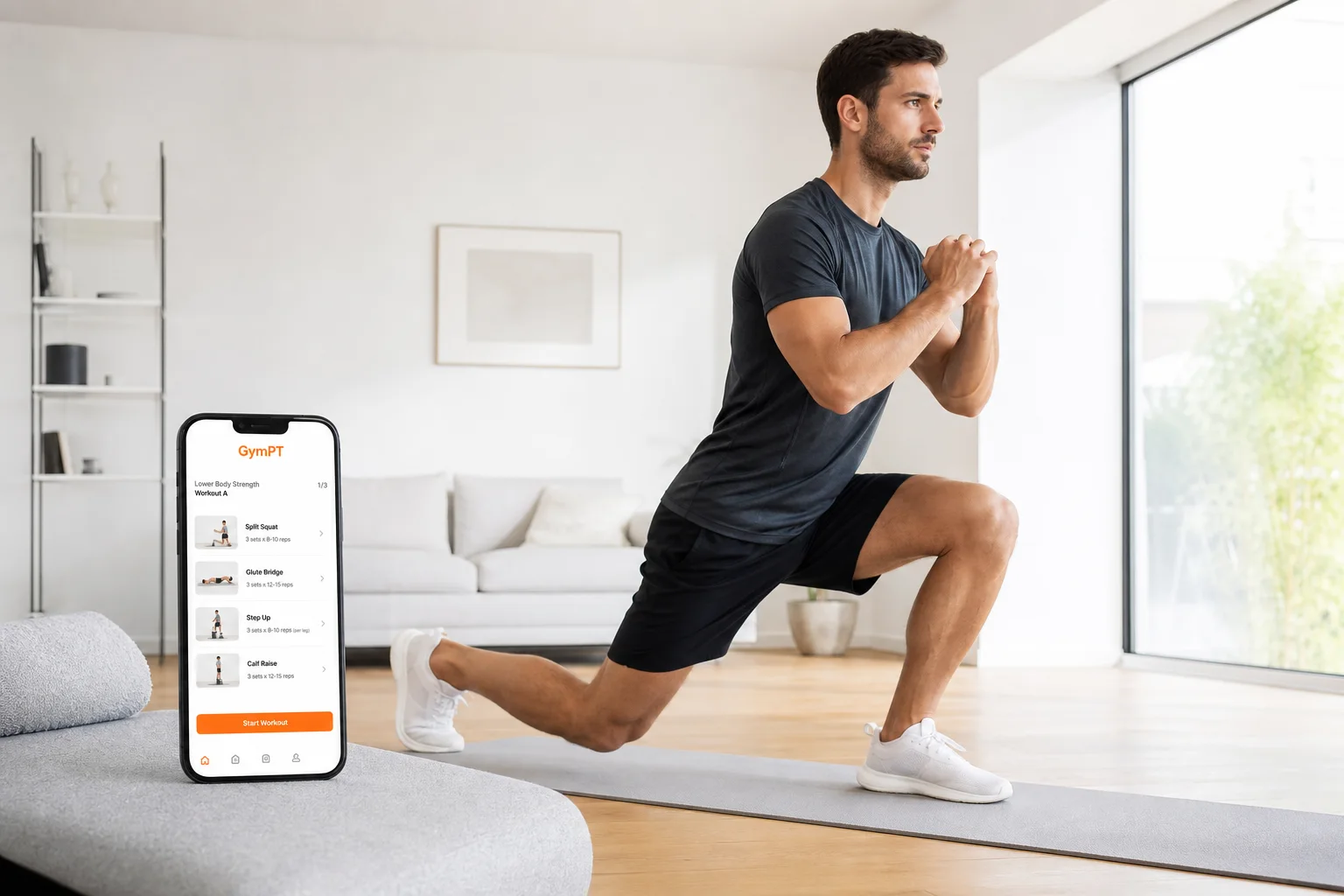
A well-designed 4 day home workout plan can help you build strength, improve movement quality, and create a consistent training habit—even if you have limited space and basic equipment. You do not need a full home gym. A clear weekly structure, challenging exercise variations, and a way to track progress are more important than having dozens of machines.
This plan uses an upper-lower split: two upper-body sessions and two lower-body sessions. It works with bodyweight exercises, resistance bands, dumbbells, or a loaded backpack. The goal is to train each major movement pattern regularly while giving the same muscle groups time to recover.
How to Use This 4 Day Home Workout Plan
A simple weekly schedule could look like this:
- Monday: Upper Body A
- Tuesday: Lower Body A
- Wednesday: Rest, walking, or light mobility
- Thursday: Upper Body B
- Friday: Lower Body B
- Saturday: Optional easy cardio or recreational activity
- Sunday: Rest
You can move the days around to fit your schedule. Try to avoid placing all four workouts back-to-back. At least one rest or lighter day in the middle of the week can make it easier to train with good effort and maintain quality technique.
Most adults are advised to include muscle-strengthening activity on at least two days each week and to work all major muscle groups. This four-day format provides more frequent practice without requiring long sessions. You can also add brisk walking, cycling, stairs, or another cardio activity across the week if it fits your goals and recovery.
Workout 1: Upper Body A
Begin with five to eight minutes of easy movement: arm circles, wall slides, marching in place, and a few slow repetitions of your first exercise. Then complete the workout below.
- Push-up variation: 3 sets of 6–15 repetitions
- One-arm backpack or dumbbell row: 3 sets of 8–15 repetitions per side
- Pike push-up or seated shoulder press: 3 sets of 6–12 repetitions
- Band pull-apart or rear-delt raise: 2–3 sets of 12–20 repetitions
- Close-grip push-up or overhead triceps extension: 2 sets of 8–15 repetitions
- Dead bug: 2–3 sets of 8–12 repetitions per side
Choose a push-up version that allows controlled repetitions. Beginners can use a wall, countertop, or sturdy elevated surface. As you improve, move toward floor push-ups, pause briefly at the bottom, or use a slower lowering phase.
Workout 2: Lower Body A
This session emphasizes squatting, single-leg control, and the muscles around your hips and trunk.
- Bodyweight squat or goblet squat: 3 sets of 8–15 repetitions
- Reverse lunge: 3 sets of 8–12 repetitions per leg
- Hip thrust or glute bridge: 3 sets of 10–20 repetitions
- Single-leg Romanian deadlift: 2–3 sets of 8–12 repetitions per leg
- Standing calf raise: 3 sets of 12–20 repetitions
- Side plank: 2–3 sets of 20–40 seconds per side
If bodyweight squats become easy, hold a backpack or dumbbell close to your chest. For a greater challenge without heavier equipment, use a three-second lowering phase, add a pause near the bottom, or progress to split squats.
Workout 3: Upper Body B
The second upper-body workout changes the angles and emphasis while still training pushing, pulling, shoulders, arms, and the core.
- Feet-elevated, regular, or incline push-up: 3 sets of 6–15 repetitions
- Band row, towel row, or supported dumbbell row: 3 sets of 8–15 repetitions
- Lateral raise with bands or light weights: 3 sets of 12–20 repetitions
- Floor press with dumbbells or backpack: 3 sets of 8–15 repetitions
- Biceps curl with bands, dumbbells, or backpack: 2–3 sets of 10–15 repetitions
- Plank shoulder tap: 2–3 sets of 8–16 total taps
Home pulling exercises require extra attention because many homes do not have a pull-up bar or cable machine. A resistance band anchored securely to an appropriate point can work well. You can also use one-arm rows with a backpack or dumbbell. Avoid using unstable furniture or an anchor that could release suddenly.
Workout 4: Lower Body B
Use this session to train the lower body through a different combination of unilateral work, hip hinging, and controlled conditioning.
- Split squat: 3 sets of 8–12 repetitions per leg
- Romanian deadlift with dumbbells or backpack: 3 sets of 8–15 repetitions
- Step-up to a stable platform or reverse lunge: 3 sets of 8–12 repetitions per leg
- Hamstring walkout or sliding leg curl: 2–3 sets of 6–12 repetitions
- Single-leg calf raise: 3 sets of 10–20 repetitions per leg
- Bird dog: 2–3 sets of 8–12 repetitions per side
Only use a step or platform that is stable and appropriate for your ability. If you do not have a safe platform, repeat reverse lunges or perform supported split squats instead.
How Hard Should Home Workouts Feel?
Each working set should feel challenging, but you do not need to push every set to complete muscular failure. A useful starting point is to finish most sets with about one to three controlled repetitions left in reserve. If your technique changes significantly or you have to rush the movement, the set is probably too difficult.
Rest for approximately 60–120 seconds between demanding sets. Use the longer end of that range for challenging single-leg exercises or movements that require more concentration. Shorter rest periods can work for smaller exercises such as band pull-aparts, calf raises, or core movements.
How to Progress Without More Equipment
Progressive overload means gradually increasing the challenge placed on your muscles. At home, that does not always mean buying heavier weights. Use this progression order:
- Add repetitions: Stay within the recommended range and work toward the upper end.
- Add a set: Increase from two sets to three when you recover well.
- Improve the variation: Move from incline push-ups to floor push-ups, or from squats to split squats.
- Slow the tempo: Take two to four seconds to lower the weight or your body.
- Add pauses: Briefly pause where the exercise is hardest.
- Increase load: Add books to a backpack, use a stronger band, or choose heavier dumbbells.
- Improve range of motion: Only when you can control the full movement comfortably.
Use one progression at a time. For example, if you complete three sets of 15 push-ups with consistent technique, you could move to a more challenging variation rather than trying to add many more repetitions.
How Long Should Each Session Take?
Most workouts in this plan should take about 35–55 minutes, including a short warm-up. To save time, organize exercises into pairs that use different muscle groups. For example, alternate push-ups with rows, or split squats with dead bugs. Keep enough rest to maintain safe and controlled form.
If you only have 20 minutes, complete the first three exercises and one core movement. A shorter workout that you perform consistently is more useful than an ideal session that regularly gets skipped. GymPT can help organize the session around your available time, equipment, and training goal.
Equipment Options for a Small Space
- No equipment: Use push-ups, squats, lunges, glute bridges, planks, and tempo variations.
- Backpack: Add books or other stable items for rows, squats, presses, and deadlifts.
- Resistance bands: Use bands for rows, presses, pull-aparts, curls, and lateral raises.
- Dumbbells: Use them for goblet squats, Romanian deadlifts, rows, presses, and carries.
- Small-space cardio: Marching, step-ups, shadow boxing, or brisk walking can add conditioning without large equipment.
For more ideas about adapting equipment and exercise selection, see this AI workout planner with dumbbells. If you prefer a simpler three-session schedule, compare it with this 3 day home workout plan.
How to Track Results
Record the exercise variation, repetitions, sets, resistance, and how difficult the final set felt. Also note whether your technique was controlled. These details help you see progress that may not be obvious from body weight or appearance alone.
Review your plan every three to four weeks. If repetitions and technique are improving, continue. If you feel unusually fatigued, performance is declining, or soreness is interfering with daily activities, reduce volume temporarily or add another rest day.
A workout app with progress tracking can make this review easier by keeping your training history in one place. You can also use GymPT to adjust workouts as your equipment, schedule, and goals change. For a broader explanation of what to measure, read workout app with progress tracking.
Common Mistakes to Avoid
- Changing exercises every session: Keep key movements for several weeks so you can measure improvement.
- Training hard without recovery: Four workouts are enough; more is not automatically better.
- Ignoring pulling movements: Include rows or band pulls to balance frequent pushing exercises.
- Using unstable furniture: Choose reliable surfaces and remove hazards from your training area.
- Progressing too quickly: Add difficulty only when you can maintain consistent control.
- Skipping the warm-up: Use a few minutes of easy movement and practice sets before demanding work.
Final Takeaway
This 4 day home workout plan gives you a practical structure for building strength in a bedroom, living room, garage, or other limited space. Train upper and lower body twice per week, use exercise variations that match your current ability, and progress gradually through repetitions, sets, tempo, range of motion, or load.
The best plan is one you can repeat consistently. If your goals, schedule, fitness level, or available equipment change, a personalized system can help you adapt instead of starting over. You can also explore this home workout plan for any space for additional ways to organize training at home.