30 minute home workout plan
30 Minute Home Workout Plan: A Simple Routine That Actually Progresses
A 30-minute home workout can build strength and fitness when it uses the right movement patterns, manageable rest periods, and a clear progression strategy. Here is a practical full-body plan you can repeat and adapt with little or no equipment.
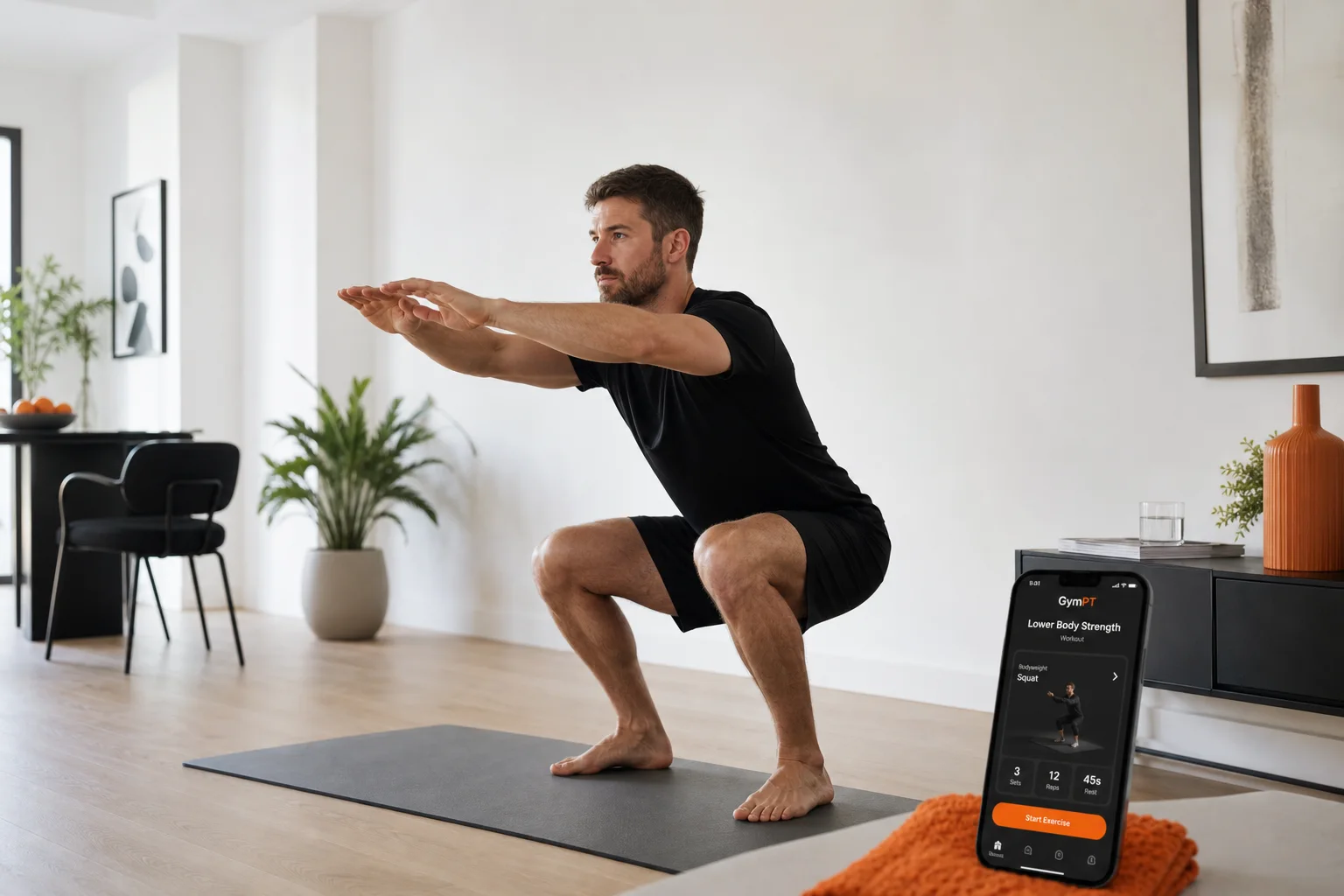
A 30 minute home workout plan does not need to be complicated to be effective. With limited space and little or no equipment, you can train your legs, pushing muscles, pulling muscles, core, and cardiovascular system in one focused session.
The key is not to rush through random exercises. A useful home workout should include major movement patterns, a realistic amount of work, and a way to make the exercises gradually more challenging. This plan is designed for general fitness and strength development. You can complete it in a living room, bedroom, garage, or any clear space where you can safely move.
If you are new to structured training, start with the easier variations and leave a few controlled repetitions in reserve. The goal is to finish feeling trained—not completely exhausted or unable to recover for your next session.
What makes a 30 minute home workout effective?
Short workouts work best when every section has a purpose. Instead of spending most of the session deciding what to do, use a simple structure:
- Warm-up: Prepare your joints, muscles, and breathing.
- Strength circuit: Train the main movement patterns with controlled repetitions.
- Conditioning finisher: Raise your heart rate without turning every exercise into a sprint.
- Progression: Track your work so the session can improve over time.
Bodyweight exercises count as resistance training when they challenge your muscles. The exercise does not have to involve a barbell or a machine. Squats, push-ups, split squats, planks, and other calisthenics movements can all be adjusted to match your current ability.
For general health, adults are advised to include muscle-strengthening activity on at least two days each week, alongside regular aerobic activity. A short full-body session can be one practical way to build that habit.
30 minute home workout plan
Complete this workout two or three times per week, ideally with at least one recovery day between challenging full-body sessions. You will need a small amount of floor space and, optionally, a sturdy chair or sofa edge.
1. Warm-up: 5 minutes
Move continuously at an easy-to-moderate pace. The aim is to feel warmer and more mobile, not tired.
- March in place or step side to side for 60 seconds.
- Perform 8 bodyweight squats.
- Perform 8 alternating reverse lunges, using a shorter range of motion if needed.
- Complete 8 incline push-ups against a wall or sturdy surface.
- Do 10 hip hinges with your hands on your thighs.
- Finish with 30 seconds of easy jumping jacks or a low-impact step-jack variation.
Use the warm-up to check how your body feels that day. If a movement feels sharp, unstable, or unusually uncomfortable, choose an easier variation or replace it with a pain-free pattern.
2. Strength circuit: 18 minutes
Complete three rounds of the following six exercises. Work for approximately 35 seconds, then rest for 25 seconds before moving to the next exercise. If you are a beginner, use 25 seconds of work and 35 seconds of rest.
- Squat: Keep your feet stable, lower under control, and stand tall without rushing.
- Push-up variation: Choose wall push-ups, incline push-ups, knee push-ups, or standard push-ups.
- Reverse lunge: Alternate legs and use a chair or wall for balance if necessary.
- Glute bridge: Press through your feet, lift your hips, and pause briefly at the top.
- Prone back squeeze: Lie face down or hinge forward while standing, draw your elbows gently back, and squeeze your upper back. Move slowly rather than pulling aggressively.
- Dead bug or plank: Use dead bugs for a controlled core challenge, or hold a high plank from your hands or knees.
Keep the quality of each repetition consistent. Stop a set when your technique begins to break down, even if the timer has not finished. For strength-focused work, a controlled pace is usually more useful than performing as many rushed repetitions as possible.
3. Conditioning finisher: 4 minutes
Alternate 20 seconds of work with 20 seconds of easy movement for six rounds. Choose one low-impact option or rotate between two:
- Fast marching with active arm swings
- Step jacks
- Mountain climbers from an elevated surface
- Shadow boxing without weights
- Bodyweight squat to reach
Use an effort level that allows you to stay coordinated. A home workout does not need to include jumping or high-impact movements to be productive.
4. Cool-down: 3 minutes
Slow your breathing with easy walking around the room. Then perform relaxed mobility movements for the hips, chest, shoulders, and ankles. You do not need to force long stretches. The cool-down is mainly a transition from exercise back to normal activity.
How to adapt the workout for your fitness level
The best home workout plan is one you can perform with appropriate control. Adjust the exercises before increasing the speed.
Beginner modifications
- Use wall or countertop push-ups instead of floor push-ups.
- Perform sit-to-stand squats from a chair.
- Use stationary split squats while holding a support.
- Replace planks with dead bugs or a shorter plank hold.
- Complete two circuit rounds instead of three.
Intermediate modifications
- Use a slower lowering phase, such as three seconds on squats and push-ups.
- Add a pause at the hardest point of each exercise.
- Move from incline push-ups toward floor push-ups.
- Use single-leg glute bridges or split squats.
- Increase the work interval to 40 seconds while keeping technique steady.
Advanced modifications
- Use harder variations such as decline push-ups, tempo squats, or elevated split squats.
- Add a loaded backpack if it can be secured comfortably and safely.
- Increase the number of repetitions without sacrificing range of motion.
- Reduce rest slightly, but keep enough recovery to maintain good form.
For more ideas on adapting training around what you have at home, read Workout Plan With Limited Equipment: How to Build, Adapt, and Progress.
How to progress your 30 minute home workout plan
Progress does not always mean doing more exercises. Choose one variable at a time and record what you do.
- Improve technique: Use a fuller comfortable range of motion and smoother repetitions.
- Add repetitions: Perform more quality repetitions during the same work interval.
- Increase time: Move from 25 seconds of work to 30 or 35 seconds.
- Use a harder variation: Change from incline push-ups to knee or standard push-ups, for example.
- Add resistance: Use a resistance band or a carefully loaded backpack when appropriate.
- Add a round: Move from two rounds to three only when recovery is manageable.
Give a progression two or three sessions before deciding whether it works. Gradual increases in repetitions, sets, resistance, or training frequency can help you build strength over time without needing a complicated program.
If you prefer a plan that adjusts to your goals and available equipment, an AI workout plan for limited equipment can help organize exercise choices and progressions around your actual setup.
How often should you do a 30 minute home workout?
For most people, two or three full-body sessions per week is a practical starting point. Leave enough time between hard sessions for the muscles you trained to recover. On other days, you can walk, perform light mobility work, or complete an easier activity.
Consistency matters more than trying to train intensely every day. If you are also following a gym routine, avoid placing this full-body workout immediately before another demanding lower-body or upper-body session. You can compare this approach with a 30 minute gym workout plan if you sometimes train outside the home.
Common mistakes to avoid
- Starting too hard: Difficult variations can make the workout impossible to repeat consistently.
- Skipping the pulling pattern: At-home programs often include many pushing exercises but little upper-back work. Use prone back squeezes, resistance bands, or a suitable row variation when available.
- Rushing every repetition: Speed can hide poor control and reduce the quality of the exercise.
- Changing the plan every session: Repeating key movements makes progress easier to measure.
- Ignoring recovery: Sleep, daily movement, and rest days influence how well you can train.
How GymPT can make home training easier
A simple routine is a strong starting point, but your best plan may change as your strength, schedule, and equipment change. GymPT can help create personalized workouts based on your goals, available equipment, and preferred training environment. You can also use AI coach chat for exercise questions, track completed workouts, and review progress insights over time.
For a broader look at building a sustainable weekly schedule, read How Many Days Should Beginners Train? A Simple Weekly Guide.
Frequently asked questions
Can a 30-minute home workout build strength?
Yes. A short session can support strength development when the exercises challenge the muscles, the technique is consistent, and the difficulty increases gradually. Your results will depend on training consistency, exercise selection, recovery, and nutrition.
Do I need equipment for this workout?
No. The main routine uses bodyweight movements. A chair, resistance band, or backpack can provide additional options, but equipment is not required to begin.
Should I train to failure at home?
You do not need to take every set to complete muscular failure. Stop when your technique is no longer controlled and keep a small amount of effort in reserve, especially when learning a new movement.
What if I only have 15 minutes?
Complete the warm-up briefly, then perform two rounds of the strength circuit. Keep the exercises controlled and choose a version that allows you to train safely within the shorter time limit.
A productive home workout is built on repeatable choices: train the major movement patterns, use an appropriate level of challenge, and track how you progress. Start with this 30-minute structure, adapt the exercises to your current level, and make small improvements from week to week.