30 minute full body workout plan
30 Minute Full Body Workout Plan: A Practical Guide for Every Level
A 30-minute full-body workout can build strength and fitness when it is structured around major movement patterns, realistic recovery and gradual progression. Use this guide to create a routine that fits your level, equipment and schedule.
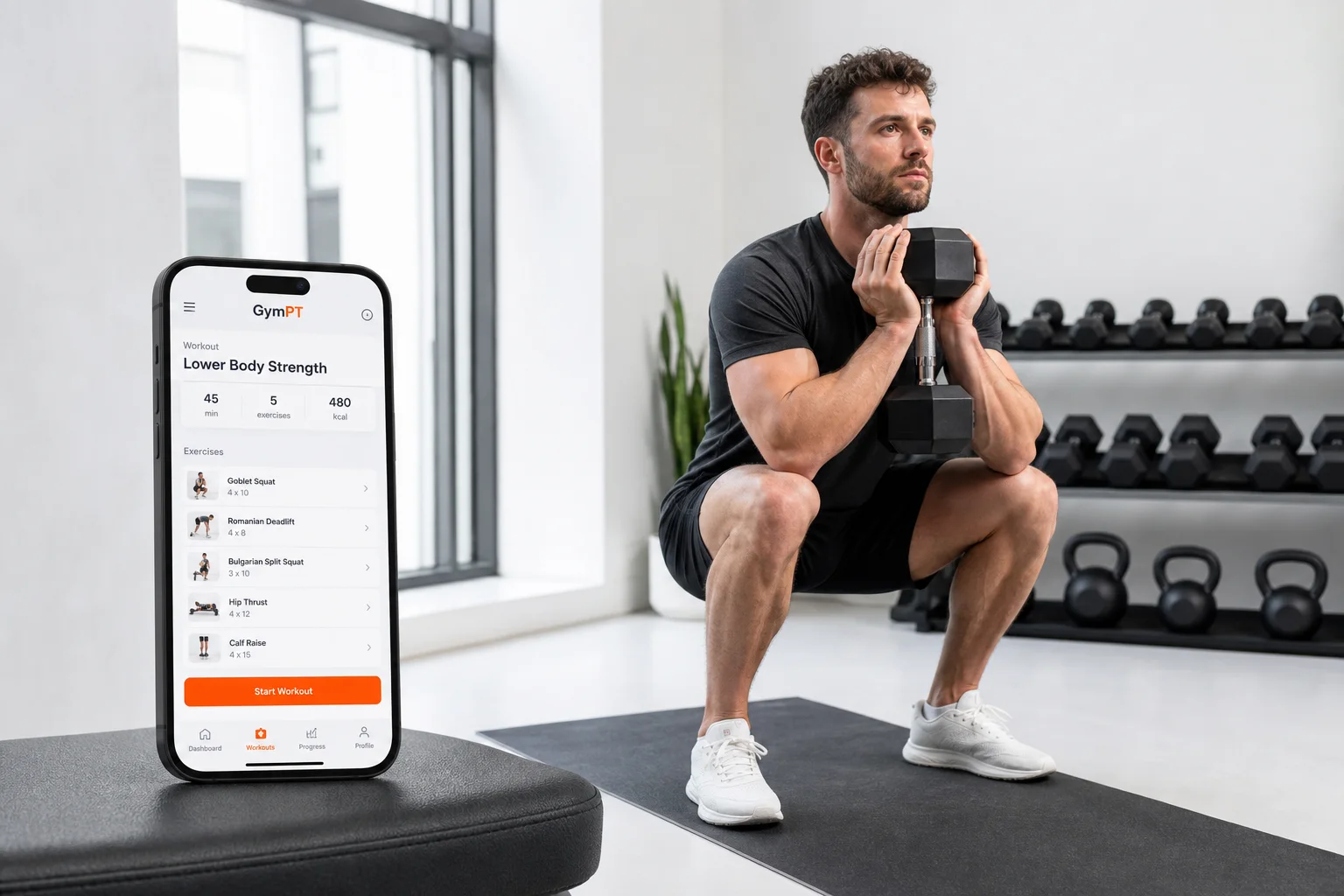
A 30 minute full body workout plan can be enough to build a consistent strength routine without spending an hour in the gym. The key is not rushing through random exercises. It is choosing a small number of movements that train the legs, hips, chest, back, shoulders and core, then repeating them often enough to improve.
This guide shows how to structure a short full-body session, how often to train at different experience levels, how much recovery to take and how to progress without making every workout exhausting. You can use bodyweight, dumbbells, resistance bands or gym machines, depending on what you have available.
What makes a 30 minute full body workout effective?
A useful short workout should cover the main movement patterns rather than trying to include every exercise. A balanced session usually includes:
- Squat or knee-dominant movement: squat, leg press or split squat.
- Hip-dominant movement: Romanian deadlift, hip thrust or kettlebell deadlift.
- Push: push-up, dumbbell press, machine chest press or overhead press.
- Pull: row, pulldown, assisted pull-up or band row.
- Core or carry: plank, dead bug, Pallof press or loaded carry.
These movements train the major muscle groups efficiently. They also make it easier to track progress because you can gradually add repetitions, resistance or control over time.
Current resistance-training guidance emphasizes consistency, individualization and gradual progression over complicated programming. You do not need advanced techniques, a perfect exercise selection or a long list of equipment to make progress. A plan you can repeat is usually more useful than a theoretically perfect routine that does not fit your week.
How to divide the 30 minutes
Use the following structure to keep the workout focused:
- Warm-up: 4 minutes. Use easy movement such as brisk walking, cycling, marching, bodyweight squats and arm circles.
- Main strength work: 22 minutes. Complete four or five exercises using paired movements or a simple circuit.
- Cool-down: 4 minutes. Walk slowly, breathe normally and perform gentle mobility work for areas that feel tight.
The warm-up should prepare you, not tire you out. For the first set of a demanding exercise, use a lighter load and treat it as an additional preparation set if needed.
A beginner 30 minute full body workout plan
If you are new to resistance training, start with two non-consecutive sessions per week. For example, train on Monday and Thursday, or Tuesday and Friday. Leave at least one rest day between challenging full-body workouts.
Beginner session
- Chair squat or bodyweight squat: 2 sets of 8–12 repetitions.
- Incline push-up: 2 sets of 6–12 repetitions.
- Supported dumbbell row or resistance-band row: 2 sets of 8–12 repetitions per side.
- Glute bridge: 2 sets of 10–15 repetitions.
- Dead bug: 2 sets of 6–10 controlled repetitions per side.
Rest about 45–75 seconds between sets. Stop each set while you still feel that you could complete two or three clean repetitions. This leaves room to learn technique and recover for the next exercise.
If five exercises feel like too much, perform the first four and alternate the core exercise between sessions. The goal for the first few weeks is to build a habit and learn stable, controlled movement.
An intermediate 30 minute full body workout
Once you can perform the beginner movements comfortably and recover well, train three times per week. Use two alternating sessions so you can cover similar muscles without repeating exactly the same exercises every time.
Workout A
- Goblet squat: 3 sets of 8–10 repetitions.
- Dumbbell bench press or push-up: 3 sets of 8–12 repetitions.
- One-arm dumbbell row: 3 sets of 8–12 repetitions per side.
- Romanian deadlift: 2 sets of 8–10 repetitions.
- Plank: 2 sets of 20–40 seconds.
Workout B
- Reverse lunge or leg press: 3 sets of 8–10 repetitions per leg, or 10–12 total repetitions on the leg press.
- Overhead press: 3 sets of 8–10 repetitions.
- Lat pulldown or band pulldown: 3 sets of 8–12 repetitions.
- Hip thrust: 2 sets of 10–12 repetitions.
- Pallof press: 2 sets of 8–12 repetitions per side.
A simple weekly schedule is Monday Workout A, Wednesday Workout B and Friday Workout A. The following week, begin with Workout B. Pair exercises that do not compete too much for the same muscles—for example, squats with presses and rows with hip hinges—to reduce idle time.
How advanced trainees can use 30-minute sessions
Short workouts can still work for experienced lifters, but the plan must be more deliberate. Use compound movements, limit unnecessary setup and keep a record of the loads and repetitions.
An advanced 30-minute session could use:
- One primary lift: 3 focused sets of squat, deadlift, press or row.
- One opposing upper-body movement: 3 sets of a press or pull.
- One secondary lower-body movement: 2–3 sets of a lunge, hip thrust or leg curl.
- One short core or carry finisher: 2 sets.
For example, you might perform three sets of a front squat, three sets of a dumbbell bench press, three sets of a chest-supported row and two sets of a farmer carry. Use longer rest periods for heavy sets, but avoid adding more exercises than you can perform with good technique.
If your main goal is muscle growth, a 30-minute session may be one part of a larger weekly plan. You can distribute volume across three or four full-body sessions rather than trying to complete all weekly work in one workout.
How often should you do a full-body workout?
Your ideal frequency depends on training experience, exercise intensity, sleep, stress and the rest of your activity. Use this starting point:
- Beginner: 2 full-body workouts per week.
- Intermediate: 3 full-body workouts per week.
- Advanced: 3–4 sessions per week if recovery and scheduling support it.
Two sessions per week can train every major muscle group effectively and may be easier to sustain. Three sessions provide more opportunities to practice movements and add weekly training volume. Four sessions can work well when each workout is kept moderate and exercises are rotated.
Remember that a 30-minute strength workout is not automatically the same as 30 minutes of moderate aerobic activity. For broader fitness, add walking, cycling or another form of cardio during the week. Many adults also aim for at least two weekly muscle-strengthening sessions and regular moderate-intensity activity, adjusted for their current ability and circumstances.
Recovery: the part many short plans miss
Recovery does not mean doing nothing. It means managing training stress so you can perform well again. Between hard full-body sessions, use at least one easier day when possible. On recovery days, you can walk, perform gentle mobility or train a different low-fatigue skill.
Reduce the next workout slightly if you notice that your technique is deteriorating, soreness is not improving or normal loads feel unusually difficult. You can also reduce one set per exercise for a week before building back up.
Sleep, adequate food and regular hydration support training, but no recovery strategy can replace a workload that matches your current level. Start conservatively and increase demand gradually.
How to progress your 30 minute workout
Use a simple double-progression method:
- Choose a repetition range, such as 8–12 repetitions.
- Start with a load that allows clean technique and a few repetitions in reserve.
- Keep the same load until you can reach the top of the range for every set.
- Increase the load by the smallest practical amount.
- Return to the lower end of the range and build again.
You can also progress by adding one set, slowing the lowering phase, improving range of motion or choosing a more challenging variation. Change only one main variable at a time so you know what caused the improvement—or the fatigue.
Track the exercise, load, repetitions and how difficult the final set felt. GymPT can help organize this information into a personalized plan based on your goals, available equipment and progress over time. If your schedule or equipment changes, adapt the exercise rather than abandoning the session.
How to make the plan fit your equipment
The movement pattern matters more than the specific tool. A squat can be performed with bodyweight, a dumbbell, a barbell or a machine. A row can use a band, cable, dumbbell or supported machine. Select the version that lets you move safely and challenge the target muscles.
For home training ideas, see this workout plan with limited equipment. If you train mainly with dumbbells, this 3-day dumbbell workout plan offers another practical structure. Gym users may also benefit from a machine-based workout plan when stability, convenience or equipment availability is a priority.
Common mistakes in a 30-minute workout
- Doing too many exercises: Five well-chosen movements are usually more useful than ten rushed ones.
- Skipping the warm-up: A few minutes of preparation can improve focus and movement quality.
- Training to failure every set: Most people can progress without making every set an all-out effort.
- Changing the plan constantly: Keep core movements long enough to measure improvement.
- Ignoring recovery: More sessions are not always better if performance keeps falling.
- Using the same load forever: Progress requires a gradual increase in challenge.
Build a plan you can repeat
The best 30 minute full body workout plan is one that fits your current level, equipment and weekly schedule. Start with two or three sessions, train the main movement patterns, keep a few repetitions in reserve and progress in small steps.
For help deciding how many weekly sessions to schedule, read How Many Days Should Beginners Train?. You can also compare this approach with a 30 minute gym workout plan if you prefer a gym-based routine.
Keep the structure simple, record what you do and adjust the plan as your strength and schedule change. Thirty focused minutes, repeated consistently, can become a strong foundation for long-term training.