AI strength coach app
AI Strength Coach App: How to Train Smarter Without Giving Up Human Judgment
An AI strength coach app can make resistance training more organized and responsive—but only when it supports sound training principles instead of promising instant results. Here’s how to use AI coaching realistically, safely, and effectively with GymPT.
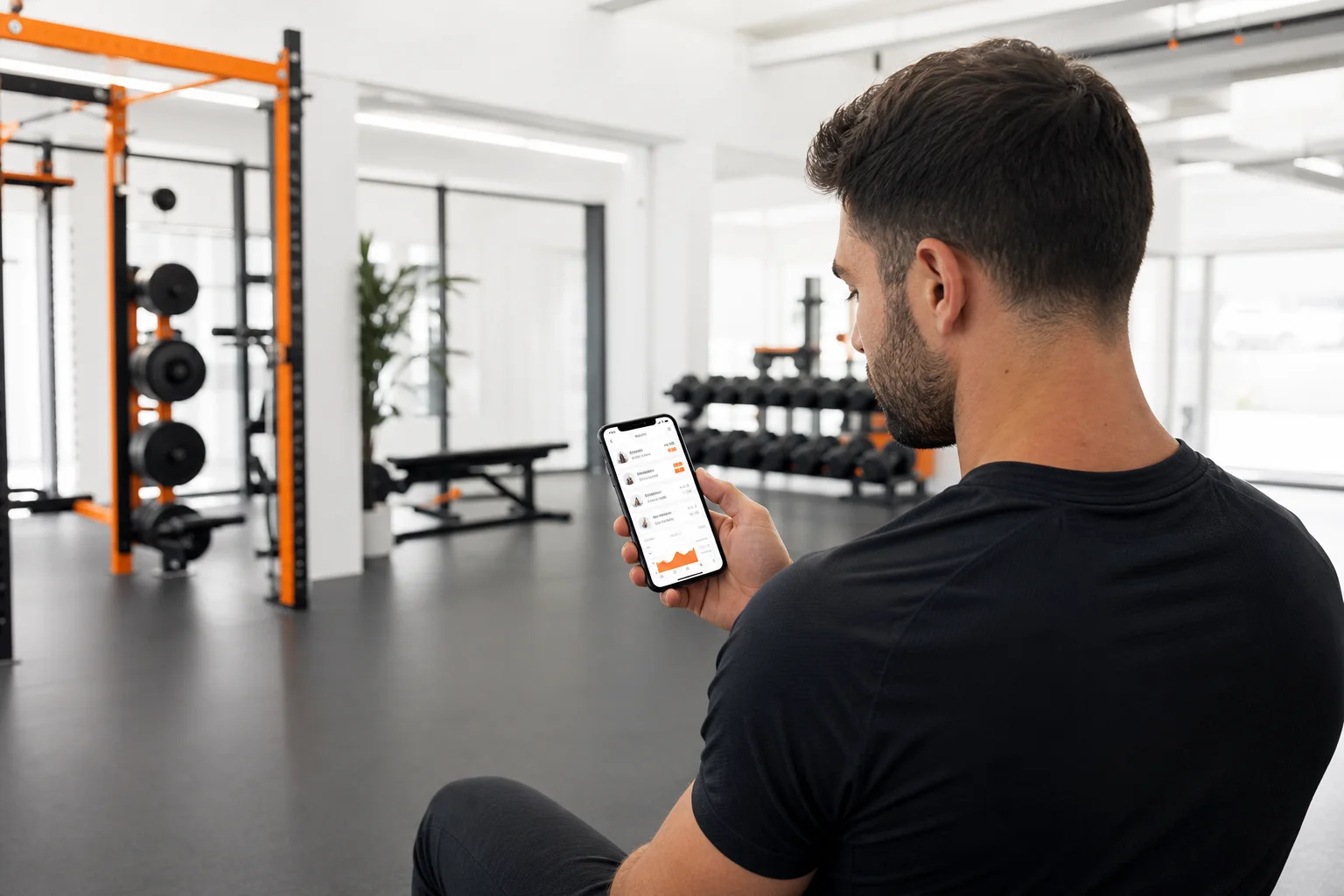
Strength training is simple in theory: choose productive exercises, train consistently, recover, and gradually do more over time. In practice, deciding what to do each session—and knowing when to adjust it—can be much harder.
That is where an AI strength coach app can help. The best tools do not replace judgment with exaggerated promises. They organize your training, adapt recommendations to your goals and equipment, and help you notice patterns in performance so you can make better decisions week after week.
GymPT is designed for that role. It can create personalized workout plans, support equipment-based training, provide AI coach chat, track completed sessions, and turn your workout history into practical progress insights. The goal is not to make every session complicated. It is to make the next useful session easier to follow.
What should an AI strength coach app actually do?
A useful strength coach app should solve the problems that cause people to train inconsistently: unclear exercise selection, unrealistic schedules, poor progression, and a lack of feedback.
That means looking beyond a long exercise library or a generic routine generator. A stronger coaching experience should connect several parts of the training process:
- Planning: Build sessions around your goal, training frequency, experience, and available equipment.
- Personalization: Adjust exercise choices and workload to your current abilities instead of assuming everyone starts from the same point.
- Execution: Give you clear instructions, sets, reps, rest guidance, and a logical order for the session.
- Adjustment: Help you respond when a weight feels unusually heavy, a station is occupied, or your schedule changes.
- Tracking: Record what you actually completed, not just what was prescribed.
- Review: Show trends that are difficult to see from memory, such as repeated stalled lifts or improving training volume.
In other words, AI is most useful when it supports the entire training loop: plan, train, record, review, and adjust.
Why adaptability matters in strength training
A fixed plan can be useful, but your performance is not identical every day. Sleep, stress, work, nutrition, previous training, and simple day-to-day variation can all affect how a session feels.
That does not mean you need to abandon structure. It means your structure should have room for sensible adjustments. Research on autoregulated resistance training has examined approaches such as perceived exertion, repetitions in reserve, and velocity-based adjustments. These methods are intended to account for changes in readiness rather than forcing the same workload regardless of how you are performing.
For most people, the practical version is straightforward: follow the planned exercise and rep range, then use honest feedback to decide whether the load should stay the same, increase slightly, or decrease for that session.
What RIR means
RIR means “repetitions in reserve”—an estimate of how many technically sound repetitions you could have completed at the end of a set.
- About 3 RIR: You likely could have performed three more good repetitions.
- About 2 RIR: The set was challenging, but you retained control.
- About 1 RIR: You were close to your limit without necessarily reaching failure.
- 0 RIR: You reached technical failure or could not complete another acceptable repetition.
RIR is not a perfect measurement, especially for beginners. However, it gives you a useful language for describing effort. A coaching app can help you apply that language consistently instead of changing weights randomly from one session to the next.
How GymPT can support a more intelligent training process
GymPT combines several features that are valuable when you want more than a static workout list.
1. Start with a plan built around your real situation
A productive plan should reflect your goal, experience, schedule, and environment. Someone training three times per week with dumbbells at home should not receive the same structure as someone training five days per week in a fully equipped gym.
GymPT can use your training preferences and available equipment to create a more relevant starting point. That reduces the friction of deciding what to train and makes it easier to begin with a plan you can realistically repeat.
If you are still comparing different training schedules, our guides to a 3 day workout plan for muscle gain and a 5 day full body workout plan can help you understand how frequency changes the way weekly training is organized.
2. Use equipment-based exercise selection
One of the most frustrating parts of generic fitness content is being told to perform an exercise you cannot access. An equipment-aware app can make substitutions more practical.
For example, a cable row, chest-supported dumbbell row, and machine row are not identical exercises, but they can all train similar movement patterns with different setup demands. The right substitution depends on your equipment, comfort, experience, and goal.
GymPT’s equipment-based training approach can help you build sessions around what you actually have available. This is especially useful for home workouts, crowded gyms, and people who prefer machines or cables over free weights.
3. Ask questions when the plan is unclear
Even a well-designed workout can create questions. You may want to know how long to rest, whether an exercise has an alternative, how close to failure a set should feel, or what to do when you cannot complete the target repetitions.
GymPT’s AI coach chat gives you a way to ask about those decisions in context. That is different from receiving a completely unrelated answer from a general search. The more useful conversation is connected to your plan, your recent sessions, and the equipment you selected.
Still, AI guidance should be treated as fitness support—not as a diagnosis or a substitute for qualified medical advice. Stop an exercise if you experience sharp or concerning pain, and seek appropriate professional help when an issue requires assessment.
4. Track completed work, not imagined progress
Progressive overload does not always mean adding weight every workout. You might progress by completing more repetitions with the same load, improving technique, adding a set, using a controlled tempo, or performing the same work with less perceived effort.
Without records, it is easy to forget what you did and make inconsistent decisions. A strength training app can make the history visible: previous loads, repetitions, completed sessions, and patterns across exercises.
GymPT’s workout tracking and progress insights can help you distinguish a genuine plateau from a normal difficult week. That perspective can prevent unnecessary program changes and keep you focused on repeatable progress.
How to use an AI strength coach app safely
AI can organize information quickly, but the quality of the result depends on the information you provide and the way you apply it. Use these principles to keep your training grounded.
- Begin conservatively. Choose loads that allow controlled technique and leave room to learn how the exercise feels.
- Be accurate about your experience. A beginner, returning lifter, and advanced trainee need different levels of complexity and workload.
- Report what actually happened. If you reduced the weight, skipped a set, or felt unusually fatigued, record it honestly. Incorrect data leads to less useful recommendations.
- Prioritize technique over completion. Reaching a rep target with poor control is not automatically better than stopping one or two repetitions earlier.
- Progress gradually. Small, repeatable increases are easier to recover from than dramatic jumps.
- Keep recovery in the plan. Rest days, sleep, nutrition, and manageable weekly volume affect whether you can train consistently.
- Use substitutions intelligently. When equipment is unavailable, replace an exercise by considering its movement pattern and the muscles being trained—not just its name.
Current resistance-training guidance emphasizes a practical point that is easy to overlook: consistency tends to matter more than making a program unnecessarily complex. An AI coach should make consistency easier, not bury you under endless variation.
What an AI coach cannot do
Realistic expectations are important. An AI strength coach app can help with planning, organization, explanations, tracking, and adjustments. It cannot physically watch every repetition, guarantee an outcome, or understand every detail of your health and training environment.
It also cannot make effort optional. You still need to show up, use sound technique, communicate accurately with the app, and make responsible decisions when something does not feel right.
Think of AI as a structured assistant. It can reduce decision fatigue and help you follow a coherent process, while you remain responsible for listening to your body and seeking qualified support when needed.
Who can benefit from an AI strength coach app?
An AI coaching app may be particularly useful if you:
- Are new to resistance training and want a clear starting point.
- Keep changing programs before giving them enough time to work.
- Train at home and need plans built around limited equipment.
- Have a busy schedule and need sessions that fit your available days.
- Want guidance without paying for ongoing one-to-one coaching.
- Already train consistently but want better tracking and more objective review.
It can also help experienced lifters who enjoy making their own decisions but want a faster way to organize sessions, compare performance, and identify patterns.
How to decide whether GymPT is right for you
Look for a coaching app that does more than generate a routine once. The important questions are:
- Can it adapt to your goals and equipment?
- Can you ask follow-up questions about your actual workout?
- Does it track completed sessions and performance over time?
- Can it help you adjust without encouraging reckless increases?
- Does the experience make training clearer and more consistent?
GymPT is built around these practical needs. It combines personalized workout planning, AI coach chat, body analysis, equipment-based training, workout tracking, and progress insights in one training workflow.
If you want to explore the role of AI in everyday training, read our guides on the AI workout assistant and AI workout coach for beginners. For a broader feature checklist, see what to look for in a smart fitness coach app.
The bottom line
The best AI strength coach app is not the one that promises to know everything about your body or guarantee rapid results. It is the one that helps you make better training decisions consistently.
Use AI to organize your plan, select realistic exercises, understand progression, record your work, and review your results. Keep human judgment in the loop, progress gradually, and treat safety as more important than completing a target at any cost.
With that approach, GymPT can become a practical training companion: not a replacement for common sense, but a clearer way to plan, execute, and learn from your strength training.