4 day workout plan for muscle gain
4 Day Workout Plan for Muscle Gain: A Practical Hypertrophy Blueprint
A well-designed 4 day workout plan for muscle gain gives each major muscle group enough weekly work while leaving room to recover. Use this practical upper-lower split to train consistently, apply progressive overload, and build muscle without turning every session into a marathon.
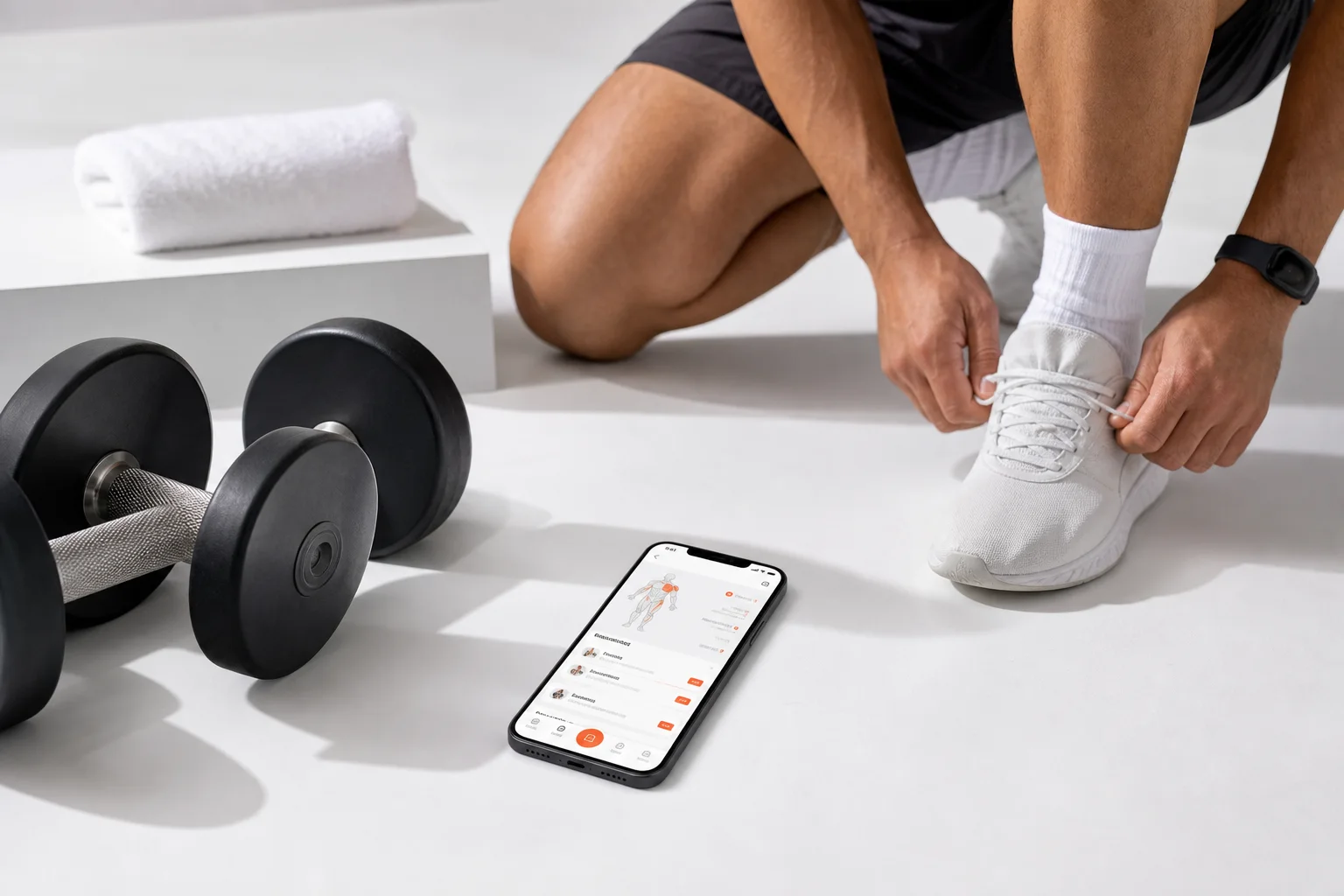
A good 4 day workout plan for muscle gain should do more than fill four spaces on your calendar. It needs enough weekly training volume to stimulate hypertrophy, a clear method for progressing, and enough recovery between sessions to let your muscles adapt.
This upper-lower split is designed for people who can train four times per week and want a straightforward muscle-building structure. It works well for many beginners after they have learned the basic movement patterns, as well as intermediate lifters who want a reliable routine without training six or seven days per week.
How this 4 day workout plan supports muscle growth
Muscle gain comes from repeatedly challenging a muscle with resistance, then recovering well enough for the body to adapt. The most important parts of the plan are not unusual exercises or complicated techniques. They are consistency, sufficient effort, productive weekly volume, and gradual progression.
Training each major muscle group twice per week is a practical way to distribute your work. Instead of performing all your weekly chest or leg volume in one exhausting session, you divide it across two workouts. That can make individual sets more productive and help you maintain better technique.
Recent resistance-training guidance from the American College of Sports Medicine emphasizes matching the program to the goal, using an appropriate amount of weekly volume, and choosing a routine that you can perform consistently. For hypertrophy, around 10 weekly sets per muscle group is a useful starting reference, but your ideal amount depends on training age, exercise selection, effort, and recovery.
The 4 day workout plan for muscle gain
A simple schedule is:
- Monday: Upper Body A
- Tuesday: Lower Body A
- Wednesday: Rest or light activity
- Thursday: Upper Body B
- Friday: Lower Body B
- Saturday and Sunday: Rest, mobility, or optional low-intensity activity
If your week starts on a different day, keep the same principle: avoid placing all four sessions back-to-back, and try to leave at least one rest day between your second upper-body and second lower-body sessions when possible.
Day 1: Upper Body A
- Barbell or dumbbell bench press: 3 sets of 6–10 reps
- One-arm dumbbell row or seated cable row: 3 sets of 8–12 reps
- Incline dumbbell press: 3 sets of 8–12 reps
- Lat pulldown or assisted pull-up: 3 sets of 8–12 reps
- Dumbbell lateral raise: 2 sets of 12–20 reps
- Cable triceps pressdown: 2 sets of 10–15 reps
- Dumbbell curl: 2 sets of 10–15 reps
Begin with the exercises that require the most coordination and load. Pressing and rowing movements should receive your best focus, while smaller isolation exercises can be completed later with controlled repetitions.
Day 2: Lower Body A
- Back squat, front squat, or hack squat: 3 sets of 6–10 reps
- Romanian deadlift: 3 sets of 8–12 reps
- Leg press: 3 sets of 10–15 reps
- Seated or lying leg curl: 3 sets of 10–15 reps
- Standing calf raise: 3 sets of 10– hook15 reps
- Abdominal exercise: 2–3 sets of 10–20 reps
The first lower-body session combines a squat pattern with a hip-hinge pattern. Keep your range of motion consistent and use a load that allows you to control the lowering phase rather than rushing through each repetition.
Day 3: Upper Body B
- Overhead press: 3 sets of 6–10 reps
- Chest-supported row: 3 sets of 8–12 reps
- Machine chest press or push-up variation: 3 sets of 8–15 reps
- Neutral-grip pulldown: 3 sets of 8–12 reps
- Rear-delt fly: 2–3 sets of 12–20 reps
- Overhead triceps extension: 2 sets of 10–15 reps
- Incline dumbbell curl: 2 sets of 10–15 reps
This session changes the angles and equipment slightly while keeping the same basic movement balance: horizontal pushing, vertical pushing, horizontal pulling, vertical pulling, and direct arm and shoulder work.
Day 4: Lower Body B
- Deadlift variation or hip thrust: 3 sets of 5–10 reps
- Bulgarian split squat: 3 sets of 8–12 reps per leg
- Leg extension: 3 sets of 10–15 reps
- Seated leg curl: 3 sets of 10–15 reps
- Seated calf raise: 3 sets of 10–15 reps
- Cable crunch or reverse crunch: 2–3 sets of 10–20 reps
The second lower-body session uses more single-leg and machine work. These exercises can add useful stimulus without requiring every movement to be a maximal barbell lift.
How hard should you train?
You do not need to take every set to absolute failure to build muscle. A practical target is to finish most working sets with approximately one to three good repetitions in reserve. In other words, you should feel that you could complete one to three more technically sound reps if necessary.
Isolation exercises, such as curls, lateral raises, leg extensions, and pressdowns, can often be taken closer to failure because they create less whole-body fatigue. For demanding compound lifts, stopping slightly earlier may help you preserve technique and perform better across the rest of the session.
Research comparing failure and non-failure training suggests that reaching failure is not automatically superior for strength or muscle growth when other training factors are similar. Effort matters, but so does the quality of the work you can recover from.
Progressive overload: how to keep gaining
A workout plan only works as a muscle-building plan if your performance gradually improves. Progressive overload does not mean adding weight every session regardless of your form. It means giving your muscles a gradually increasing challenge over time.
Use a double-progression method:
- Choose a rep range, such as 8–12 reps.
- Start with a weight you can lift for the lower end of the range while keeping about two reps in reserve.
- Keep the same load until you can reach the top of the range on all prescribed sets.
- Increase the load by a small amount during the next session.
- Return to the lower end of the range and build again.
For example, if you perform dumbbell presses for three sets in the 8–12 range, your logbook might show 10, 9, and 8 reps in week one. Over several sessions, you may reach 12, 12, and 12 with the same weight. That is a clear signal to increase the load slightly.
Track more than the weight. Record repetitions, sets, exercise variations, and a short note about effort or technique. If a weight increases but your range of motion becomes shorter, the progression may not represent a better stimulus.
Volume, rest, and exercise substitutions
Adjusting weekly volume
The routine provides a moderate amount of work for the major muscle groups. Start here for at least four to six weeks before making major changes. If your performance is improving and you are recovering well, there is no need to add more simply because a larger number looks more advanced.
If progress has stalled for several weeks, your technique is stable, and sleep and nutrition are adequate, add one set to a small number of exercises rather than doubling the entire program. Conversely, reduce sets temporarily if your performance is falling, soreness is persistent, or motivation and recovery are consistently poor.
Rest between sets
Rest long enough to perform the next set well. For heavy compound exercises, two to three minutes is a useful starting point. For smaller isolation exercises, one to two minutes may be enough. If your repetitions drop sharply because you started the next set too soon, take more rest.
Adapting the equipment
You can build muscle with barbells, dumbbells, machines, cables, or well-chosen home equipment. The key is that the exercise challenges the intended muscle through a comfortable, repeatable range of motion.
For example, replace:
- Barbell bench press with a machine chest press or dumbbell press.
- Back squat with a hack squat, leg press, or goblet squat.
- Lat pulldown with assisted pull-ups or a resistance-band pulldown.
- Romanian deadlift with a dumbbell hip hinge or machine hamstring-focused movement.
GymPT can help match exercises to the equipment available, then adjust the plan as your performance and preferences change. For more ideas, explore this 4 day full body workout plan or compare the structure with a 4 day push pull legs workout plan.
Nutrition and recovery for muscle gain
Training creates the stimulus, but nutrition and recovery support the adaptation. Aim to eat enough total food to maintain performance and, if desired, support a gradual increase in body weight. A small calorie surplus is often easier to manage than aggressive bulking, which can add unnecessary fat.
For protein, a commonly used evidence-based range for exercising individuals is approximately 1.4–2.0 grams per kilogram of body weight per day. Spread protein across regular meals and choose foods you can consistently eat. You do not need a complicated supplement routine to make this plan work.
Prioritize sleep, regular meals, hydration, and rest days. Also pay attention to stress outside the gym. A program that looks perfect on paper can underperform if your schedule leaves you constantly exhausted.
Common mistakes with a 4 day muscle-building workout
- Changing exercises too often: Keep key movements long enough to evaluate progress.
- Adding volume before improving execution: Better control and range of motion may be more useful than more sets.
- Training every set to failure: Save all-out efforts for selected exercises instead of making them the default.
- Ignoring the logbook: Without records, it is difficult to know whether your training is progressing.
- Skipping lower-body recovery: Hard leg sessions can affect performance for several days, so distribute them sensibly.
- Expecting weekly visual changes: Muscle gain is a gradual process. Judge progress using performance, measurements, photos taken under consistent conditions, and how your clothes fit.
If you are deciding between training frequencies, a lower-frequency routine can still work when your week is busy. Compare this plan with a 3 day workout plan for muscle gain, or use a 5 day workout plan for muscle gain if you have more time and can recover from the additional sessions.
How to use this plan with GymPT
Start by entering your goal, training experience, schedule, and available equipment. Use GymPT to organize the four weekly sessions, track every set, and review performance trends over time. If an exercise does not feel appropriate or your equipment changes, ask the AI coach for a substitution rather than abandoning the session.
The best routine is the one you can repeat, measure, and adjust. Follow this plan consistently, progress when the evidence from your logbook supports it, and give recovery the same attention as the workouts themselves.