4 day push pull legs workout plan
4 Day Push Pull Legs Workout Plan: A Practical Guide to Training, Recovery, and Progression
A four-day push pull legs plan can build strength and muscle without requiring six weekly gym sessions. Learn how to structure the split, manage recovery, choose exercises, and progress consistently.
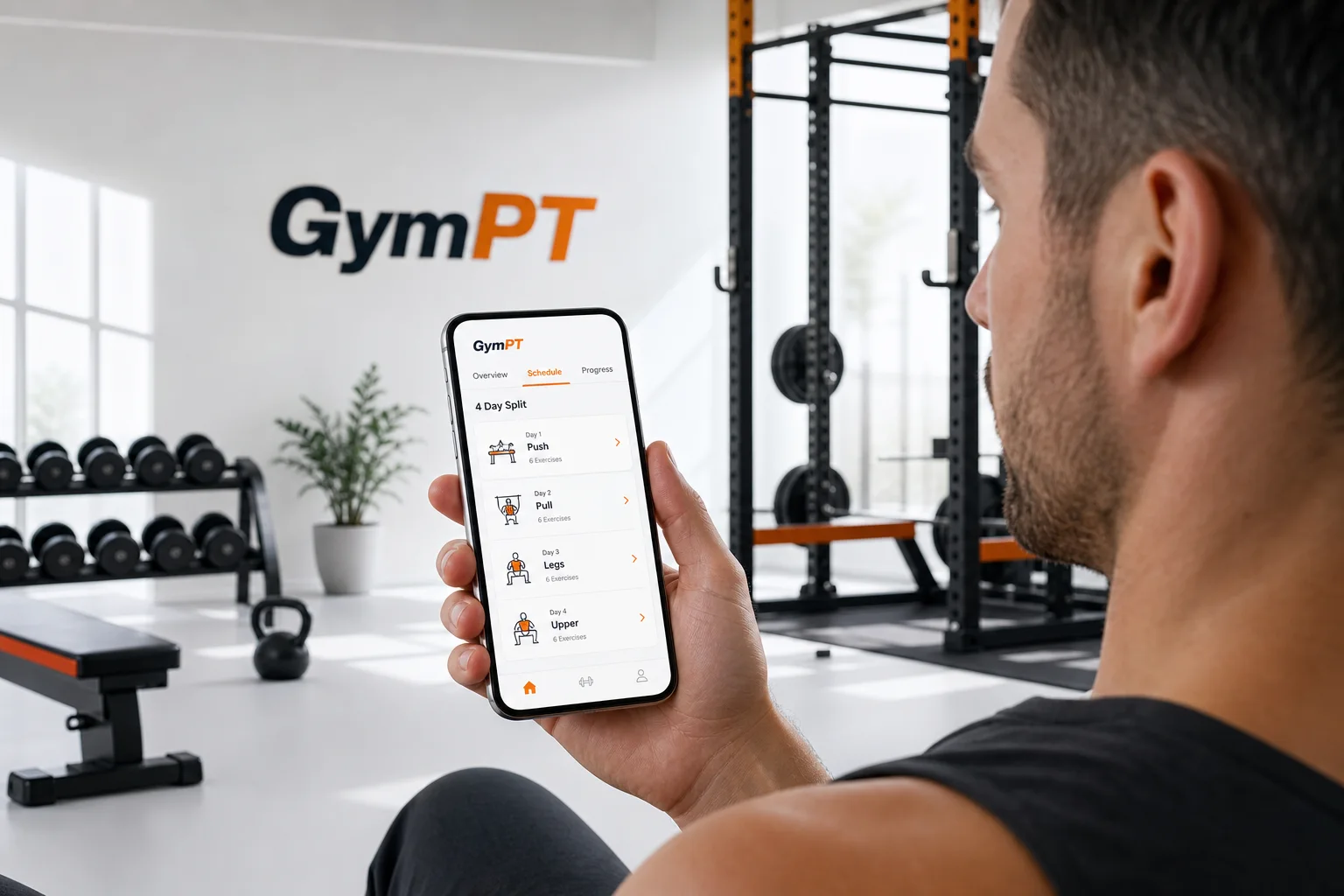
A 4 day push pull legs workout plan can be an excellent middle ground between a three-day routine and a traditional six-day push pull legs split. You get enough training time to build strength and muscle, while keeping several recovery days available for work, family, sports, and everyday life.
The main challenge is that push, pull, and legs are three training categories, while your week contains four sessions. The most practical solution is to use a fourth workout as a structured repeat or priority session rather than forcing every muscle group into an arbitrary split.
This guide explains how to build a sustainable four-day PPL schedule, who it suits, how to choose volume and exercises, and how to progress without turning every workout into a test of exhaustion.
What is a 4 day push pull legs workout plan?
A four-day PPL plan organizes training around three movement-based sessions:
- Push: chest, shoulders, and triceps.
- Pull: back, rear delts, and biceps.
- Legs: quadriceps, hamstrings, glutes, and calves.
The fourth day is usually used for one of three purposes:
- Repeating the muscle group that needs the most attention.
- Adding a balanced upper-body session.
- Repeating the first session in a rotating sequence.
For most people, the second option is the easiest to manage. A Push, Pull, Legs, Upper schedule gives the upper body a second weekly exposure while allowing the legs to receive a dedicated session. If your legs are your priority, you can make the fourth session a lower-body or posterior-chain workout instead.
Who should use a four-day PPL routine?
This 4 day PPL workout is best suited to an intermediate lifter or a consistent beginner who has learned the basic movement patterns and can train four times most weeks. You should be comfortable with exercises such as presses, rows, squats or leg presses, hinges, pulldowns, and basic isolation work.
It may not be the best starting point if you are completely new to resistance training. A full-body plan performed two or three times per week can make it easier to practice each movement more frequently. If you currently train twice per week, compare this approach with a 2 day gym workout plan before adding more sessions.
A four-day split also requires realistic scheduling. If you regularly miss the fourth workout, a well-designed three-day plan will usually outperform an ambitious routine that is rarely completed.
Recommended weekly schedule
A simple schedule separates demanding sessions and gives you recovery time between lower-body training and the next major workout.
- Monday: Push
- Tuesday: Pull
- Wednesday: Rest, light activity, or mobility
- Thursday: Legs
- Friday: Rest
- Saturday: Upper or priority session
- Sunday: Rest
The days do not have to be Monday through Saturday. The important principles are consistency and recovery. Try to avoid placing the legs session immediately before a demanding sport session or a long physical workday.
Sample 4 day push pull legs workout plan
The following routine is a practical starting point for muscle gain and general strength. Begin with the lower end of the set ranges if you are new to this amount of training.
Day 1: Push
- Barbell or dumbbell bench press: 3 sets of 5–8 reps
- Incline dumbbell press: 3 sets of 8–12 reps
- Seated shoulder press: 2–3 sets of 6–10 reps
- Cable or dumbbell lateral raise: 3 sets of 12–20 reps
- Triceps pressdown: 2–3 sets of 10–15 reps
Use a stable pressing exercise first, then add an incline press and shoulder isolation work. Your front delts and triceps already receive indirect work from pressing, so you do not need a long list of extra exercises.
Day 2: Pull
- Pull-up or lat pulldown: 3 sets of 6–10 reps
- Chest-supported row: 3 sets of 8–12 reps
- Single-arm cable row: 2–3 sets of 10–15 reps
- Reverse fly or rear-delt cable fly: 3 sets of 12–20 reps
- Incline dumbbell curl: 2–3 sets of 8–12 reps
- Hammer curl: 2 sets of 10–15 reps
Choose at least one vertical pull and one horizontal row. A chest-supported row can help you train the upper back without adding as much lower-back fatigue before leg day.
Day 3: Legs
- Squat, hack squat, or leg press: 3 sets of 5–10 reps
- Romanian deadlift: 3 sets of 6–10 reps
- Walking lunge or split squat: 2–3 sets of 8–12 reps per leg
- Leg curl: 2–3 sets of 10–15 reps
- Leg extension: 2 sets of 12–15 reps
- Standing or seated calf raise: 3 sets of 10–20 reps
Keep the first exercise technically demanding but controlled. You do not need to use both a heavy squat and a heavy deadlift variation in the same session. Combining a squat pattern with a moderate Romanian deadlift is often enough for a productive lower-body workout.
Day 4: Upper-body balance or priority session
- Overhead press or machine shoulder press: 3 sets of 5–8 reps
- Close-grip bench press or machine chest press: 3 sets of 8–12 reps
- Lat pulldown or pull-up: 3 sets of 8–12 reps
- Seated cable row: 3 sets of 8–12 reps
- Lateral raise: 2–3 sets of 12–20 reps
- Optional arm superset: 2 sets of 10–15 reps each
This fourth workout should support the first three, not compete with them. Keep it shorter if your recovery is limited. You can also change its emphasis every four to six weeks: use a chest and triceps focus during one block, then a back and biceps focus during the next.
How much volume should you use?
Volume should match your training history, recovery, and performance. A reasonable starting point is approximately 8–12 challenging weekly sets for larger muscle groups, counting both direct and meaningful indirect work. Some people progress with less, while experienced lifters may eventually benefit from more.
Do not add sets simply because a routine looks short on paper. Pressing sets contribute to the shoulders and triceps, while rows and pulldowns contribute to the biceps and rear delts. Counting this overlap helps you avoid turning the fourth workout into unnecessary fatigue.
If performance is improving, soreness is manageable, and you are recovering before the next session, your current volume may be sufficient. If progress stalls for several weeks and technique, sleep, nutrition, and exercise consistency are in place, add one set to a priority movement before adding several new exercises.
How to progress week by week
A simple double-progression method works well for this push pull legs 4 days a week schedule:
- Choose a rep range, such as 8–12.
- Start with a weight that allows controlled sets near the lower end of the range.
- Add repetitions when you can maintain good technique.
- Once all working sets reach the top of the range, increase the load slightly.
- Return to the lower end of the range and build again.
For example, if you perform three sets of dumbbell presses at 10, 9, and 8 reps, keep the same load next time and try to improve by one or two total repetitions. When you reach 12, 12, and 12 with consistent form, increase the weight by the smallest practical increment.
Keep one to three repetitions in reserve on most sets. Training every set to absolute failure is not required for progress and can make it harder to recover, especially on compound exercises. Isolation movements can occasionally be taken closer to failure when technique remains controlled.
Recovery rules that make the plan work
The quality of your recovery determines whether four weekly sessions are productive or excessive. Use these guidelines:
- Leave at least one easier day after demanding training when needed. Rest days can include walking, light cycling, or mobility work.
- Monitor performance. A single bad workout is normal, but repeated drops in reps or load may indicate accumulated fatigue.
- Keep warm-ups specific. Perform general movement first, then a few lighter sets of the first exercise.
- Use stable exercise choices. Consistent movements make progress easier to measure.
- Adjust volume before abandoning the split. Remove one or two isolation sets if recovery is poor.
Adults should also include muscle-strengthening activity regularly as part of an overall active lifestyle. Your gym sessions are one part of that picture; daily movement, sleep, nutrition, and stress management also influence how well you train.
When should you change the schedule?
Change the plan when your circumstances or priorities change, not just because a new split looks exciting. If you need more leg frequency, turn Day 4 into a lower-body priority session. If your upper body needs more attention, keep the upper-body version shown above. If four sessions become difficult to sustain, move to a 3 day workout plan for muscle gain rather than repeatedly missing workouts.
You can also use an eight-week rotation to distribute emphasis:
- Weeks 1–4: Day 4 emphasizes chest, shoulders, and triceps.
- Weeks 5–8: Day 4 emphasizes back, rear delts, and biceps.
This approach keeps the basic structure stable while giving lagging muscle groups additional attention. For a different frequency model, compare it with a 5 day push pull legs workout plan or a 4 day full body workout plan.
How GymPT can personalize the routine
A template is useful, but the best plan depends on your goals, available equipment, training age, schedule, and recovery. GymPT can help turn this framework into a more personalized program by adapting exercise choices to your equipment, tracking completed workouts, and using progress insights to guide adjustments.
You can also use AI coach chat to ask practical questions such as whether to replace a barbell movement, how to reduce volume during a busy week, or when to repeat a stalled exercise. For a broader look at personalized planning, read our guide to an AI workout plan app.
Bottom line
The best four-day PPL routine is not the one with the most exercises. It is the one you can repeat long enough to improve. Start with three focused sessions—Push, Pull, and Legs—then use the fourth workout to balance your upper body or prioritize a lagging area. Keep volume manageable, progress gradually, and adjust the plan when recovery or scheduling demands it.
With consistent training and sensible progression, a four-day split can provide a strong combination of structure, flexibility, and recovery.