AI workout planner for women
AI Workout Planner for Women: How to Build a Smarter, Safer Routine
The best AI workout planner for women should do more than generate exercises. It should adapt to your goals, schedule, equipment, experience, recovery, and feedback. Here is how to use AI coaching more effectively.
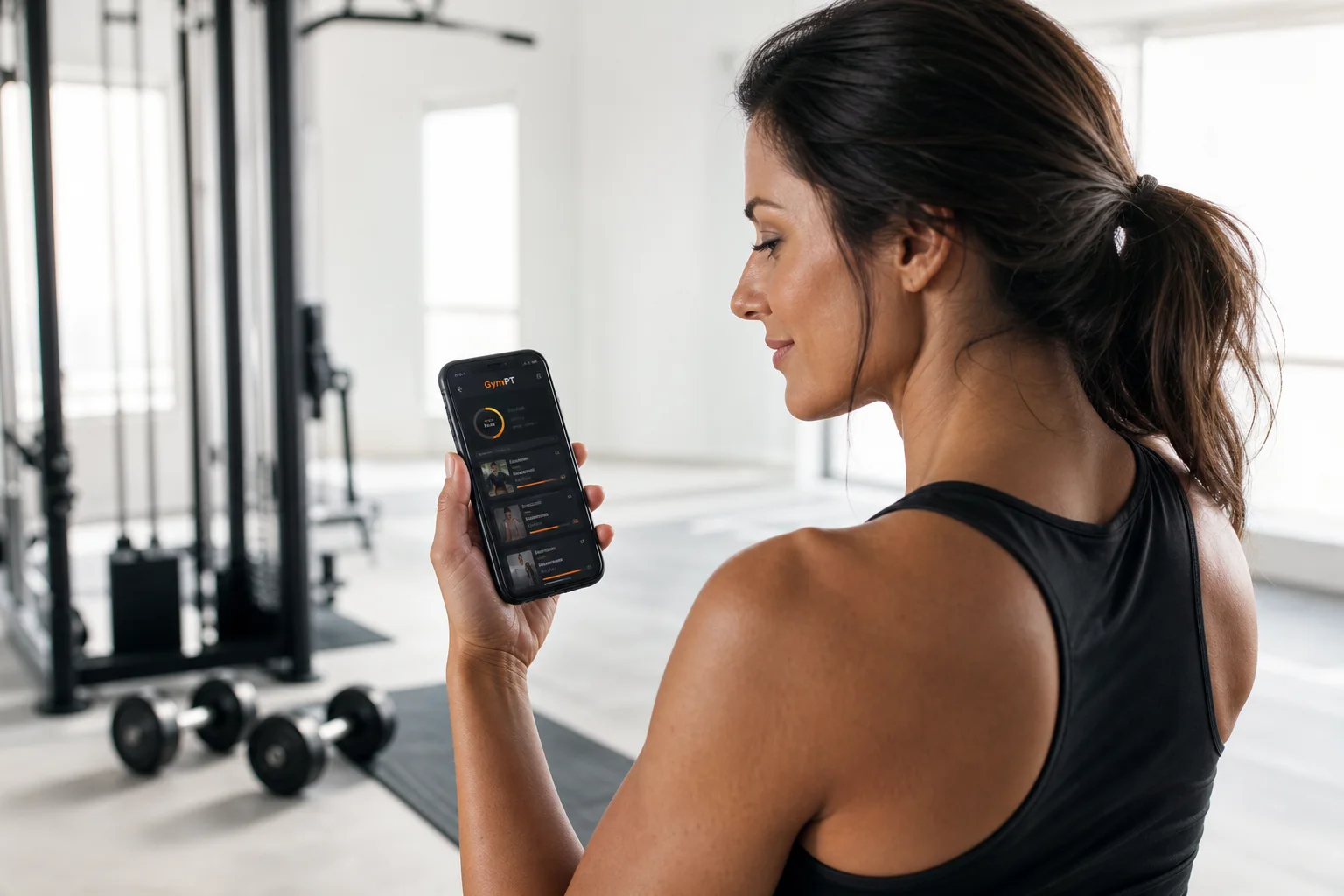
An AI workout planner for women can make structured training easier to start and easier to maintain. Instead of searching for a new routine every week, you can use your goals, available equipment, schedule, and training history to create a plan that fits real life.
However, useful AI coaching is not about assigning a completely different exercise science to women. The fundamentals of progressive resistance training, recovery, consistency, and sensible progression apply broadly. The value comes from individualization: building a plan around the person using it rather than relying on stereotypes about what women should train.
What should an AI workout planner for women actually personalize?
A good plan should change based on meaningful training inputs. “Women’s workout” is not a sufficient profile on its own. Your goals and circumstances matter much more.
1. Your primary goal
Strength, muscle gain, general fitness, improved conditioning, and building a consistent exercise habit can all require different priorities. A strength-focused plan may use fewer repetitions and longer rests, while a general fitness plan may combine resistance training with moderate conditioning.
Be specific when setting your goal. “Get fit” is difficult to program. “Train three days per week to improve full-body strength” gives an AI coach a much clearer direction.
2. Your experience level
A beginner may need fewer exercises, more technique practice, and simple progression rules. An experienced lifter may benefit from more training volume, exercise variations, and closer tracking of performance.
An AI fitness coach for women should also avoid treating a beginner as an advanced athlete simply because she has access to a full gym. Equipment availability does not equal training experience.
3. Your schedule and recovery
A plan that requires five gym visits is not personalized if you can realistically train only three times per week. Your available days, session length, sleep, stress, and other physical activities should influence the plan.
Consistency usually improves when the routine is achievable. A shorter plan that you complete regularly is more useful than an ambitious plan that repeatedly gets abandoned.
4. Your equipment and preferences
Your plan should reflect what you can actually use: dumbbells, cables, machines, resistance bands, barbells, or bodyweight movements. It should also account for exercises you enjoy or prefer to avoid.
GymPT can use equipment-based training information to make exercise selection more practical. If a cable station is busy or you are training at home, the plan should offer a reasonable alternative rather than leaving you without a way to complete the session.
Why strength training belongs in a women’s workout plan
Strength training is not only for people preparing for competitions. It can support muscular fitness, help maintain muscle during weight loss, and contribute to stronger bones and better physical function. Current public health guidance recommends muscle-strengthening activity for all major muscle groups on at least two days each week.
Research focused on women has also found meaningful improvements in strength following resistance training. A systematic review of female participants reported substantial strength gains and moderate improvements in muscle hypertrophy, while training frequency and volume influenced some strength outcomes.
That does not mean every woman needs the same program. It means a personalized workout plan for women should not automatically avoid challenging resistance exercise or limit training to light movements. The right load depends on experience, technique, goals, and current capacity.
How to use AI coaching without handing over your judgment
AI can organize information and suggest a logical progression, but it cannot replace your awareness of how you feel or a qualified professional’s assessment when one is needed.
- Start with accurate information. Enter your actual schedule, experience, equipment, goals, and preferred training style. Better inputs usually lead to more useful outputs.
- Begin conservatively. Your first week is an opportunity to learn the exercises and assess how demanding the plan feels. You do not need to test your limits immediately.
- Use feedback after each workout. Record completed sets, repetitions, difficulty, and any exercise substitutions. This gives the planner useful context for future sessions.
- Progress gradually. Increase repetitions, load, sets, or exercise difficulty only when your technique is consistent and the current workload is manageable.
- Keep flexibility in the plan. A missed workout, low-energy day, or unavailable machine should lead to an adjustment, not an all-or-nothing reset.
For more context on responsible AI guidance, read AI Personal Trainer: What It Can Do, What It Cannot, and How to Use One Well.
A practical three-day structure for many women
There is no single ideal weekly split, but a three-day full-body structure can be a useful starting point for people who want strength practice without training every day.
Day 1: Squat, push, and pull
- Squat or leg press variation
- Chest press or push-up variation
- Seated row or one-arm dumbbell row
- Hip hinge variation
- Optional core exercise
Day 2: Hinge, press, and single-leg work
- Romanian deadlift or machine hinge variation
- Overhead press variation
- Lat pulldown or assisted pull-up variation
- Split squat or step-up
- Optional carry or core exercise
Day 3: Full-body practice and accessories
- Leg press, goblet squat, or another lower-body movement
- Incline press or chest-supported press
- Cable row or dumbbell row
- Glute-focused movement
- Optional shoulders, arms, or core work
This is a framework, not a prescription. Sets, repetitions, exercise choices, and rest periods should match your experience and goal. A beginner may start with one or two controlled sets per exercise, while a more experienced trainee may need additional volume.
If three days is more than your schedule allows, a two-day full-body plan can still be productive. If you have more time, an upper-lower or four-day split may be appropriate. GymPT can help organize these options around the equipment and time you actually have.
For help choosing a realistic weekly schedule, see How Many Days Should Beginners Train? A Simple Weekly Guide.
Where personalization matters most
Cycle and energy changes
Some people notice changes in energy, comfort, or performance across their menstrual cycle, while others do not notice a consistent pattern. An AI planner should treat this as optional feedback rather than assume that every woman needs a fixed cycle-based program.
If you notice a recurring change, record it and adjust training effort, exercise selection, or recovery when useful. The goal is to respond to your data, not force your body into a calendar.
Pregnancy, postpartum training, and health conditions
Pregnancy, the postpartum period, injuries, persistent pain, and diagnosed health conditions may require individualized guidance from an appropriate healthcare professional. An AI workout planner can help organize general fitness information, but it should not diagnose symptoms or replace medical advice.
Stop an exercise that causes sharp or unusual pain, and seek professional guidance when you are unsure whether a movement is appropriate for your situation.
Comfort and confidence in the gym
A plan is more usable when it reduces uncertainty. Clear exercise instructions, alternatives for busy equipment, and a visible record of progress can make the gym feel less intimidating.
GymPT supports this process with workout tracking, exercise guidance, equipment-aware planning, body analysis features, and AI coach chat. These tools are most valuable when they help you make a plan you understand and can follow—not when they encourage constant changes.
How to tell whether your plan is working
Do not judge progress only by body weight or appearance. Depending on your goal, useful markers may include:
- More repetitions with the same load
- A heavier load with controlled technique
- Improved balance, range of motion, or exercise confidence
- Better consistency from week to week
- Shorter recovery time between familiar sessions
- Improved workout quality at the same perceived effort
Body measurements and photos can be optional tracking tools, but they should be used respectfully and interpreted over time. Daily fluctuations are normal, and no app can promise a specific physical transformation.
For a deeper look at progression and tracking, read Strength Training Program: How to Progress Safely and Track Real Strength Gains.
What to look for in a women’s workout planner
Before choosing an app, look for features that support practical decision-making:
- Personalized onboarding: The app should ask about goals, experience, schedule, equipment, and preferences.
- Exercise alternatives: You should be able to replace an exercise when equipment, comfort, or ability changes.
- Progressive planning: The program should explain how to build over time instead of generating random workouts.
- Tracking: Logging sets, repetitions, load, and perceived difficulty makes future adjustments more useful.
- Transparent limitations: The app should make clear that AI guidance is not medical diagnosis or a substitute for professional care.
You can also compare these features with the broader checklist in Fitness Program Builder App: 9 Features That Make a Plan Usable.
The bottom line
The best AI workout planner for women is not the one that uses the most gendered language or promises the fastest results. It is the one that turns your actual goals, time, equipment, experience, and feedback into a clear routine you can repeat and improve.
Use AI to reduce planning friction, explore sensible exercise options, and track your training. Keep your own judgment involved, progress gradually, and seek qualified guidance when your situation requires more than general fitness support. That is how AI coaching becomes practical rather than just another source of workouts.