
3 Day Workout Plan for Muscle Gain: An Upper, Lower and Full-Body Split
A practical three-day hypertrophy plan that spreads upper- and lower-body training across the week, with example sessions and simple ways to progress.
In this article
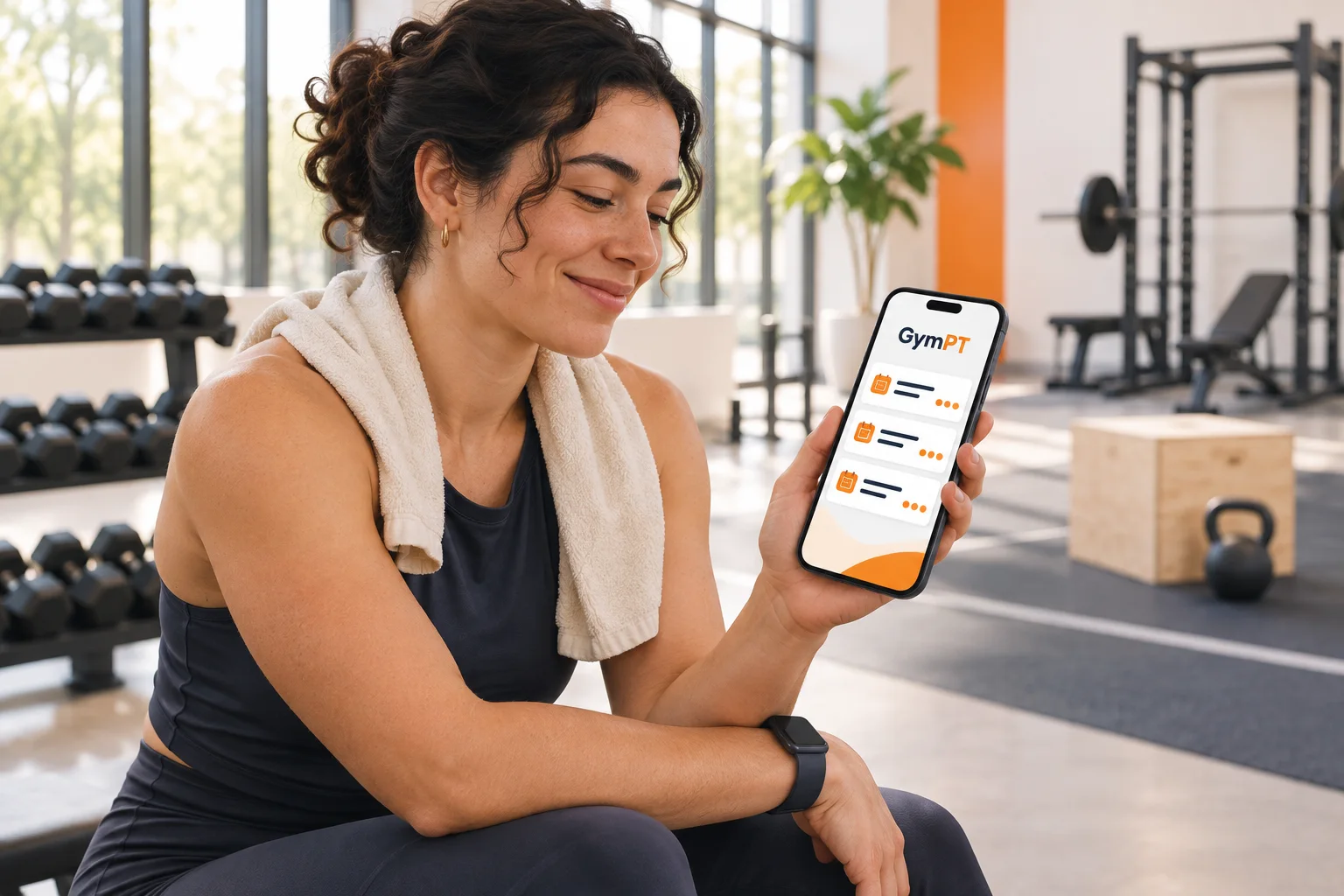
A 3 day workout plan for muscle gain can fit a busy week and give you room to recover between sessions. Rather than repeating the same full-body workout each time, this example uses an upper-body day, a lower-body day and a full-body day. That lets you train major muscle groups more than once across the week without making all three sessions identical.
The plan is a starting framework, not a test you have to pass. Choose movements you can perform with control, begin with a manageable number of sets, and record your work so you can make gradual progress. Consistency and effort matter more than complicated programming.
Why use an upper, lower and full-body split?
Three weekly sessions give you several ways to arrange training. A push-pull-legs split often gives each area one main session if you lift only three days. An upper-lower-full-body approach revisits many muscle groups on the full-body day, while leaving rest days between workouts. Research suggests that weekly training frequency alone is not a magic driver of muscle growth when total training volume is similar; spreading work across days can simply make that volume easier to manage.
For muscle gain, the useful question is not “What split is perfect?” but “Can I complete this plan, recover, and gradually do more over time?” A recent American College of Sports Medicine review highlights regular resistance training and individualized programming; its summary notes that higher weekly training volume can support hypertrophy. You do not need to start with a high-volume routine, though. Build from a workload you can repeat.
3 day workout plan for muscle gain: the weekly schedule
Try a Monday-Wednesday-Friday schedule, or use any three nonconsecutive days that suit your week. Each session includes a few compound movements followed by smaller accessory exercises. The listed sets are working sets; do a few lighter warm-up sets before your first challenging lift as needed.
Day 1: Upper body
- Bench press or dumbbell chest press: 3 sets of 6–10 reps
- Chest-supported row or cable row: 3 sets of 8–12 reps
- Overhead dumbbell press: 2 sets of 8–12 reps
- Lat pulldown or assisted pull-up: 3 sets of 8–12 reps
- Lateral raise: 2 sets of 12–20 reps
- Biceps curl and triceps pressdown: 2 sets each of 10–15 reps
Alternate a press with a row if you want to keep the session moving, but take enough rest to perform each set well. If an exercise is unfamiliar, use a stable variation and learn the movement before adding load.
Day 2: Lower body
- Squat or leg press: 3 sets of 6–10 reps
- Romanian deadlift: 3 sets of 8–12 reps
- Split squat or reverse lunge: 2 sets of 8–12 reps per side
- Leg curl: 2 sets of 10–15 reps
- Calf raise: 2 sets of 10–15 reps
Keep the squat and hinge patterns controlled and within a comfortable range of motion. If you are still learning these lifts, choose a machine or a simpler variation, and consider asking a qualified trainer to check your technique.
Day 3: Full body
- Incline dumbbell press: 3 sets of 8–12 reps
- Hip thrust or glute bridge: 3 sets of 8–12 reps
- Seated cable row: 2 sets of 8–12 reps
- Goblet squat or leg extension: 2 sets of 10–15 reps
- Rear-delt raise: 2 sets of 12–20 reps
- Optional core exercise: 2 sets of 8–15 controlled reps
These movements are examples, not mandatory exercises. Substitute a similar movement if equipment is unavailable, a variation does not suit you, or you have a preference you can stick with. For more exercise-selection ideas, see our guide to matching your workout to available gym equipment.
How to progress without adding weight every workout
Progressive overload means gradually increasing the challenge your muscles can handle. That may come from adding repetitions, increasing resistance, improving control, or adding a set when appropriate. It does not mean forcing a heavier lift every session.
- Choose a load you can control. Finish most working sets with about one to three good repetitions still possible. You should not need to grind or lose technique to complete the target range.
- Build reps within the range. For a 3 × 8–12 exercise, keep the load steady while you work toward 12 reps on each set with sound form.
- Add a small amount of weight when ready. Once you reach the top of the range across all sets, and the reps still look controlled, increase the load modestly next time. Your reps may return to the lower end of the range.
- Repeat and record. Note the exercise, load, reps and sets. Compare like with like rather than judging progress by how one session felt.
For example, if your dumbbell press is 10, 9 and 8 reps at the same load, aim to add a rep over future sessions while keeping the movement steady. When you can complete all three sets at 12 reps, try the next available dumbbell size and build again. If performance drops sharply or technique becomes messy, keep the load or reduce it rather than forcing progress.
Sets, effort and rest: keep the basics useful
The sample plan uses a moderate number of sets so you can establish a baseline. It is not necessary to take every set to momentary failure. Work hard while preserving repeatable technique, and adjust the effort to your training experience and the exercise. A systematic review on rest periods found a possible small benefit to resting longer than 60 seconds, with no clear additional hypertrophy difference beyond 90 seconds in its analysis. In practice, rest long enough to make the next set productive: often around two to three minutes for demanding compound lifts and roughly one to two minutes for smaller exercises.
After several consistent weeks, review your log. If a muscle group is recovering well but progress has stalled, you might add one set to an exercise that trains it. If you are frequently missing sessions, unusually fatigued, or losing reps across workouts, adding more volume is unlikely to be the first fix. Keep the schedule manageable before making the plan bigger.
Recovery is part of the workout plan
Leave at least a rest day between sessions when possible. A rest day can include normal daily movement or light activity; it does not need to mean staying completely still. Prioritize enough sleep, regular meals and a sustainable routine. You do not need soreness as proof that a workout worked.
If you miss a day, continue with the next session when you can rather than cramming two hard workouts together to “make up” for it. If a movement causes pain or you have a health concern, stop and seek suitable professional guidance; this plan is general fitness information, not a diagnosis or individualized medical advice.
Make the plan yours and track the details
Give the routine a few weeks of consistent practice before judging it, while paying attention to how you feel and perform. Keep the main movements stable long enough to compare your training records, but swap an exercise if it is uncomfortable, unavailable or a poor fit. If you want a different structure, compare it with our repeatable three-day full-body plan or four-day full-body plan. If glutes are a priority, our two-day glute workout plan offers another example of distributing focused work.
GymPT lets members build a manual program and save training records without AI credits. You can also request optional AI assistance or review a program proposal from a personal trainer; you decide whether to save and use that proposal. A trainer can review only the programs, workout records and notes you permit them to see. Whatever tool you use, track enough detail to know what you did last time, then make the next step small and deliberate.
Quick checklist
- Train on three days with rest days between sessions when practical.
- Use controlled exercises and a workload you can recover from.
- Keep most sets challenging, but do not force failure on every set.
- Record reps and resistance, then progress gradually.
- Adjust the plan to your equipment, experience and schedule.
A good three-day muscle-gain plan is one you can repeat, measure and adapt. Start with the sessions above, build your technique and consistency, and let your training log—not pressure to do more—guide the next adjustment.