
4 Day Full Body Workout Plan: Train Often, Recover Well
A four-day full-body schedule can fit strength training into a busy week, but the key is managing effort and total workload. Use this A/B plan, recovery guide and progression method to make four sessions repeatable.
In this article
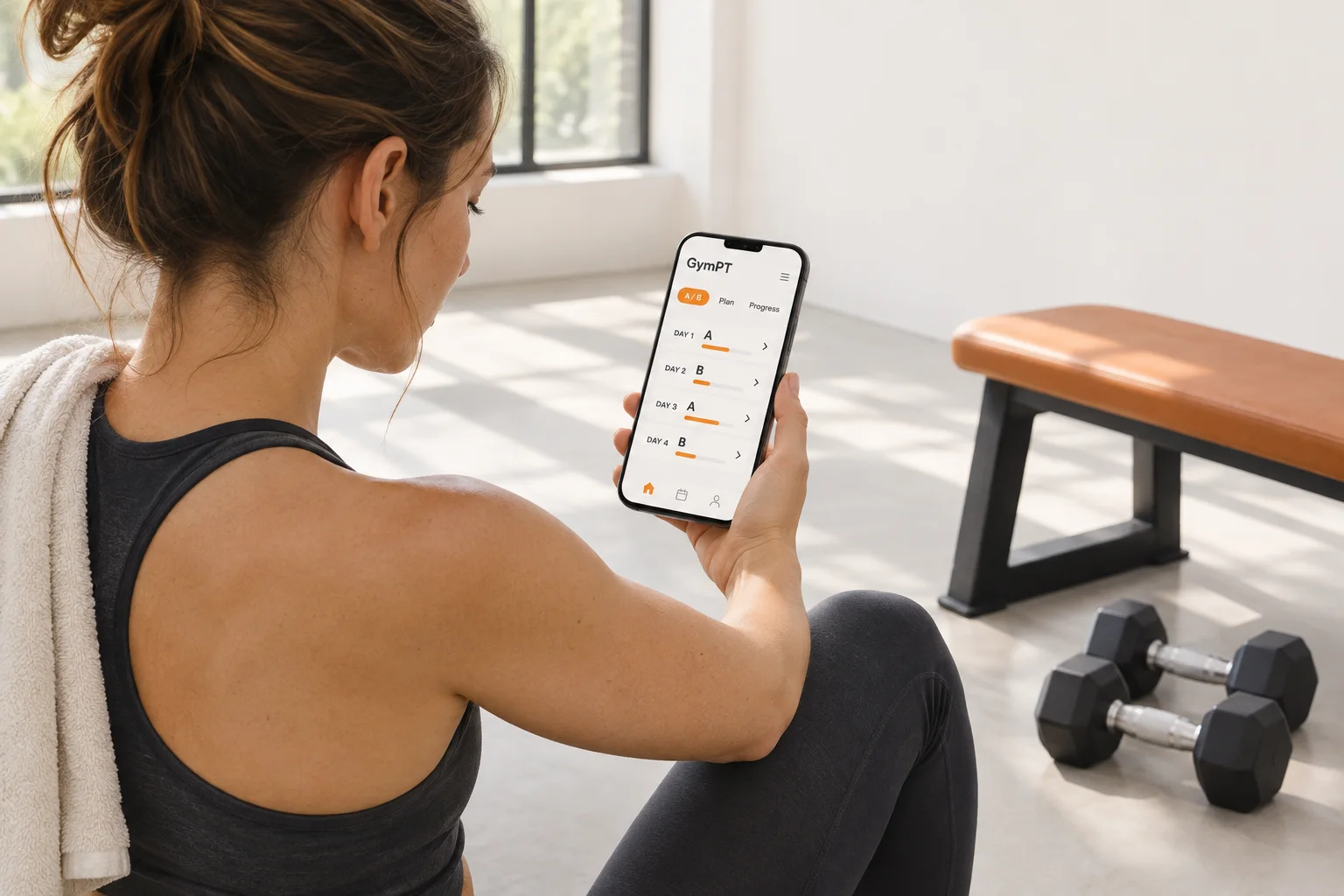
A 4 day full body workout plan can give you four regular opportunities to practice the major movement patterns without making any one workout responsible for your entire week. The trade-off is that each session should be planned with recovery in mind: four hard, high-volume workouts in a row are not the goal.
This guide uses two alternating sessions, A and B, across four training days. It is designed as a practical template for generally healthy adults who already know basic exercise technique. If you are new to resistance training or returning after a long break, start with fewer weekly sessions or use the lower-volume option below. Adjust exercises to your equipment, comfort and experience.
Is a four-day full-body schedule right for you?
Four days can work if your calendar allows rest or lighter activity between demanding sessions and you can keep each workout focused. Full-body training means each session includes movements for several major muscle groups; it does not mean every session needs to exhaust every muscle.
Adults are generally advised to include muscle-strengthening activity on at least two days per week. That is a broad activity guideline, not a requirement to lift four days. Choose four sessions because the schedule suits your goals and routine—not because more training days automatically mean better progress.
For a beginner, two or three full-body sessions may be an easier starting point. If you are comparing schedules, see our 3 day full body workout plan for a lower-frequency option.
Weekly layout: leave room to recover
Try this nonconsecutive pattern, which spreads sessions across the week and avoids four consecutive lifting days:
- Monday: Workout A
- Tuesday: Workout B
- Wednesday: Rest or easy activity
- Thursday: Workout A
- Friday: Rest or easy activity
- Saturday: Workout B
- Sunday: Rest
Each workout appears twice weekly, but the paired sessions are not identical in effort. Keep at least some repetitions in reserve on most sets, especially when two training days are close together. If Tuesday’s performance is consistently worse, soreness lingers, or your usual loads feel unusually difficult, reduce sets or move a session to create more space.
There is no single recovery timetable that suits everyone. Training experience, exercise choice, total sets, sleep, work demands and other activity all affect how much training you can comfortably repeat. For more on fitting a plan to real-life equipment and time, read our gym equipment workout plan guide.
4 day full body workout plan: sample A/B sessions
Start with a few minutes of easy movement and warm-up sets for your first main exercise. The sets below are working sets, not warm-ups. Select a variation you can perform with controlled technique and a comfortable range of motion. Rest long enough to be ready for the next set; compound movements may need more rest than smaller accessory exercises.
Workout A
- Squat pattern: goblet squat, leg press or squat variation — 2–3 sets of 6–10 reps
- Horizontal push: dumbbell bench press or push-up — 2–3 sets of 6–12 reps
- Horizontal pull: cable row or supported dumbbell row — 2–3 sets of 8–12 reps
- Hip hinge: Romanian deadlift with dumbbells or barbell — 2 sets of 8–10 reps
- Optional trunk exercise: dead bug or carry — 2 controlled sets
Workout B
- Single-leg or squat pattern: split squat, step-up or leg press — 2–3 sets of 8–12 reps per side where applicable
- Vertical push: seated dumbbell press or a comfortable machine variation — 2 sets of 8–12 reps
- Vertical pull: lat pulldown or assisted pull-up — 2–3 sets of 8–12 reps
- Glute or hamstring pattern: hip thrust, glute bridge or leg curl — 2–3 sets of 8–12 reps
- Optional arms or calves: one exercise — 1–2 sets of 10–15 reps
Keep the optional work optional. If you are short on time or carrying fatigue from the previous day, finish after the main movements. You can also alternate exercises that do not compete heavily with each other, such as a push and a pull, if that helps you stay on schedule without rushing your technique.
The plan provides a starting structure, not a mandatory exercise list. Swap movements when equipment is busy or an option does not suit your current ability. Our progressive overload workout plan explains how to record and build on your work without changing everything at once.
Choose the right workload for your level
If you are new to training
Consider starting with three weekly sessions instead of four, or keep the four-day schedule but perform only two working sets per exercise and skip optional work. Use stable variations that let you learn the movement, and end most sets while you could still complete a few more good repetitions. Add volume only after the schedule feels manageable for several weeks.
If you have consistent training experience
Use the listed two to three sets according to how well you recover and what you are already doing. Someone who also runs, plays sports or has a physically demanding job may need less lifting volume than someone whose other activity is light. If you want more work for a particular muscle group, add a small amount there rather than expanding every exercise.
If you are returning after a long break
Begin below your previous workload. Use lighter loads, fewer sets or fewer training days, then build gradually as sessions feel repeatable. Our guide to a workout plan after a long break covers how to choose a sensible starting workload.
Progress without turning every workout into a test
Use a simple double-progression approach. Choose a load that lets you complete the lower end of the rep range with controlled form. Over later sessions, add repetitions while keeping the load and technique consistent. When you can reach the top of the range for all prescribed sets, with a little effort still in reserve, consider a small increase in load and work back up through the range.
- Record: exercise variation, load, reps and working sets.
- Repeat: keep the same movement long enough to compare sessions meaningfully.
- Adjust one thing: add a rep, a small amount of load or a set—not all at once.
- Review the week: look at performance and recovery across all four sessions.
Missing a repetition or repeating the same load is not a failed week. If performance is slipping across several sessions, reduce the workload temporarily or add a rest day before trying to progress again. A log helps you distinguish a normal variation from a pattern.
Make the plan easy to follow
Before the week begins, decide which days are realistic and choose exercise variations your gym or home setup supports. Keep the A/B sessions written down, then track what you actually complete. GymPT members can build a manual program and save training records with a free account; optional AI assistance may require credits, and eligible Premium features have their own requirements displayed before use. You can also review and save a personal trainer’s program proposal if one is shared with you.
The best four-day routine is one you can repeat with appropriate effort, useful records and enough flexibility to adapt. Start with the sample, adjust the dose to your experience, and let consistent training—not constant program changes—guide your next step.