
3 Day Full Body Workout Plan: Build a Week You Can Repeat
A three-day routine can fit strength training into a busy week without making every session complicated. Use this flexible plan to train major movement patterns, recover between workouts, and progress at a pace you can sustain.
In this article
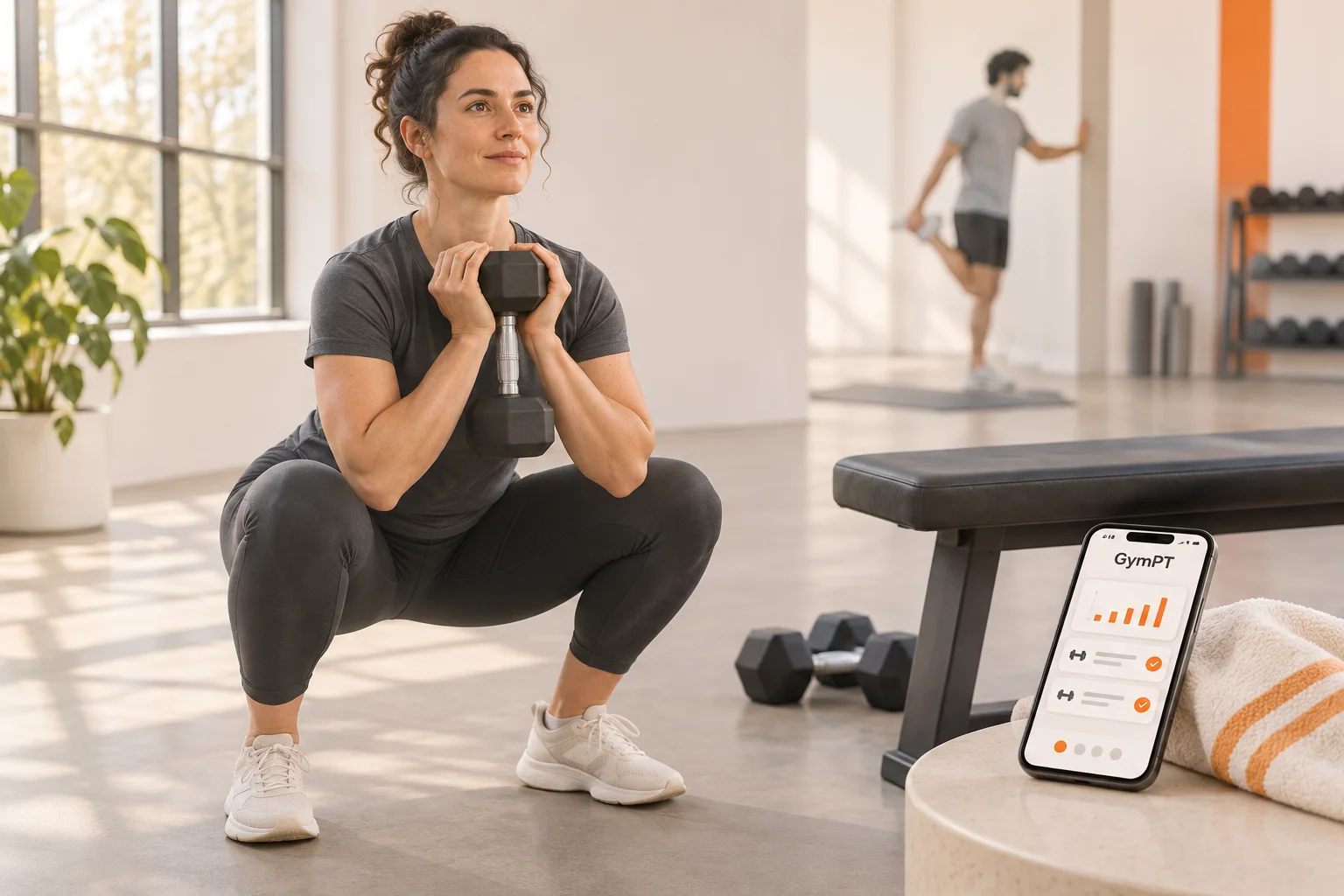
A 3 day full body workout plan gives you three weekly chances to practice the major movement patterns: squatting, hinging, pushing, pulling, and carrying or bracing. It can work for beginners learning a routine and for experienced lifters who want to spread training across the week. The key is to choose manageable exercises, leave room for recovery, and repeat the plan long enough to see how it feels.
Use the sample workouts below as a starting framework, not a test you have to pass. Adjust the movements to your experience, equipment, and available time. If you are returning after a break, start with the beginner option and build gradually; this guide to choosing a starting workload can help you scale the first few weeks.
How to schedule a three-day full-body routine
Space your sessions across the week so you are not doing all three on consecutive days. For example, train on Monday, Wednesday, and Friday, or Tuesday, Thursday, and Saturday. The rest days between sessions give you time away from lifting and make the routine easier to fit around work, family, and other activity.
Adults are generally advised to do muscle-strengthening activity on at least two days per week, involving the major muscle groups. Three sessions are one practical way to organize strength training, but you do not need to lift on exactly these days to make a schedule work. Consistency matters more than matching a particular calendar template.
- Beginner: Start with two working sets per exercise and use loads that let you practice controlled repetitions.
- Intermediate: Begin with two or three sets per exercise, then adjust total work based on your progress and recovery.
- Short on time: Keep the first four exercises and do the optional final movement only when time allows.
3 day full body workout plan: the sessions
Start each workout with a few minutes of easy movement and lighter practice sets for the first lifts. Warm-up sets do not need to feel exhausting; use them to prepare for the working weight and check that the movement feels controlled. Rest long enough between sets to perform the next one with good technique.
Workout A: squat and horizontal push
- Squat pattern: Goblet squat, barbell squat, or leg press — 2–3 sets of 6–10 reps.
- Horizontal push: Dumbbell bench press or push-up — 2–3 sets of 6–12 reps.
- Horizontal pull: Seated cable row or one-arm dumbbell row — 2–3 sets of 8–12 reps.
- Hip hinge: Dumbbell Romanian deadlift — 2 sets of 8–12 reps.
- Optional trunk work: Dead bug or plank — 2 controlled sets.
Workout B: hinge and vertical push
- Hip hinge: Trap-bar deadlift, kettlebell deadlift, or Romanian deadlift — 2–3 sets of 5–8 reps.
- Vertical push: Seated dumbbell shoulder press or a suitable machine press — 2–3 sets of 6–10 reps.
- Vertical pull: Lat pulldown or assisted pull-up — 2–3 sets of 8–12 reps.
- Single-leg pattern: Split squat or step-up — 2 sets of 8–10 reps per side.
- Optional carry: Farmer carry — 2–3 steady trips, if you have safe space and suitable weights.
Workout C: balanced practice
- Squat pattern: Front squat, leg press, or goblet squat — 2–3 sets of 8–12 reps.
- Horizontal push: Incline dumbbell press or push-up — 2–3 sets of 8–12 reps.
- Horizontal pull: Chest-supported row or cable row — 2–3 sets of 8–12 reps.
- Hip hinge or glute focus: Hip thrust or light Romanian deadlift — 2–3 sets of 8–12 reps.
- Optional arm work: Biceps curl and triceps pressdown — 2 sets of 10–15 reps each.
The exercise names are examples, not requirements. Choose an alternative that trains a similar pattern and that you can perform comfortably with the equipment available. If an exercise feels unfamiliar, reduce the load and practice the movement rather than forcing the listed numbers.
Choose a starting level that fits your training
New to lifting or rebuilding consistency: For the first two to three weeks, do two working sets for each main exercise. Keep a few good repetitions in reserve instead of pushing every set to your limit. You can also use stable machines or simpler variations while learning the routine. If three visits feel like too much at first, begin with two sessions and add the third when the schedule feels repeatable.
Already training regularly: Use two or three sets for the main movements, selecting loads that make the final repetitions challenging while keeping your form controlled. Add work only where it serves a clear purpose. More exercises and more sets are not automatically better if they make the sessions difficult to recover from or repeat.
For an efficient, two-session alternative, see this 45-minute full-body workout plan. If you are still deciding between a few basic weekly structures, the beginner workout split guide offers another way to think through frequency and scheduling.
Recovery: what to do between workouts
Use non-lifting days for rest or other activity that fits your routine, such as walking or easy cycling. You do not need to turn every rest day into another hard workout. Pay attention to how your performance, energy, and interest in training are trending across the week. If you are consistently struggling to complete your usual work, reduce a set or two, lower the load, or take an easier session before adding more training.
Recovery is individual. A demanding week, unfamiliar exercise, or a sudden increase in workload can change how ready you feel for the next session. Rather than relying on a fixed rule, space sessions sensibly and adjust the plan when you need to. If a movement causes sharp or concerning discomfort, stop that exercise rather than trying to train through it.
How to progress without changing the plan every week
Keep a simple record of the exercise, load, sets, and repetitions you complete. Use the same movement and a consistent range of motion while you are building familiarity. When you can reach the top of a rep range for all planned sets with controlled technique, consider a small increase in load next time. Then work back up through the rep range.
For example, if your target is 8–12 reps, you might complete 10, 9, and 8 reps this week. Over later sessions, aim to add repetitions while keeping the movement steady. Once you can do 12 for each set, increase the weight slightly and build up again. Progress does not have to happen in every workout. If repetitions or technique drop noticeably, keep the same load or reduce it rather than forcing an increase.
Review your log every few weeks. If the plan is working with your schedule and you are gradually improving, keep it. If you repeatedly miss sessions, simplify the workouts or move the training days. For a closer look at progression, read how to apply progressive overload without guesswork.
Make the plan yours
A useful routine is one you can perform, recover from, and return to. Start with a repeatable version, then make one adjustment at a time: exercise choice, sets, repetitions, or load. You can build and save a manual program in GymPT without AI credits, and record your training so you can review how the plan is going. If you choose to involve a personal trainer, you can review a program proposal and decide whether to save and use it.
Keep the first goal simple: complete the sessions at a manageable effort and learn what fits your week. Once that foundation is steady, use your training record to guide the next small change.