
AI Workout Coach for Beginners: Start Simple, Train Smarter
An AI workout coach can help you organize a beginner routine, but the best plan is one you can follow and review. Learn what to ask, what to check and how to use human guidance.
In this article
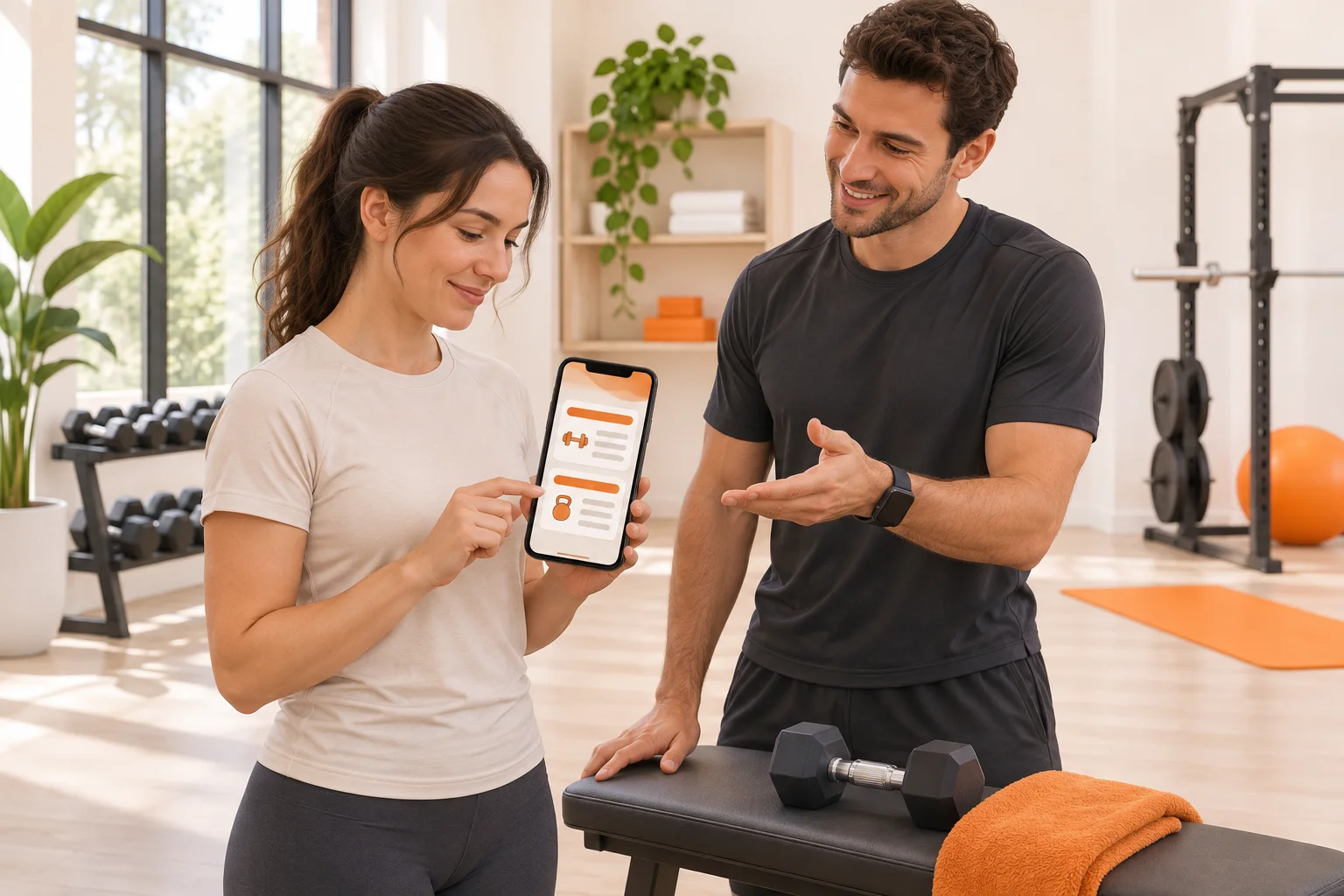
An AI workout coach for beginners can make it easier to turn a broad goal—such as getting stronger or starting a gym routine—into a workable first plan. But a generated schedule is a draft, not an in-person assessment or a substitute for coaching. You still need to check whether the exercises, workload and weekly rhythm fit your experience and circumstances.
A useful beginner plan is usually clear, repeatable and modest enough to begin consistently. This guide shows how to ask for one, review it before training and use GymPT to keep your own training connected with optional support from a real personal trainer.
What an AI workout coach can—and cannot—do
An AI tool can help organize information you provide: training days, available equipment, preferences and a broad goal. It can suggest exercises and arrange them into a weekly structure. That can be a useful starting point when you are unsure how to make a routine feel manageable.
However, an AI plan cannot reliably observe your movement, confirm that a piece of equipment is set up correctly or understand every detail of your training background. A confident-sounding answer is not proof that the program is suitable. Treat it as a draft to review, and ask a qualified professional when you need personal instruction or have concerns that affect exercise choices.
For a wider checklist of app capabilities, read what to look for in a smart fitness coach app.
Start with a beginner plan you can actually repeat
Before asking for exercises, decide what your week realistically allows. Two strength sessions on nonconsecutive days may be a practical starting point for someone new to resistance training. Public physical-activity guidance recommends muscle-strengthening activity on at least two days a week, but that is a general guideline—not a personal prescription or a requirement to start at full volume.
Keep the first version simple: a small number of movements that cover major muscle groups, familiar equipment where possible, and enough time to learn the routine. The 2026 American College of Sports Medicine guidance emphasizes consistency and individualizing training rather than making a plan complicated. Start with a comfortable workload; build gradually as you learn how you respond.
A sample structure to discuss or adapt
This example is a planning framework, not a personalized workout. Choose movements that you can perform comfortably and learn their setup before adding load.
- Day A: a squat pattern, a push movement, a row or pull movement, and an optional simple core exercise.
- Day B: a hip-hinge pattern, a different push or pull variation, a single-leg movement if appropriate, and an optional core exercise.
- Between sessions: leave room for recovery and normal daily activity. If the week gets busy, keep the next session straightforward instead of trying to make up missed work by doubling the workload.
For each movement, the plan should state a sensible starting range, rest guidance and a way to make the exercise easier if needed. You do not need to test a maximum lift to begin. Stop a set when your technique becomes difficult to maintain, and ask a trainer to check a movement if you are unsure how to perform it.
How to prompt an AI workout coach for beginners
Specific, realistic inputs make a plan easier to evaluate. Tell the tool what you know rather than asking it to guess. For example:
- “I am new to strength training and can train twice a week for about 40 minutes.”
- “I have access to basic gym machines and dumbbells; please avoid exercises that require equipment I have not listed.”
- “Give me a simple full-body structure, explain the purpose of each movement and include an easier alternative.”
- “Keep the starting workload conservative and explain how to progress only when I can complete the work with steady technique.”
- “List any assumptions you are making and tell me what a qualified trainer should review.”
Do not enter sensitive personal information unless you understand how the service handles it. If you have a medical condition, injury or other concern that may affect exercise, get appropriate professional guidance rather than relying on an AI-generated plan.
Review the plan before your first session
Read the whole routine before you start. A beginner workout plan should be understandable without decoding specialist jargon, and its exercises should match the equipment and time you actually have.
Use this quick review
- Fit: Does the schedule match the days you can realistically train?
- Clarity: Can you identify each movement and understand the basic setup and instructions?
- Balance: Does the week include a reasonable range of movement patterns rather than repeating one type of exercise?
- Workload: Does the plan start at a level that leaves room to learn and recover, instead of demanding exhausting sessions from day one?
- Progression: Does it explain a gradual next step, rather than telling you to increase weight every session regardless of how training feels?
- Alternatives: Is there a simpler option if a movement or piece of equipment is unfamiliar?
Be cautious of plans that prescribe maximal efforts, lots of advanced techniques, a demanding daily schedule or guaranteed results. If an instruction is unclear, ask for a plain-language explanation or have a real trainer review it. For more on checking generated routines, see how to use an AI workout assistant and check the details and how to review an AI gym workout generator plan.
Track a few details and adjust thoughtfully
After each session, record what you completed, the load or variation used, and a short note about how manageable the session felt. These records help you compare like with like. They also give a trainer more useful context if you choose to ask for help.
Change one thing at a time. For example, if you can complete the planned work with steady technique and the session feels manageable, you might add a small amount of weight or a repetition next time—depending on the exercise and the plan. If the routine feels too demanding, reduce the workload or ask for a simpler version instead of forcing progression. A training log is information to guide a decision, not a score you have to beat every workout.
Where GymPT fits in a beginner’s training
GymPT lets members build a program manually without AI credits, request optional AI support, or review a program proposal from a personal trainer. The member decides whether to save and use a PT proposal. Optional AI actions may require credits, and eligible Premium features have their own requirements shown before use.
If you connect with a PT, they review only the programs, workout records and notes you permit them to see. Sharing can make a follow-up more specific: for instance, you might share your recent sessions and a note that a particular exercise is unfamiliar, then ask the trainer whether they can suggest a suitable variation. Weekly AI summaries also require the appropriate grants.
AI can help you organize a first draft, but your choices and a real trainer’s professional judgment remain important. To explore the planning process further, read how to build an AI fitness plan you can trust.
Key takeaway
The best AI workout coach for beginners is not the one that creates the most complicated routine. It is a tool that helps you make a clear first draft, gives you something practical to review and leaves room for gradual adjustments and human guidance. Start with a schedule you can repeat, check every exercise and progression, and ask a qualified trainer for help when you need an experienced eye.