4 Day Dumbbell Workout Plan: A Flexible Weekly Routine
Build a four-day dumbbell routine around the weights and space you actually have. This plan covers upper- and lower-body training, exercise swaps, progression and recovery.
In this article
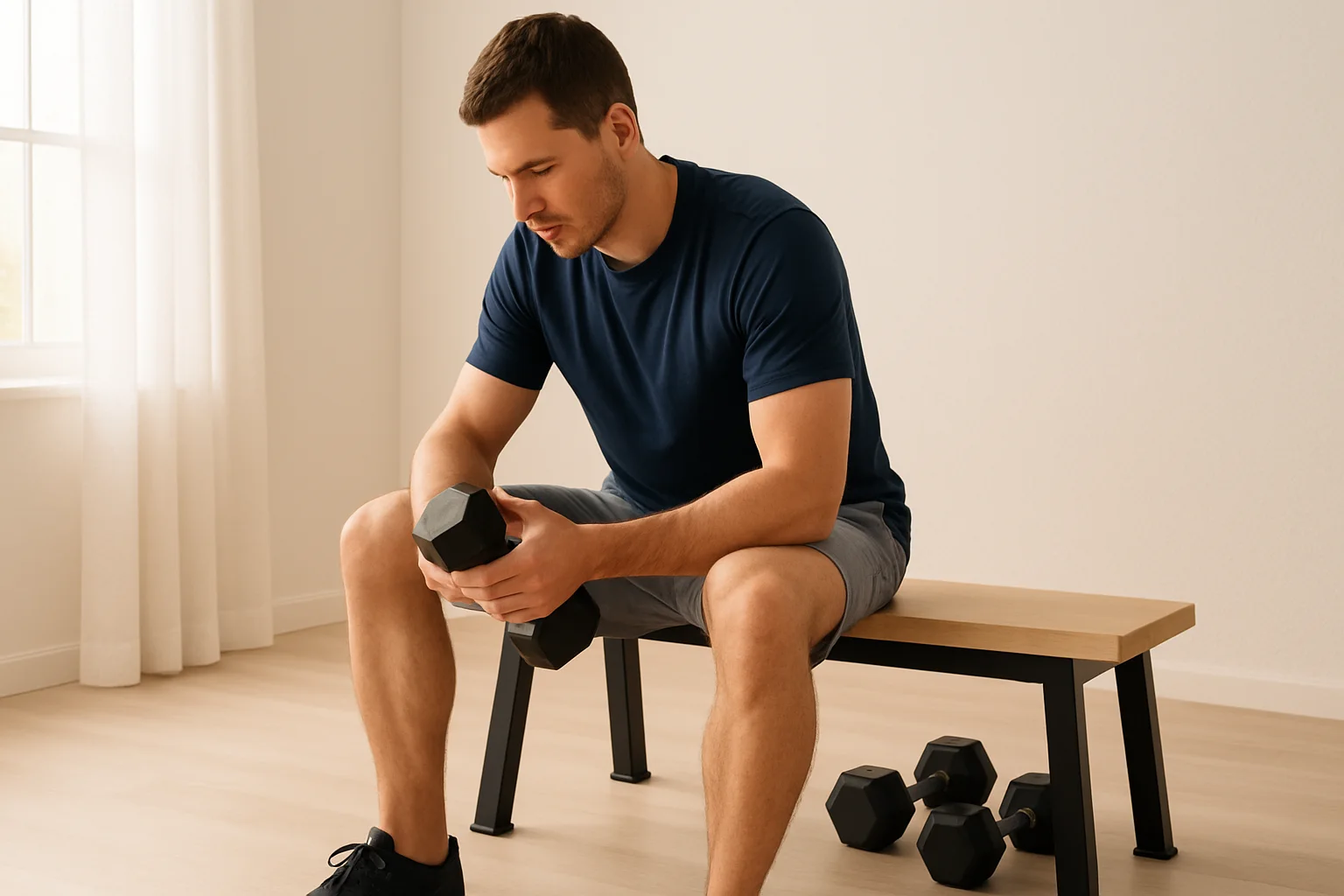
A 4 day dumbbell workout plan can make strength training easier to organize at home or in a gym. The key is not owning a full rack of weights. It is choosing movements that match the dumbbells, bench or floor space you have, then tracking your work so you can make gradual progress.
This plan uses an upper/lower split: two upper-body sessions and two lower-body sessions, with recovery days between some workouts. Treat it as a practical starting template, not a rule that every lifter must follow. Adjust the movements, range of motion and workload to suit your experience and equipment.
How to organize a 4 day dumbbell workout plan
One simple weekly schedule is Monday: Upper A, Tuesday: Lower A, Thursday: Upper B, and Saturday: Lower B. Move the days to fit your week, while aiming to avoid stacking all four sessions together. The spacing gives you chances to recover between similar workouts.
Resistance-training guidance supports working all major muscle groups regularly and choosing a program that can be performed consistently. For this routine, begin with two or three working sets per exercise. Use a weight that lets you complete the target reps with controlled technique and some effort left, rather than forcing a poor final repetition.
The four-day dumbbell routine
Day 1: Upper body A
- Dumbbell floor press or bench press: 3 sets of 8–12 reps
- One-arm dumbbell row: 3 sets of 8–12 reps per side
- Seated or standing dumbbell shoulder press: 2 sets of 8–12 reps
- Dumbbell lateral raise: 2 sets of 10–15 reps
- Dumbbell curl: 2 sets of 10–15 reps
If you do not have a bench, use the floor press. For rows, brace one hand on a sturdy surface if available, or hinge at the hips and row both dumbbells with a stable torso. Choose a shoulder-press position that feels controlled with your available range of motion.
Day 2: Lower body A
- Goblet squat: 3 sets of 8–12 reps
- Dumbbell Romanian deadlift: 3 sets of 8–12 reps
- Reverse lunge: 2 sets of 8–10 reps per side
- Glute bridge with dumbbell: 2 sets of 10–15 reps
- Standing calf raise holding dumbbells: 2 sets of 10–15 reps
Use a squat depth you can control and maintain comfortably. If lunges are awkward in your space, substitute a split squat while holding onto a stable support for balance. If the dumbbells are too heavy to hold securely for a bridge, perform bodyweight glute bridges.
Day 3: Upper body B
- Incline dumbbell press or floor press: 3 sets of 8–12 reps
- Chest-supported row or bent-over dumbbell row: 3 sets of 8–12 reps
- Dumbbell pullover: 2 sets of 10–12 reps, if you can perform it comfortably and securely
- Rear-delt raise: 2 sets of 10–15 reps
- Overhead dumbbell triceps extension: 2 sets of 10–15 reps
No incline bench? Use a floor press or repeat a press variation from Day 1 with a lighter weight or a different rep target. For chest-supported rows, use a bench only if you have one; otherwise, choose a stable bent-over row. Keep the routine useful rather than chasing a particular exercise name.
Day 4: Lower body B
- Dumbbell split squat: 3 sets of 8–10 reps per side
- Dumbbell sumo squat: 3 sets of 8–12 reps
- Single-leg Romanian deadlift: 2 sets of 8–10 reps per side
- Dumbbell hip thrust or glute bridge: 2 sets of 10–15 reps
- Suitcase carry or static hold: 2 rounds per side, using a safe open space if carrying
Balance is part of the challenge in single-leg movements. Start with bodyweight or use a light load and a stable support if needed. If your available dumbbells make a movement too difficult to control, choose a simpler variation rather than trying to force the prescribed reps.
Adapt the plan to your dumbbells
A fixed-weight pair can still support a flexible program. Match the exercise to the load you have, and adjust repetitions or leverage when necessary. For example, if your dumbbells feel light for a goblet squat, try a controlled split squat or a slower lowering phase. If a pair is too heavy for a raise or curl, select a lighter dumbbell or omit that isolation exercise until you have a suitable option.
- Only one dumbbell: Prioritize goblet squats, one-arm rows, single-arm presses and one-sided carries or holds.
- No bench: Use floor presses, floor-based glute bridges and supported rows using a secure household surface.
- Limited space: Choose stationary lunges or split squats instead of walking lunges, and use a static hold instead of a carry.
- Several weight options: Use heavier loads for movements you can control well, and lighter options for smaller or less stable exercises.
Where possible, use a full, comfortable range of motion and repeat each movement with consistent technique. There is no need to turn every set into an all-out effort. Finish with the sense that you could perform a few more good-quality repetitions, especially while learning a new exercise.
How to progress from week to week
Record the weight, sets and repetitions for each exercise. When you can complete the top of the rep range for every set with steady technique, increase the dumbbell load slightly if you have that option. If you do not, progress by adding a repetition, improving control or choosing a harder variation that remains manageable. Change one factor at a time so it is easier to tell what is working.
Keep the first few weeks straightforward. If soreness or fatigue makes the next workout difficult, reduce a set or use a lighter variation rather than automatically adding more work. Consistency and repeatable records are more useful than changing the plan every session.
Want a different weekly structure? Compare this plan with the 5-day dumbbell workout plan, or see how a 2-day dumbbell routine can work when your schedule is tighter. If you prefer to build a week around available space and equipment, the custom workout generator guide offers another planning angle.
Use GymPT to keep your plan practical
You can build a manual program in GymPT without AI credits and save training records with a free account. Use your records to see which loads and rep ranges you have actually completed, then make a considered adjustment when the current version becomes too easy or no longer fits your equipment.
If you want input from a real personal trainer, you can review a program proposal and decide whether to save and use it. A trainer can only review the programs, workout records and notes you permit them to see. Optional AI assistance may require credits, and eligible Premium features have separate requirements shown before use. AI can help with planning, but it does not replace your judgment or a qualified trainer’s professional input.
For a practical walkthrough of making a proposed plan your own, read how to review and give feedback on a personal trainer’s program proposal. Choose exercises you can set up safely, track what you do, and adjust the template to your week rather than forcing your week around a template.
Quick checklist before you start
- Choose four training days that leave room for rest.
- Check that each movement suits your dumbbells, available space and setup.
- Start with two or three sets per exercise and controlled repetitions.
- Record your work and progress gradually when you can maintain good technique.
- Swap an exercise if the equipment or movement does not fit, rather than forcing it.