Gym Trainer Collaboration Responsibilities: A Clear Workflow for Gym Teams
Clear responsibilities help gym teams coordinate trainers and members without blurring professional boundaries or sharing more information than needed. Use this workflow to manage handoffs, client-approved training records, program proposals and branch access.
In this article
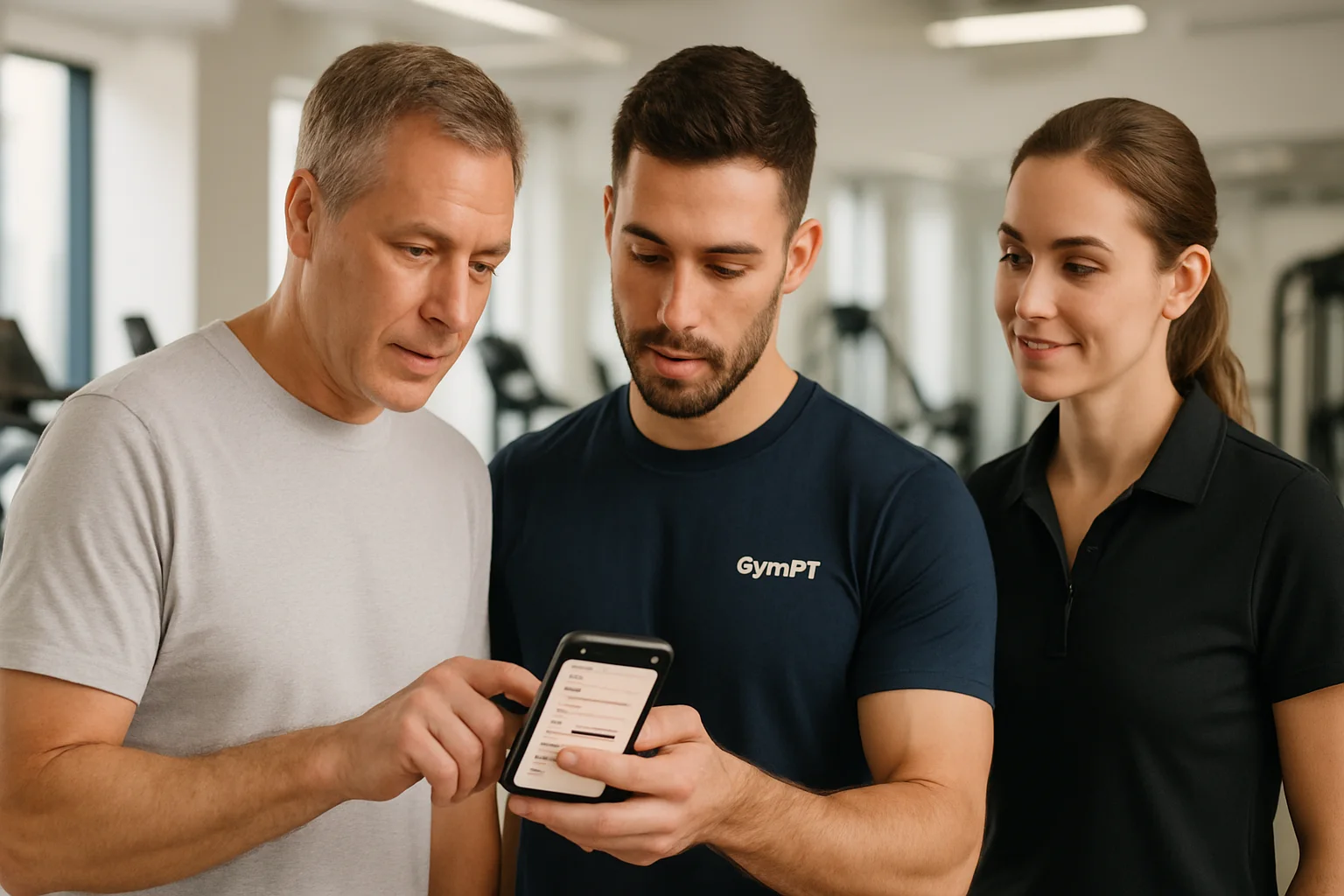
When a member works with a personal trainer at a gym, good coordination depends on more than a shared location. The gym needs clear operating rules, the trainer needs room to make professional training decisions, and the member needs to understand what information is shared and with whom. Defining gym trainer collaboration responsibilities helps teams make those handoffs predictable without assuming that every staff member should see every client record.
This guide offers a practical workflow for gym owners and staff. It covers roles, client permissions, program proposals, follow-up and branch access—including where optional AI support may fit. The goal is coordination with clear accountability, not a gym-wide view of individual training data.
Start with three distinct responsibilities
The gym owns the operating framework
Gym leadership sets the standards for how its team works: staff roles, accessible branches, approved connections, member communication expectations and procedures for questions or concerns. The gym can make sure staff know how to follow those procedures and where to route issues that sit outside their role.
That does not make the gym a decision-maker for every client program, nor does a staff role automatically grant access to all member training information. Keep the operating framework separate from personal training decisions and from permissions to view individual records.
The trainer owns professional training work
A personal trainer gathers relevant information, discusses the member’s goals and preferences, plans exercise within their competence, reviews training records they are permitted to see, and follows up on the client’s experience. Trainers should explain their recommendations and adjust their approach based on useful feedback—not treat a draft, data summary or automated suggestion as a substitute for their judgment.
Professional boundaries matter, too. Exercise professionals should stay within their scope and refer a client to an appropriately qualified professional when a question exceeds it. A gym can support consistent practice by making expectations clear, without asking trainers to provide diagnoses or other services outside their qualifications.
The member makes choices about participation and sharing
The member decides whether to work with a trainer, whether to review a proposed program and whether to save and use it. They also decide what training information and notes to share where the product or workflow offers those permissions. Explain those choices plainly; do not imply that joining the gym means granting every trainer or staff member access to every record.
For a more detailed operational checklist, see gym member consent and privacy.
Use a permission-first handoff
A useful handoff begins with a specific purpose. A member asks for help with a training plan; staff help connect them with an appropriate trainer; the trainer explains what information would be useful to review; and the member chooses whether to share it. Each step should have an identifiable owner.
- Clarify the request. Ask what the member wants help with and whether they are looking for general guidance, a trainer connection or a more involved review.
- Confirm the route. Explain who will follow up and what role that person has. Avoid promising a particular outcome before a trainer has assessed the request.
- Ask before sharing. Make clear what program, workout records or notes the trainer would review, and obtain the member’s permission through the appropriate workflow.
- Keep the handoff narrow. Share only what is relevant to the stated training purpose and permitted by the member. Do not pass information along simply because it is convenient or visible to staff.
- Close the loop. Confirm that the member knows how to contact the trainer, what the next step is and how to change sharing choices if needed.
For example, a front-desk staff member might say: “I can connect you with a trainer to discuss a plan. They will only review training information you choose to share. Would you like me to help set up that connection?” This supports a clear handoff without making the staff member a program reviewer.
Make program proposals a member-led decision
A trainer may prepare a program proposal manually or with optional AI support in the GymPT web workspace. The proposal is a recommendation for the member to review—not an automatically adopted plan. The member decides whether to save and use it.
A dependable review sequence looks like this:
- The trainer checks the client-shared program, records and notes that are relevant and permitted.
- The trainer considers the member’s stated goals, available equipment, schedule, training experience and feedback.
- The trainer drafts a proposal and reviews it for suitability, clarity and practical fit.
- The member reviews the proposal, asks questions and chooses whether to save and use it.
- The trainer follows up through the agreed channel and revisits the plan when the member provides useful feedback.
Some optional AI actions may require credits, and eligible Premium features may have separate requirements shown before use. Core training does not require a paid subscription: a free account can save records and connections, and members can build a manual program without AI credits. Keep any discussion of optional features factual and specific to what the member sees before use.
AI can help with a task when available, but it does not replace the trainer’s review or the member’s choice. Weekly AI summaries, where used, require the appropriate grants. A summary is not blanket permission to inspect other records or to share results with a gym team.
Separate trainer follow-up from gym operations
After a member and trainer connect, the trainer handles the agreed training follow-up: reviewing permitted records, discussing the proposal and asking for feedback. Gym staff can support the relationship by explaining gym procedures and helping resolve operational questions. Those are complementary tasks, not interchangeable ones.
For instance, if a member says a proposed plan does not fit their week, the trainer should discuss adjustments with them. If the member asks how to connect with a different trainer or how staff access is managed, the gym should route that request to the appropriate person. Avoid asking reception or general staff to interpret an individual’s training history unless their role and the member’s permissions make that appropriate.
Use this permission-based trainer communication workflow to help make follow-up expectations explicit. Teams working through trainer responsibilities in more depth may also find the personal trainer and gym collaboration workflow useful.
Manage branches, staff roles and approved connections
For gyms with more than one location, define which branches each staff member can access and review those assignments when responsibilities change. Make sure staff know how to handle a request that belongs to another branch or team. Access should follow the staff member’s operational role rather than an assumption that working for the gym means seeing all member data.
GymPT supports gym management of accessible branches, staff roles and approved GymPT connections. Treat those controls as part of a clear operating process: assign roles deliberately, keep approved connections current and remove or update access when a person’s responsibilities change. These controls help organize gym participation; they do not create unrestricted access to members’ personal training information.
For a focused review process, read gym staff member connection review. If your team needs to coordinate permissions across locations, use the multi-branch staff access workflow as a related reference.
Give staff a simple responsibility check
Before a new staff member or trainer handles a handoff, make sure they can answer these questions:
- What is my role in this request, and what am I responsible for next?
- Has the member agreed to the connection or information sharing involved?
- Which specific records or notes may I review for this purpose?
- Is this a training decision for the trainer, an operational question for the gym or a choice for the member?
- Is the question within my professional scope, or should I route it elsewhere?
- What is the agreed follow-up, and who will confirm it with the member?
Review these boundaries during onboarding and revisit them when staff roles, branch access or workflows change. A short, repeated explanation is more useful than a policy that staff cannot apply in a real conversation.
A practical standard for collaboration
Strong gym and trainer coordination is specific: the gym manages its operating framework and staff access, the trainer leads professional training work, and the member decides whether to participate and what to share. A permission-first handoff, a human-reviewed program proposal and a clear follow-up owner can make collaboration easier to understand without expanding access beyond what is needed.
Use technology to support that process—not to blur responsibility. In GymPT, members can keep records and connections with a free account, build manual programs without AI credits, request optional AI assistance or review a trainer’s proposal. Trainers work with the information clients permit them to share, while gyms manage their branches, staff roles and approved connections. Keep the member’s choice and the trainer’s professional judgment at the center of each handoff.