Barbell Workout Plan: Choose the Right Exercises for Your Equipment
A useful barbell workout plan is not just a list of lifts. Learn how to choose exercises around your rack, plates, bench and space, then adapt the plan when equipment or experience changes.
In this article
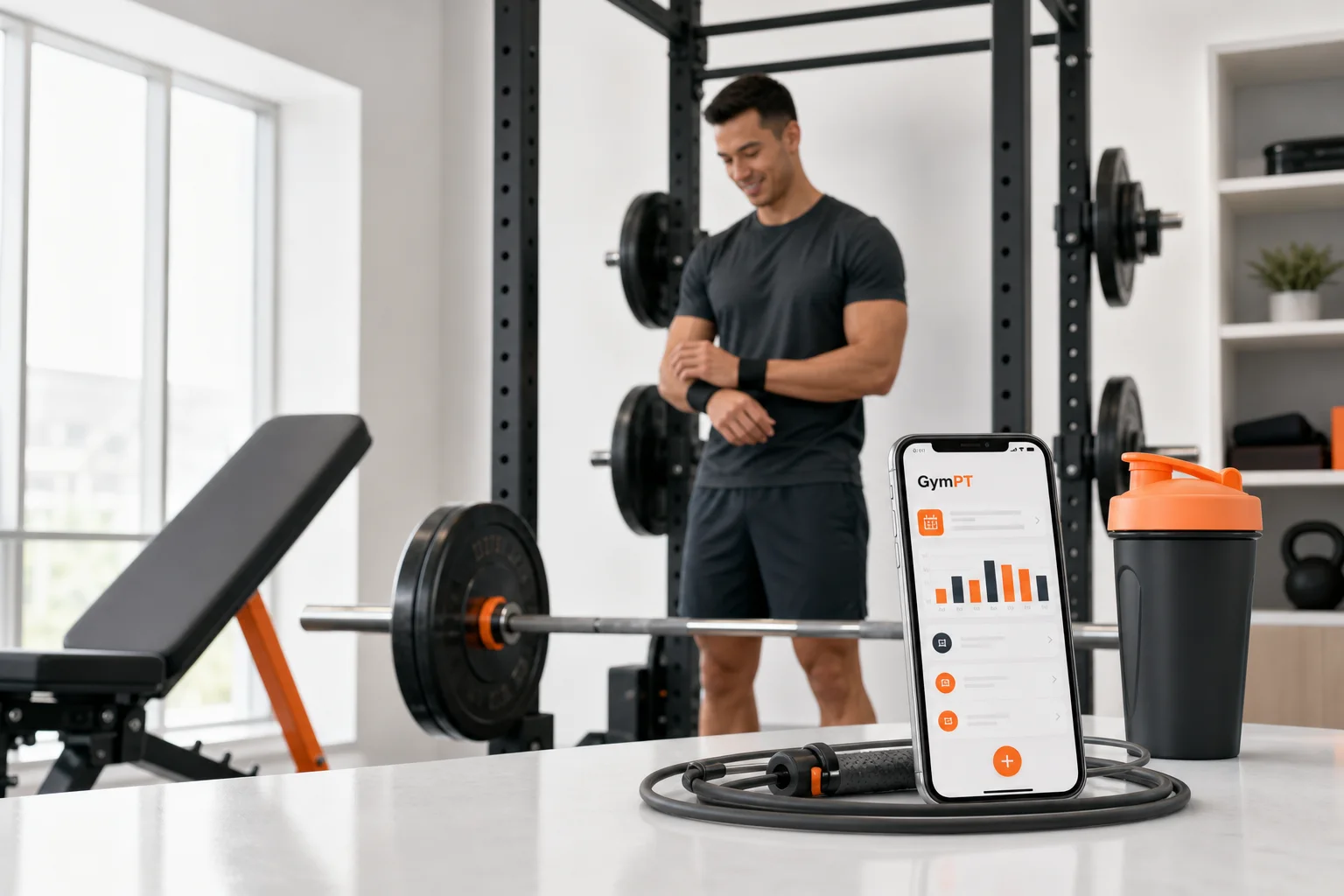
A good barbell workout plan starts with the equipment you can use consistently. A full rack and several plates create different options from a barbell, plates and floor space. Your experience, training goal, available time and confidence with each movement matter too.
The goal is not to force every popular barbell exercise into one routine. It is to choose a small group of movements that cover the major patterns, fit your setup and can progress without unnecessary complexity. This guide shows how to build that plan and how to adjust it when your equipment changes.
What makes a barbell workout plan practical?
A practical plan has four qualities: it matches your available equipment, uses exercises you can perform with reliable technique, gives each movement a clear purpose and leaves room for progression.
Barbells are useful because they allow efficient loading for movements such as squats, presses, hinges and rows. However, the barbell itself does not make an exercise automatically suitable. A movement should also fit your space, rack height, plate availability, mobility, training history and current confidence.
Exercise order is worth considering as well. If strength on a particular lift is your main goal, place that lift earlier in the session while you are less fatigued. If your main goal is general training, a balanced order that begins with larger or more technically demanding movements is usually easy to manage.
Start with an equipment audit
Before choosing exercises, write down what is actually available. This prevents a common planning mistake: selecting a routine that looks good on paper but cannot be completed safely or consistently.
Check these equipment categories
- Barbell: Note whether you have a standard bar, an Olympic-style bar or another format, and check its load capacity.
- Weight plates: Record the smallest plates available. Smaller increments make gradual progression easier.
- Rack or stands: A rack supports movements that begin from a racked position, such as back squats and overhead presses.
- Bench: A stable bench adds pressing and supported-row options, but it is not essential for a complete routine.
- Floor space: Deadlifts, rows and some carries need enough room for setup and safe movement.
- Safety equipment: Spotter arms, collars and a stable lifting surface can improve the practicality of your setup.
If you train in a commercial gym, equipment availability can vary by time of day. Your plan should include substitutions before you need them. If you train at home, the best plan is often the one that works with your current setup rather than the one that assumes future purchases.
For a deeper planning approach, see Gym Equipment Profile for Workout Planning.
Build your plan around movement patterns
Instead of starting with a list of famous lifts, begin with movement patterns. This gives your barbell workout routine structure while keeping exercise selection flexible.
1. Squat pattern
A squat pattern trains knee and hip extension together. Options include a back squat, front squat, box squat or a controlled pause squat. Choose the variation that fits your rack setup, technical ability and comfort.
If you do not have a rack, a barbell squat may not be the best starting point because getting the bar into position can become the limiting factor. A goblet squat, split squat or leg press may be a more practical substitute until your equipment changes.
2. Hinge pattern
A hinge emphasizes moving through the hips while maintaining control of the trunk. The conventional deadlift, Romanian deadlift and barbell hip thrust are common choices.
Use the conventional deadlift when you want a floor-based pull and have adequate space. Use a Romanian deadlift when you want a simpler setup from a standing position and can control the range of motion. A hip thrust can be useful when a stable bench and comfortable setup are available.
3. Horizontal push
Horizontal pushing includes movements such as the barbell bench press and floor press. A bench press requires a stable bench and an appropriate safety setup. A floor press reduces the range of motion and can be a useful alternative when no bench is available.
4. Vertical push
The barbell overhead press is a straightforward vertical-push option, but it requires enough ceiling clearance and a safe way to bring the bar into position. If you cannot rack the bar comfortably, dumbbells or a machine may be a better choice.
5. Pulling pattern
Barbell rows, chest-supported rows and pull-ups can train the upper back through different setups. A barbell row can work well when you have a barbell but no cable station. If maintaining your torso position is difficult, use a supported row or another stable pulling option.
A simple three-day barbell workout plan
The following structure is an example, not a requirement. Adjust the exercises, loading and volume to your experience and equipment. Begin conservatively, especially if a movement is new to you.
Day 1: Squat and horizontal push
- Squat variation: 3 sets of 5 to 8 repetitions
- Bench press or floor press: 3 sets of 5 to 8 repetitions
- Barbell row: 3 sets of 6 to 10 repetitions
- Optional accessory exercise: 2 sets of 8 to 12 repetitions
Day 2: Hinge and vertical push
- Deadlift or Romanian deadlift: 3 sets of 5 to 8 repetitions
- Overhead press: 3 sets of 5 to 8 repetitions
- Split squat or a light squat variation: 2 to 3 sets of 8 to 10 repetitions per side
- Optional trunk exercise: 2 to 3 controlled sets
Day 3: Balanced full body
- Front squat, pause squat or another squat variation: 3 sets of 5 to 8 repetitions
- Incline press, floor press or push-up variation: 3 sets of 6 to 10 repetitions
- Romanian deadlift or hip thrust: 3 sets of 6 to 10 repetitions
- Barbell row or another pulling exercise: 3 sets of 6 to 10 repetitions
Leave at least one rest day between sessions when possible. A schedule such as Monday, Wednesday and Friday is easy to remember, but the best arrangement is the one you can repeat without regularly training while excessively fatigued.
How to choose the right variation
When two exercises train a similar pattern, compare them using five questions:
- Can I set it up safely? The equipment should support the movement rather than create a risky or awkward setup.
- Can I control the full intended range? Choose a range you can perform consistently without forcing positions.
- Can I repeat the technique? A useful exercise should look reasonably similar from set to set.
- Can I progress it? Consider whether you can add a small amount of load, perform more repetitions or improve control over time.
- Does it fit my goal? Place your highest-priority movement earlier in the session and give it enough attention.
Equipment choice is individual. A machine, dumbbell or bodyweight movement can be a sensible substitute when it better matches your skill, body proportions, preferences or available setup. The best substitution usually preserves the main movement pattern rather than copying every detail of the original exercise.
Progress your barbell plan without rushing
Progression does not have to mean adding weight every session. Use a simple method such as double progression: choose a repetition range, keep the same load until you can complete the upper end with controlled technique, then increase the load by the smallest practical amount.
For example, if an exercise is programmed for 3 sets of 5 to 8 repetitions, you might begin with 3 sets of 5. Over several sessions, work toward 3 sets of 8. When that becomes repeatable with good form, add a small amount of weight and return toward the lower end of the range.
- Record the load, repetitions and sets after each session.
- Use the same exercise variation long enough to evaluate it.
- Increase only one major variable at a time when possible.
- Reduce the load or volume if technique repeatedly breaks down.
- Review whether the plan still fits your schedule and recovery.
Consistency matters more than constantly changing exercises. A plan can be adjusted when equipment, time or confidence changes, but frequent unnecessary variation makes progress harder to evaluate.
Adapt the plan when equipment changes
Real training environments are not always predictable. A rack may be occupied, a bench may be unavailable or you may travel with only limited equipment. Prepare substitutions by pattern:
- Squat: back squat to front squat, split squat or goblet squat.
- Hinge: deadlift to Romanian deadlift, hip thrust or dumbbell hinge.
- Horizontal push: bench press to floor press, push-up or dumbbell press.
- Vertical push: overhead press to dumbbell press or a suitable machine press.
- Pull: barbell row to supported row, cable row or pull-up variation.
When substituting, adjust the load rather than assuming the same number on the bar will apply. Different exercises have different leverage, stability and range-of-motion demands.
Use GymPT to keep the plan connected to your training
You can build a manual program in GymPT without AI credits, save workout records and keep your training information organized. If you want support, you can request optional AI assistance or review a program proposal prepared by a real personal trainer. You decide whether to save and use that proposal.
A useful workflow is to record the equipment you have, your preferred training days and the exercises you can perform confidently. If you work with a trainer, share the programs, workout records or notes you want them to review. Trainers see only the information you permit them to access, and optional weekly summaries require the appropriate permissions.
For more on evaluating a trainer-created plan, read Personal Trainer Program Review Checklist. If you want to compare a proposal before saving it, Personal Trainer Workout Program Proposals explains the review workflow.
Final checklist
Before starting your barbell workout plan, confirm that:
- The exercises match your actual equipment and available space.
- Your highest-priority movement appears early enough in the session.
- Each major movement pattern has a practical option.
- You know what substitution to use if equipment is unavailable.
- Your starting load allows controlled, repeatable technique.
- You have a simple way to record sets, repetitions and load.
- The schedule is realistic enough to repeat for several weeks.
A strong plan is not defined by how many exercises it contains. It is defined by whether you can perform it safely, progress it gradually and adapt it when real-life conditions change.